CREATIVE WRITING

at the Ruth Asawa School of the Arts in San Francisco

Welcome! CW develops the art and craft of creative writing through instruction, collaboration, and respect. This blog showcases STUDENT WRITING and how to APPLY to Creative Writing.

  • by Molly (’15)

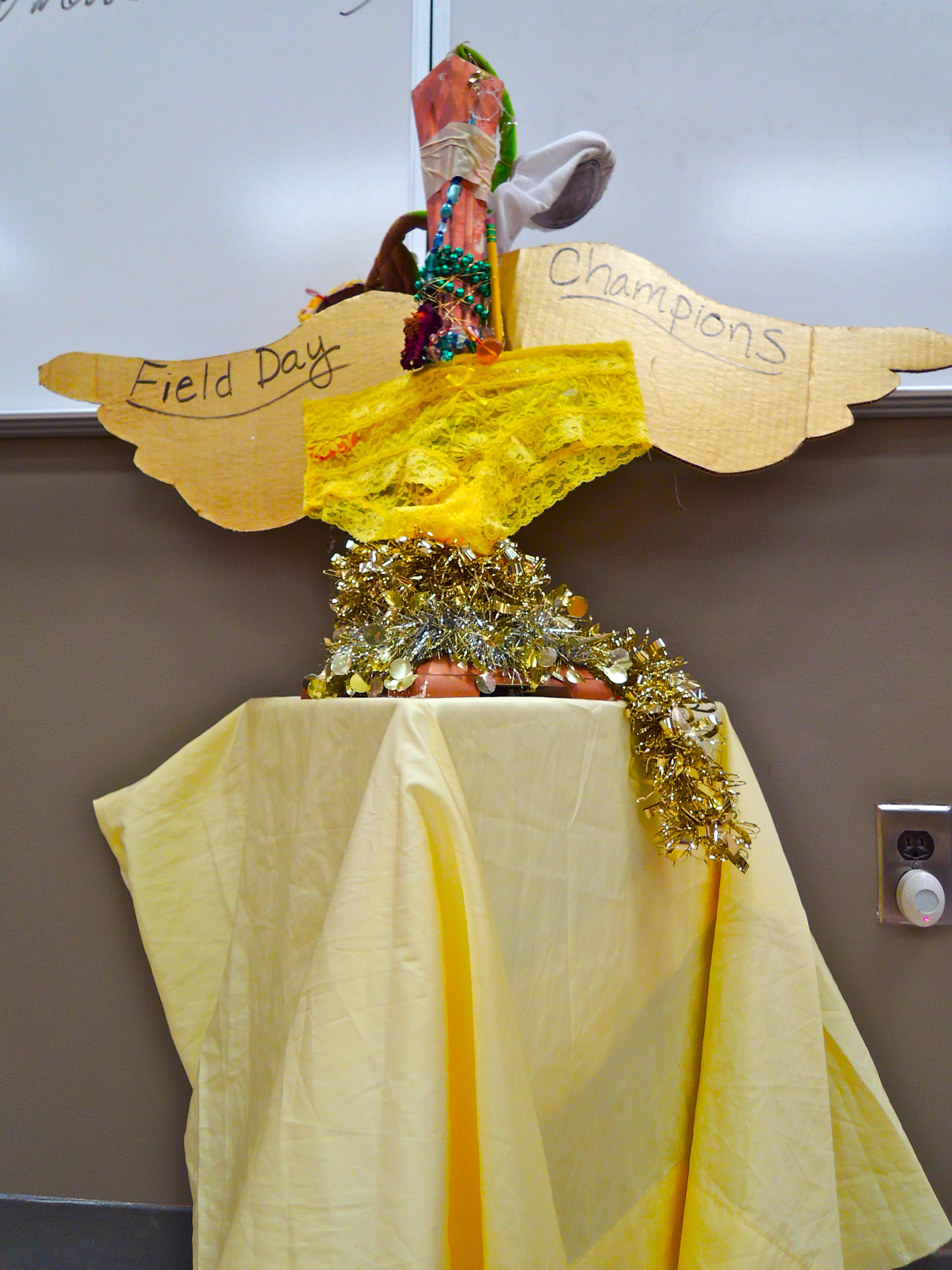
    Many people are nervous about Field Day. Strolling down the halls at school, one can hear a variety of conversations from different departments, all bragging about how quickly they can form a human pyramid or eat a doughnut off a string. When I hear these conversations, I can’t help but crack a smile. They are such fools. It is completely obvious that Creative Writing will win field day.

    I have many reasons to believe this with such fervor. I will do my best to explain these reasons to you; they are all quite simple.

    1. The sun is yellow. Yellow is the color of Creative Writing. The sun is also the reason we are all alive. Therefore, if we do not win, there will be no life.

    2. Due to yellow’s eye-catching presence, it is very unlikely any Creative Writers will get hit by a car during the night. Therefore, no Creative Writer will be missing on Field Day, giving us a better chance of success.

    3. Very intelligent individuals agree with my point, making it even more credible. Even Barack Obama mentioned it:

    “It is very likely [that Creative Writing] … will … win [Field Day] … they are [so incredibly talented] … that every other [department] … [pales] … in comparison.”

    I hope my explanations will convince those of us that are still doubtful of Creative Writing’s obvious victory.

  • by Shanna (’13)

    I’ve had Scott as a teacher for almost two years and I feel like I know him pretty well; so when Heather told us his wife was coming in to teach CW, I knew she was going to be to cool. And it was true, Rachel emanated this totally friendly and down-to-earth, arsty vibe. She’s an artist that deals a lot with social activism and social constraints in her work and pushes those boundaries, which is something CW hasn’t seen a lot of. It was a refreshing change of pace, to work with someone who showed us her art not only in pictures and paintings, but also in a real-life installation in the CW room. And I think most of the girls in CW agree, after Rachel showed us some of the many wedding dresses she made (including her own!), we all wanted to jump the gun and ask her to design our own. Rachel was such an amazing artist and person that all of CW agrees: we want her back. (And good job, Scott – your favorite student approves.)

  • by Lizzie (’14)

    What, in fact, is the difference between the mind and brain? If all our thoughts and feelings are controlled by our axons firing or not, do our thoughts go beyond the chemical? Is visceral even a real thing when all that there is, what feels visceral, is a direct link to neurotransmitters breaching the synaptic gap?

    I have no opinion either way. You could convince me that all mind is brain and I would accept that and be very sad because even if what has been said to me is true, the fact that I am nothing but a victim to neurons and brain tissues invalidates all that I’ve ever felt. Yet, I could still be convinced other wise. The brain is just the oil that keeps the machine running but it is not the machine, the mind is. Neurotransmitters are the space where the intangible becomes a bodily function and thus interpretable. It is not what makes up a mind but it is the mind’s access to the physical world and nothing more than that.

    However, the logical part of my brain is moving toward the former conclusion. I know that even as I am writing this, my fingers pressing the typewriter keys, words forming and thoughts becoming coherent, it is only the work of millions of neurons firing. My excitatory signals are surpassing the threshold of my nerves and thus action potential has been created. Am I nothing more than that? But if that is all I am aren’t I not still a person who can feel and love and hate? Yes, there are chemicals that dictate these feelings but they are still feelings, perhaps even more real because science can prove them chemically.

  • by Colin (’16)

    It’s funny how even the most experienced writers are constantly bewildered by their own methods and their own creations. At the Herbst Theater, myself and a few other SOTA students had the wonderful opportunity to hear Michael Chabon speak about his life, his books, and his ability to year after year perform his duties as both a father and as a novelist. It was a very full evening, and many topics were discussed in detail: he recalled with tender feeling the way in which he wrote his first novel, The Mysteries of Pittsburgh; he talked about the personality and actions of his children (and of his memories of early childhood) that might have bled through into his young characters, giving them a realism that could otherwise not be achieved; and he talked about other writers and their methods in stark contrast with his own. There was nothing he didn’t talk about, and no facet of his literary career was hidden away. And the interviewer, the conversation starter, was none other than Adam Savage, the bearded engineer/artist/theorist/brain/goofball/science-teacher/inventor on Mythbusters!

    Our group saw Chabon from afar, our seats elevated above him so that he looked like a dwarf among a forest of redwoods, but it didn’t matter because his words reverberated throughout the theater with intensity and, often, true fascination. In many ways, talking about his writing and his literary idols (Raymond Chandler being one of them) appeared as a liberating event for the renowned author. This could be regarded as a sort of narcissism, but it was really a public reflection on his career and his life, and the crowd loved it. The simple viewing of two men talking inspired sitting ovations and brought upon hearty laughs. When Chabon was asked questions by the audience, he answered them with honesty and elaborate detail, making it equally about the person asking the question and himself. The author, throughout it all, never made a play at being humble, but did truly understand that people were watching him with adoring eyes for a reason, and that he had something legitimate and interesting to say to them. Overall, it was a very pleasant evening. Thank you Ronald Chase and Art & Film.

  • FRIDAY, SEPTEMBER 14 CINE/CLUB Randall Museum 199 Museum Way Refreshments 6:30 Film Program 7
    Ronald Chase, moderator
    CARTOON
    Short Film: Chris Anthony’s And Everything in Between
    Student group film: The Balloon Man 
    Terry Jones’ THE MEANING OF LIFE (1983, England)


    A now, for something completely different! This Monty Python classic is filled with some of their most outrageously funny sketches. The British comedy troupe takes on the challenge of uncovering the meaning of life, from birth, through school, work, live organ transplants and the afterlife.  It’s extravagant excess and a thoughtful skewing of the world we live in. 

PARENTAL WARNING: there’s simulated sex, but it’s a riot.

    WHY WE CHOSE THIS FILM:

    A masterpiece by Monty Python?  You bet. And close to one of the most popular films we’ve ever shown. We’re starting this year with a Hit Parade! Python makes fun of all the popular classics—starting off with a musical take-off a-la-Mary Poppins about Catholics and Protestants war on birth control. 

It continues with sex education, corporate mergers, national heath care, the bureaucracy, over-eating, greed, and winds up, of course, in Heaven. You’ll never forget the “ middle-of-the-film” with its elephant dressed in a tux and the mysterious question, “where did that fishy go?” We hope you won’t die laughing, but we’ll have the ambulance waiting, just in case. Come early because this one will be really popular.

  • by Luca (’16)

    This movie is very, very strange. Packed with metaphors that might mean nothing, this movie explores death and imagination. It doesn’t even explore the topic, it wanders in the rain, blasting a shotgun into a hurricane like the drunk and dying dad of Hushpuppy, our main character, who lives in a sinking island off Louisiana. Despite contending with rising sea levels, mythical beats, and an impending hurricane, Hushpuppy might just have super powers. She can talk to her mom who isn’t there and seems to have thawed out frozen prehistoric creatures by accident. Hushpuppy has a swirly of disgusting, grimy southern folk around her, living in the Bathtub, a small community on the verge of being swallowed up by the waves. This movie is very interesting, as the Hurricane comes and smothers the land with water. Eventually, Hushpuppy and the survivors of the Hurricane take to the rivers that used to be streets and homes. This movie is a little too wierd at times and at other times seems half baked, with criminal acts going un-punished and Hushpuppys imagination fusing with the real world so much that both are indistinguishable. This is interesting but causes plotholes as big as the eye of the death-dealing hurricane on the horizon. And there are characters that say absolutely nothing at all, like the children Hushpuppy hangs out with, and parens so incompetent in noticing their childrens absence that they probably are another figment of Hushpuppy’s imagination. This wierd parents also have nothing much to say either. While the movie’s meaning is extremely confused, being that the plot itself is extremely confused, it still is a good movie. The performances are real and the shaky camera and methodical pacing do make you feel that your there, in a rather unpleasant, yet magical place.

  • by Molly (’13)

    Put on your turtlenecks ladies and gentlemen, and head over to Peet’s Coffee to discuss the wonder of poetry. Read your favorite poems aloud over a steamy mug of espresso while your fedora-wearing friends nod wisely. The poetry here will be everything from T. S. Eliot’s The Wasteland to the sonnet you wrote last night while half-asleep, so come with open ears and a few dollars to purchase a coffee-drink of your choosing. If you wish, the group will gladly workshop your poetry, but remember it will be a very relaxed atmosphere and our attentions may wander. Meet in Room 202 after school on any day you’d like (we meet on Tuesdays, Wednesdays, and Thursdays), and take the bus with Smolly and Justus to the Castro Peet’s. Session timing will be flexible, and will end when feels appropriate. You don’t need to go to all of our meetings to be a member, so don’t feel stressed about scheduling. We hope to see you there!

  • by Mykel (’14)

    Today the whole department went to see Lorna Dee Cervantes, San Francisco Poet Laureate Alejandro Murguía, and California State Poet Laureate Juan Felipe Herrera read poetry and discuss the current state of Chicano literature. I expected to hear some bilingual poetry and a short discussion afterwards, but the panel q&a turned out to be the meat of the program. I was astonished by the way the three poets wove big-picture politics in with their personal and artistic lives. They talked about issues too diverse and far-reaching for me to itemize here, but touched on subjects from war budgets sleep apnea to independent publishing. Lorna Dee Cervantes passionately went in depth about the attack on ethnic studies in Arizona schools, blowing my mind with connections between censorship of Chicana/o literature, dropout rates, and hate crimes. (To learn more about this issue, go to http://librotraficante.com/.) This then led to discussion about the implications of censorship, and the ways that current trends in the U.S. mirror the rise of Nazism in Europe in the 30s.

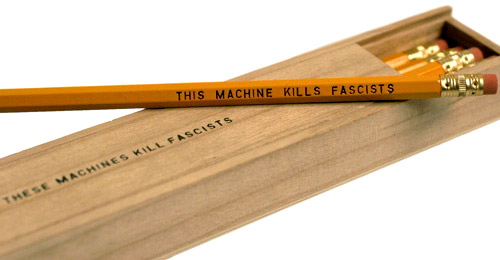
    When asked what people could do to counteract this, Herrera said to “focus on the creative.” The others agreed and expanded on the sentiment. The fact that these experienced, educated activists (one of whom studied the rise of Nazism in graduate school) truly believe that writing poetry can fight fascism: that’s definitely the thing that I’ll carry with me from this afternoon. That amount of responsibility placed on me as a writer is simultaneously horrifying and inspiring. I can’t wait for more of those radical political/artistic “a-ha!” connections, which are sure to happen when Juan Felipe Herrera teaches his unit in the Creative Writing classroom.

    (Midori) The day before, I assisted with a Saturday Chinese school my mom teaches at and my sister attends. I met the principal, a friendly man that told me the only thing I had to know about his school was the mission statement– to get children interested in the Chinese language. He didn’t say anything about the SAT or the AP, the babysitting business they were practically doing, the rise of China as a world power or anything like that, just told me of his sincere wish for children to like Chinese. Invigorated by our meeting, I taught a class, and was faced with the annoying reality of twenty five arrogant middle schoolers and freshmen. Their literacy level was also much lower than I had hoped for, and upon asking one of them how long they’ve been at this school, she answered proudly “Ten years!” This was from a girl that didn’t even understand when I asked for her name in Chinese. I was infinitely saddened by this response, and today, I realized why. As someone who has immediate access to both Chinese and English cultures, I have the best of both worlds, and I see the value in both. Here is a student that is more concerned with appearing “cool” and not caring about her grades than with culture. Her culture. It saddened me that she had ignored this wonderful opportunity for ten frickin’ years, that she had forsaken an entire world of stories and culture, and had done it all with pride. As all three featuring poets said today, this is the road a lot of youths are facing– illiteracy, pride, ignorance, and fear. It scared me, but in a way that reaffirmed my determination to be a writer, to not be afraid of people, to not be afraid of stories.

  • by Giorgia (’14)

    One of the main things Creative Writing has taught me, through a constant struggle of tears and rage and wailing (“But I’m not good enough!”) is that I have opinions and think things. And, even more shocking, is that I am allowed to do that: that is why I write–– and it is okay for me to have more to say than describing a field. Describing a field is great, and I love fields, but sometimes a field is just a field and sometimes a field is a metaphor, but then a lot of times a field becomes this yucky in between thing when you’re trying to say something that you are blatantly not saying which results in a massive portfolio full of dead dogs. My last two years in Creative Writing has taught me that it is okay to just write about a field if I am in a field-y mood that day, and that it is okay to make the field a metaphor–– as long as I make it into a metaphor and everyone is aware that it is a metaphor and are then able to think about what it means. But also that the meaning of the metaphor does not always have to be a metaphor, that sometimes I can just write what I mean and add the bells and whistles later or maybe the point is that it doesn’t have any bells and whistles, and that that is good writing as well, often better writing. Because maybe my writing wasn’t meant to be a field. People like Alex (’12), their writing can be the field and the field is a field and a metaphor and everything a poem-field should be, filled with little imagery flowers and sensory detail birds and bees, but my writing is not a poem-field. And my writing is not “warm snow covering my house of sticks,” or “changed by your optimism,” or a “bad case of American society,” or my “serpentine, turpentine valentine” or “a bramble of briars beneath my coat,” or “hey you with the astrolabe eyes,” or “as he walks he soars.”

    My writing is a little bit of all of these things because these amazing people have helped me realize that my writing is my writing, it is “curled in the crooked arms of the tree,” and “pressing outwards towards some kind of heaven,” and “i shake when I speak and you say okay? okay,” and things I might not always be happy with and that is okay.

    Usually my writing is things I’m not happy with because I’m not being honest. The point of writing is to be honest, to talk about things and try to explain them and mostly fail. And things that I think need explaining are different than what other people think need explaining and that is great, A-PLUS.

    So I might not always write things I like and I am lifetimes away from being the best writer I can be or the writer I want to be, and hell, I probably won’t get anywhere close, but so far I’ve learned that the first step to any of that is being honest, if nothing else. Being honest about what I have to say and how I feel and the way words contort themselves in my brain and that sometimes they’ll trip and come out ugly and that is okay. It’s all okay. I am a writer and I’m just trying to make it okay and if I’m not okay right now, if I am sad and angry and betrayed by some of the people I loved most, I am allowed to feel that way and I am allowed to–– I should write about it. I can and should write about how sad I am, or how happy I am in the roda, or the sound buses make in the night and fog, and that these are the things I need to be writing and I don’t need to always write about the field.

    (Midori) Over the summer, I had my own version of this revelation, though in a far more anticlimactic way. Caught up in writing my personal stories, I ran out of time to write the 10-page short story for Creative Writing, and I thought instead of coming up with a brilliant lightbulb idea of a plot, I’ll just play it short and safe by writing from personal experience instead.

    Only, it wasn’t short, nor was it easy. In fact, it was one of the hardest things I’ve ever had to write, and the product, despite being assured over and over again by people that it is one of the best things I’ve ever written, is something I can read a hundred times and still just stare wryly at. Maybe, given time, I’ll grow to be fond of it, even proud of it, but at this point, I can only scrutinize it, wondering if this is really the best I can do, if this simple little thing that I got to experience is truly something people should awe and marvel at. One thing, though, is that I can’t bring myself to be ashamed of it in any way, as I do with most of my other pieces (the same “I’m not good enough!”). It’s a very subtle enlightenment that I’m still working my way through, but right now, I’m just infinitely glad that I don’t hate it.

  • by Noa (’16)

    It’s safe to say that seeing Apocolypse Now as my first Cine/Club experience left me completely blown away and guaranteed my further (voluntary) interest in Cineclub’s films. Coming in, I had expected my first film viewing to be tedious and boring, having never seen or heard much about Apocolypse Now and having been informed that the movie would be “really, really long.” Instead, I found myself completely engrossed in the story of Benjamin Willard, an army captain who is sent on a mission by his military superiors to “terminate” a colonel gone rogue. I was perhaps even more absorbed in the images of the film, from the brilliant pain and insanity of Willard in the opening scene to the ominous shadows obscuring the face of the colonel, than the plot itself. These images, combined with the frenzied and panicked rhythm of the soundtrack, left me with a deep feeling of uneasiness and tension that heightened both the film and the film viewing experience in the best possible way.

    (Midori) Never had a film left me so completely and utterly terrified as Apocalypse Now had. Coppola’s use of imagery, motif, cinematography… Even something as small has failing to focus the shot on something left me gulping for air. Anyone who has ever watched almost any film with me can tell you that I cry. A lot. I get easily carried away by the plot, by empathy for the characters (part of the reason why I love going to Cine/Club), but during the entire run of Apocalypse Now, I didn’t cry. Horror left me in a state of shock, hopelessly gaping at the screen, and flinching almost constantly at the scenes. It’s definitely a movie I will carry with me for the rest of my life.