CREATIVE WRITING

at the Ruth Asawa School of the Arts in San Francisco

Welcome! CW develops the art and craft of creative writing through instruction, collaboration, and respect. This blog showcases STUDENT WRITING and how to APPLY to Creative Writing.

  • by Hosanna (’14)

    GLIDE Memorial Church is the place to be. My mother had told me about GLIDE, then my homepiece and peer, Flavia (a Creative Writer) told me we should check it out together. During the summer I decided to check it out. I went on www.glide.org, picked out a date, and received a confirmation email. Of course, because I spend a lot of time curled up, watching corny Bollywood love stories that make me cry, I didn’t know where 330 Ellis Street was (don’t listen to Google Maps . . . they misled me). I, from 6th and Market, ran through the surprisingly empty Tenderloin side streets (not to say there weren’t any creeps lingering around) until I ran into Glide. For my first time, things were surprisingly simple and the volunteers there, old and new, were sociable and very helpful. My sister and I signed in, put on some gloves, got better gloves, and stood by our assigned tables. We were put into the main cafeteria, a large orange space with a kitchen and a clean up room off to the side. My sister and I were given instructions on how to refill water pitchers, clean the tables, and who to give the used trays to.

    Lunch started at around 11:30 and the cafeteria, after everyone got their food, was flooded with people. People were stuffed in the hallway, coming out of every entrance and exit, all waiting for a free lunch and place to sit down and eat. I had to move quickly, wipe down tables, remove trays, refill water pitchers, and get salt and pepper when they were asked for. This busy atmosphere continued until 1pm; I took off my very sweaty gloves, my hairnet, and sat down to relieve my feet. I felt grateful and more human than I had ever felt. I smiled out of happiness when I was thanked for volunteering, not out of pitiful kindness. I went to Glide once a week until the school year was beginning to approach. However, I plan on returning to Glide, balancing three trays on one arm, collecting tickets from eager faces, and getting told I look like Angela Davis (happened three times in one day– SCORE). I would encourage everyone and anyone to spend a Saturday morning, afternoon, or evening at Glide. All the Staff members are extremely nice as well as the people who go there for a meal. Help prevent a growling stomach, you never know what tomorrow brings.

  • by Flavia (’14)

    This past unit with Kevin Carnes was truly and melodiously enlightening. This guy has a stern persona; his words are as careful and precise as his drumming. It was his first time teaching a classroom of high school students and he was able to not only meet the teaching expectations but also to cross the line from being a teacher to a person speaking wisdom. He spoke to us about his understanding of music, specifically the drums, in a highly articulate manner by covering sound, pulse, rhythm, and silence to give us an understanding of the essential components. As a matter of fact, although his lesson was music-oriented, his words went beyond the meaning of sound to guide and to understand the form and style of life. In other words, he was teaching us his “religion,” his form of thinking, and expressing himself as a musician even off the stage. This was inexplicably valuable for me, because it reassured me of my ability to create different forms of art, such as singing/songwriting, rather than just writing, now that all art is interconnected in some way or another, just as much as it relates to our daily lives. Kevin made it clear, you can be an artist of any kind if you develop a deep understanding for the medium you choose and you apply constant practice. Evidently, this man spoke truth, because in the last few minutes of class, when he played for us as we wrote to the beat of his drum, I—along with others I’m sure—could hear the words that were told through each movement of his hand; soft taps, heavy banging, and of course the pause between each beat, the beauty of silence.

  • by Olivia A. (’14)

    For the past two summers I’ve worked at the de Young Museum as a Museum Ambassador—which is an imposing name for a whimsical job (in a constructive, healthy way that occasionally involves doing impressions of Picasso or throwing modeling clay at coworkers). When my coworkers and I weren’t playing word games or debating the quality of various frozen yogurt shops around the city, we were teaching art lessons to elementary school-age children in their camps or schools, and learning about the art in the museum.

    During the school year Ambassadors are either in a presentation group or a tour group. The presentation groups go out to schools to teach art lessons related to the collection the tour group presents. The tours are very different from normal museum tours—they are based on the students’ observations rather than on historical context and scholarly interpretations.

    I’ve learned so much over the past two years about public speaking, professionalism, and art history that I don’t know who I’d be without this program. To apply for this school year session fill out an application (found at http://deyoung.famsf.org/education/museum-ambassadors) and go to the de Young on Monday, October 1st for an orientation. You may have to arrange to miss one class period every week to go out and teach—though I know that two years ago when I worked during the school year there was an afterschool team to accommodate Ambassadors who weren’t able to miss class. If you’re interested I highly recommend at least going to the orientation–it’s not an opportunity you want to miss.

  • Did you know that there is a Banned Books Week?  It takes place September 30th through October 6th.  The San Francisco Public Library and Banned-by-the-Bay are included in the  local groups who celebrate banned books week.

    The most interesting event of the week is the Naked Girls reading:

    Tuesday, October 2, 2012
    Naked Girls Reading Banned Books
    8:00 pm | Cost: FREE | Stagewerx Theatre

    Banned Books Week 2012: Naked Girls Reading | SF

    Naked Girls Reading San Francisco is simply a group of women who read literature naked to a doting audience.

    On October 2, we will be celebrating our right to read by selecting banned, censored and burned books.

    I suppose someone needs to compete with the Naked Guys on Castro.  All they do is sit around, exercising their free speech by simply being naked.  The “Naked Girls” actually celebrate free speech by reading excerpts from banned books.

    So jump on the banned-wagon and learn more about banned books (sorry, couldn’t resist the pun).


  • by Josie (’16)

    Dan Hoyle’s show, The Real Americans, exceeded my wildest expectations. What I had expected was an older gentleman, maybe clad in old, worn-out corduroy slacks, a plaid shirt, and fleece vest clutching a cane, reciting his life story to a large audience. This was not the case, fortunately. Dan Hoyle is a young, very attractive man with enough energy to do a one-man show that is both exciting and captivating. He wore a plain white shirt and jeans and a variety of baseball caps to differentiate between the characters. The other aspect of his show that surprised me was how he could capture each character so precisely that I could really see the person Hoyle was acting as. It was almost as if those people were on the stage with him. Hoyle was so comfortable with the theater space usually filled with other actors and being in front of an audience alone. Hoyle also did an excellent job of encapsulating the “Real Americans.” He had the accents and the behavior and actions that the classic middle-of-America Americans would have. Hoyle also had the excellent point that we live in a liberal bubble in San Francisco, and that is why it is important to be exposed to who the “Real Americans” are. I hope Dan Hoyle has other shows to come that I can enjoy as much as I enjoyed The Real Americans. I would recommend all who have the opportunity to go see the play, do it!

  • by Abigail (’14)

    I had no idea there were so many galleries downtown! And all free!

    For any parents reading this who don’t know what I’m talking about, last Saturday the C-Dubs were taken at hyperspeed through San Francisco’s art world by Ronald Chase, creator of Art and Film. As a culmination of the unit on art criticism Ronald taught on Thursday and Friday, we visited twelve galleries in less than two hours, practicing our new analytical skills.

     Ronald’s explanations of each room helped with the dizziness of consuming so much art at once. The experience was first-hand, which, as he pointed out, is the best way to learn. I especially enjoyed finally seeing one of Andy Goldsworthy’s mud-walls in person. It had more substance, the clay looked thicker and more impressive, than in books. You know it’s real if it’s in a gallery, especially with something as tactile as Goldsworthy’s pieces. At the same time, it felt more fleeting: photographs preserve things as they are, but mud cracks and changes.

    On the first day of class, Ronald said that it takes ten to fifteen years for an artist to develop a style of her own; that, to be a strong artist, one must have outside support for the first years. It reminded me of a quote from Robert Frost: “The poet, as everyone knows, must strike his original note sometime between the ages of fifteen and twenty-five…School and college have been conducted with the almost express purpose of keeping him busy with something else till the danger of his ever creating anything is past.” One of the reasons I appreciated Ronald’s unit, and his whole program, is that it increases the danger of our creating things.

    In closing: I think we can all agree that Ronald, and the parent who made our picnic lunch on Saturday, have our undying gratitude for feeding us. Starving adolescents tend not to be the best of listeners or thinkers, and the food more or less assured our complete interest and participation…am I right, or am I right?

  • by Luca (’16)

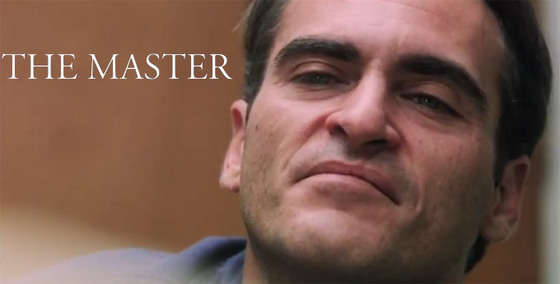
    This movie is directed by Paul Thomas Anderson, who masterfully made films such as “There Will be Blood” and “Magnolia”, the fastest four hours I have ever sat through. He is no doubt a fantastic talent, a producing-writing-directing type who has never made a bad movie, and has never succumbed to making popular entertainment. However, this one makes all his others look straight shooting and sensible, it’s bizarrely constructed plot blowing your mind from beginning to end. The movie starts with Joaquin Phoenix being bad in the Pacific during the tail end of WWII. We start to see his skewed habits as he drinks torpedo fuel, associates all Rorschach tests with sex, and goes off on rampages, drunk on paint thinner while he throws crystal and steals valuables. Joaquin Phoenix’s performance is incredible. His eyes and hunchback-like stance are intense. He channels insanity and is utterly magnetizing, belittling even a messianic Phillip Seymour Hoffman who plays an L. Ron Hubbard character called The Master. The Master creates a religion based on his commandments that he makes up as he goes. Processing is used to strip the human mind of its animal instincts. Sounds almost rational, right? Well Processing can also cure Leukemia, abolish the nuclear threat, and turn the world into a bunch of peace-loving, flower-showering hippies. However, at 137 minutes, this movie does over stay its welcome with too much mumbo jumbo about Processing. Joaquin Phoenix’s character also has a past that is almost too screwed up to be believable. His lousy life is shown in quick exhibition while the rest of the movie sags in the middle with its own weight and high concept. Scientology is not the subject of this film. It is mostly focused on Joaquin Phoenix, while The Master is only a character he runs into, not as important as he is built up to be. After the entire movie, you are thoroughly confused. The plot seems almost inconclusive, the ending just happens and although this movie is really good, it is not as traditional as I thought it would be which is a good thing. It does keep you thinking and talking about it for you a very long time. It also fills you with the unpleasant feeling that you are not smart enough to get what’s going on. I guess you could call it a little pretentious in the way it comes off but not every movie needs be easy to follow and quick to understand. This movie is good but not bad for the reasons I didn’t love it and still a movie you should see. If without merit, it is still beautiful in 70 mm that pops with color like a field of tulips.

  • by Kwesi (’15)

    I have a habit of taking notes. Not in class, when I’m supposed to, but when the people sitting in front of me are having a conversation or when the teacher has an emotional breakdown and starts crying in the middle of third period, and afterwards I’ll look down at my notebook and see lines of “I can’t take this anymore/Did you hear about what Kayla did over the weekend/Stop talking and listen! Learn to listen!”.

    And sometimes I don’t know where the notes come from. The other day, in English class, I found the phrase “What if we just drew bees” at the top of my otherwise empty paper.

    “What if we just drew bees?” What if we did? What if that was an integral part of our society, and that was the only way to record what we were like and what we thought? What if we had to decode the intricate political policies of the 17th century through haphazard doodles of bees?

    And through that ridiculous hypothetical question, the door to discussions of and reflections on our society and our normal is opened.

    Sometimes silly questions are the only way to address really serious subjects. Even when we are thinkers, intellectuals, we are still people wrapped up in our little world and our way of life. We can’t be entirely objective, and many times we don’t want to be. But as soon as you introduce drawing bees? It isn’t about us. And when it isn’t about us, we can look at “us” as a silly question, too.

  • by Maya (’15)

    Last year, I was part of SOTA’s Mock Trial team. In Mock Trial, a group of students put on a trial and argue on the defense or prosecution side. We are provided with case materials which include a pre-trial argument, witness statements, stipulations, a list of objections, and a fact situation. Each Mock Trial team has a prosecution and a defense side, and in the competitions, one side from each team goes against each other. My role last year was a witness, who gets to play a character and is asked questions regarding the case. I played a coroner, who autopsied the victim, and I got to talk about the knife wound, some fibers found on the victim’s body, and when and how she died (it was a murder trial). A lawyer on my side (the prosecution) made up questions to ask me to prove that the defendant was guilty, and I got to practice answering as my character. This exchange is called a direct examination. Another part of my role in the trial was being asked questions by the other team’s lawyer, which I didn’t know in advance. This is called a cross examination, and allowed for some improvisation, which is always exciting, and gave me a chance to show the judges that I knew my facts. Other parts of the trial include and opening and closing statement (on both sides), objections (which are made if the other team says something they’re not allowed to that you don’t like), and a pre-trial argument (which happens before the trial on one of the amendments, and decides if a certain fact gets into the actual trial or not).

    This may seem complicated, and it’s hard to explain, but I had a blast doing it last year. The whole team feels like a family, and it’s nice to have a community outside of Creative Writing. We have practices two times a week, and they are fun, informative, and interesting. I do not think I want to become a lawyer at any point, but I find it fascinating, and really enjoyed being a witness. When the time comes for competitions, the whole team has bonded. We put on a trial against different schools (one side of each team goes on one night), and are scored by actual lawyers. Last year, SOTA got 2nd in the city competition, which was a little disappointing, but totally worth it. Afterwards, all the teams get together and get awards, and I got the best witness in the city, which was an honor.

    Anyway, Mock Trial was and is really fun, and even if this doesn’t make you want to join (which it should), I hope it gives you an understanding of what the only team-sport at SOTA looks like.

  • As many of our readers probably know, Creative Writing became the first ever art department at SOTA to win Field Day more than once. It’s an honor, guys, and here are some words on it:

    By Mollie (’13)

    There are several misconceptions about the Creative Writing Department: that we spend our two hours of art discipline time only writing, that we rarely leave our room, and that the muscles of “CDubs”, as we’ve named ourselves, have atrophied from disuse. However, on Field Day the misconceptions of our department as dry, pasty, and un-athletic was destroyed as all members of our department consistently exceeded our resting heart rates, scoring point after point (albeit surprising point), finally earning the revered Field Day trophy. My favorite part of Field Day, however, is not the glory of winning. More than the great pleasure I get of smugly informing people of how Creative Writing, the smallest department in number and physical size of students, has now been Field Day champion twice, I enjoy the festival itself. Field day is a day for the eccentric and inherently SOTian student. On Field Day the different departments flamboyantly bathe themselves in their department colors: Creative Writing, yellow, Tech, green, Vocal, pink, and so on. During Field Day a sea of jubilant and raucous teens make their way to the field beside our school to celebrate our individuality. Where else will you find adolescent boys so willingly dressed in pink tutus and girls in grape-colored Teletubby outfits? Societal norms and restrictions seem to fall to the wayside at SOTA and rightly so. SOTA is filled with those who do not conform, artists as we’ve come to name ourselves. If San Francisco is a liberal bubble and artistic Mecca within the United States, SOTA is the same within the San Francisco Unified School District. As a senior, winning my last Field Day, I am ecstatic, but more so, I am pleased to go to a school where we can have this riotous event. During Field Day glitter, gloriously-costumed people, and music fill our field for a day, and we celebrate ourselves as artists.

    By Hazel (’13)

    I love my department. I can’t say that I tend to exhibit a great amount of enthusiasm or school spirit, but truly, if I were not at SOTA, in Creative Writing, I do not know where I’d be.

    Now, as I said: not a lot of school spirit. I doubt that that makes me an exception in a school of brooding teenage artist-types, but I believe it bears mentioning. At this point, I barely dress up for spirit week, I tend to avoid interaction (with pretty much anyone at school) whenever possible both because it terrifies me and does not hold great weight in my mind. But on Field Day, I found myself screaming and cheering while hardly aware of it, and when we tallied up our points (even before the winner was announced) I could not stand still for excitement. When our department was called up and presented with the trophy (or rather when we ran out onto the track and claimed it), I was leaping and celebrating with all the competitive types who made a point of practicing our pyramid until it could be done in less that five seconds. When people began gushing about their joy over winning back in room 202, I found myself nodding and smiling.

    In retrospect, I had to wonder why this meant so much (or really anything) to me. I have little interest in athletics (if you want to call Field Day “athletic”) and am distinctly uncomfortable with intense competition. Why did I care if we won or lost?

    I came to the conclusion that what I was so excited about was not the victory itself but our ability to win. As I said, my department has become an integral part of my life and I love everyone in it, even those I don’t know as well. It is a department full of interesting, kind, and talented people, both because those are the type of people admitted and because being around such wonderful humans tends to influence your opinions and behaviors in positive ways. I cared about winning Field Day both because I knew it would make others in the department happy and because it is further tangible proof that we are a bunch of innovative, in-synch, and miraculous kids (plus Heather and Isaiah, who I think deserve honorary child status).

    So I thank you all for being who you are. Creative Writing is perhaps the most close-knit department out there, and one of the few institutions I am comfortable referring to as my second family. You help me function and you make me my best. We kicked ass out there and I am so proud to stand beside you in that ridiculous color we call ours.

    As an afterthought, I sort of hope that no other departments read this blog. I feel like my excessive affection could be construed as elitist sentiments and casual gloating. This is not at all my intention. We’re just pretty cool.