CREATIVE WRITING

at the Ruth Asawa School of the Arts in San Francisco

Welcome! CW develops the art and craft of creative writing through instruction, collaboration, and respect. This blog showcases STUDENT WRITING and how to APPLY to Creative Writing.

  • Submission Anxiety. We all get it. We all deal with it. We all sit back in out chairs, look at the ceiling, take a breather, breathe in, breathe out, then start searching through the giant list of places to submit. We pick a few that seem promising–like they would be a good home for our writing, and click that dreaded submit button. Will they like it? Will they accept it? Will their rejection letter be as long-winded and purposefully inoffensive as the others? Then, we wait a few weeks or a few months, getting excited when we notice we have mail in our inbox before we realize that, no, it was just someone spamming everybody pictures of cats. Hurray.

    There’s no cure, unfortunately. But there are ways to make it easier.

    Check out the Yahoo! group CRWROPPS-B · Creative Writers Opportunities List

    and the website NewPages

    for opportunities for submissions.

    I promise. It will get better.

  • You Can’t Spell November without NaNoWriMo

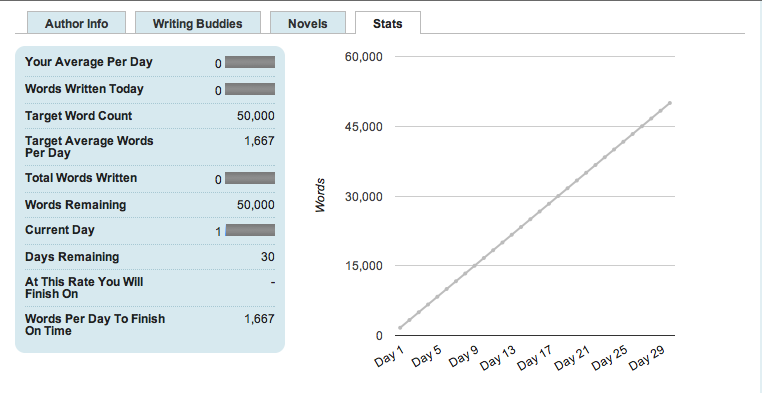
    That’s right, ladies and folks and collective bros, it is once again November, as in NaNoWriMo, the National Novel Writing Month, during which ladies and folks and collective bros across the map of our United States will be participating in a challenge to write a total of 50,000 words by the end of the month.

    Here is where we start: good old zero. As writers, CDubs are intimately familiar with the blank page, the emotionally abusive affair we all hold with the cursor icon, blinking in morse code why haven’t you written yet write you worthless numbskull write. But we always come back in the end, do we not? Writing– for me, at least– always seems to be the only option left, the last thing I have hope of doing well. So, better stick with it.

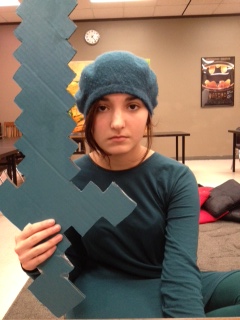
    The turtle got out again…

    And that’s where NaNoWriMo comes in. As Heather loves to say, the hardest part about writing is the physical act of writing, and participating in NaNoWriMo suspends you in this absurd, magical space where quantity trumps quality (though your ego probably would strive for both). As a participant from last year, I can honestly say that it is something to experience. Some hate the pressure of the deadline, and some, like myself, thrive under that pressure, eagerly updating our word counts every evening and hungrily watching the orange bar climb.

    So my advice? Give it a shot. There are different goals you can set for yourself depending on real life, and there is no penalty for quitting or not quite reaching where you wanted. It’s a great way to see your personality as a writer, and, well, since I’m going to be juggling this alongside all my classes, misery loves company.

  • This is an excellent opportunity for a FREE submission opportunity with cool prizes. Check it out:

    WHAT: Entries must have a California coastal or California marine theme (e.g. no tropical or Arctic settings or species — for help with California species, click here.) Poems and artwork must be student’s original work. If using a photo model taken by someone else, image must be significantly altered to avoid plagiarism. Art should be no larger than 11 inches by 17 inches. Acceptable art media are paint, pencil, markers, ink, crayon, chalk or pastel (fixed), and collage. Three-dimensional pieces, computer printouts, photography, or photocopies are not eligible in this contest. All entries must include a completed contestEntry Form.Winners will be selected in each of five grade-level categories (K-1st, 2nd-3rd, 4th-6th, 7th-9th, and 10th-12th) in both art and poetry to receive a gift certificate for $100 to an art supply store (for winners in art) or book store (for winners in poetry). Winners and honorable mentions will receive tickets to Aquarium of the Pacific, courtesy of the Aquarium. Each sponsoring teacher will receive a gift certificate for $50 for educational materials from Acorn Naturalists.
    WHEN: Entries must be postmarked by January 31, 2013.
    HOW: Review and complete the Guidelines and Entry Form and submit it with your art or poetry to:COASTAL ART AND POETRY CONTEST
    California Coastal Commission
    45 Fremont Street, Suite 2000
    San Francisco, CA 94105
    Students may have their work featured in California Coastal Commission materials and webpages. Students may enter multiple pieces. Artwork will only be returned if it is submitted with adequate postage and an address label for reuse of your original packaging (preferred) or a self-addressed, stamped envelope of the correct size. Entries that do not include these items at the time of submittal can not be returned. Poetry will not be returned. Winners and honorable mentions may be retained by the Commission for approximately one year for public exhibit.

    For more information, or to request to have an entry form emailed, mailed, or faxed to you, contact the California Coastal Commission at
    800-COAST-4U or coast4u@coastal.ca.gov.

    Alexa Sharpe, 12th grade, Torrance
    Honorable Mention in 2012
  • by Giorgia (’14)

    (Last year, when the class of ’14 were sophomores, CWI studied groups of Movements throughout history, and on top of writing responses to each Movement, reflected on each group’s causes, characteristics, and effects in the poetry of the modern world.)

    In creative writing I find we often have a very narrow view of poetry, accepting it only as one type of writing that conveys a very limited message using constrained images and form. While most of the poetry we read and discussed from our anthology last week are not poems that resonate on a personal level with me, I found that they greatly broadened my appreciation for poetry as a massive body of work with many genres inside, rather than one genre in itself.

    Especially with my group, the Vienna Group, I realized the incredibly fluid definition of poetry, and how tied it is to the language it is being written in and the language’s and region it is being written in’s dialects. One thing might resonate as the “truest” words ever written with one person and it might seem contrived and shallow to another. That said, one does not have to speak the language or be a part of the culture in which a poem was written for it to resonate. This ties to the essay we also read last week in which the woman being interviewed discussed the idea of a collective consciousness—of poetry from one place reaching deep into the heart of a person from another; African women who had been forced to run away from their villages under fear of death marveled at a white American woman’s ability to communicate their own experiences, but her poem was a response to an entirely different experience and image, and yet, poetry tied the two of them together unconsciously.

    This allows us to proceed to the idea of the “musilanguage” discussed in that same essay—the idea that there was a language of sounds charged with emotions that existed before the concept of structured spoken language we have today, and grammar. The idea that one can glean emotion and meaning from something even if they do not understand what it says or if it has no words is derived from this. I can connect these ideas to those found in visual art and classical and instrumental music, as well as other languages the audience or “experiencer” does not speak. For example, I attend capoeira and in the Rhoda we sing in Portuguese. I only understand a handful of words (mostly nouns) in Portuguese and yet I glean a particular meaning and resonance from these songs. Often when we discuss what they mean or their history, I will find my personal interpretations free from their literal, Portuguese-to-English translations will not be so different.

    In my own writing however, I have found that the schools of poetry we studied and the essay did not have a great effect. They have effected my thinking and the way in which I see and read (which I’m sure indirectly effect my writing), but I have found that Thomas Hardy, a poet I have always carried close, whom I have chosen for the Ponder-a-Poet project and have been reading him intensely and exclusively, is having a profound effect on my writing. In the poems I wrote over the weekend and workshopped, I saw the way in which his work has enhanced my voice and effected my word choice and image refinement, allowing me to communicate ideas with a precision I never have before. It is, quite frankly, remarkable, and makes me glad I chose Hardy rather than any of the other poets I have been considering. The simplicity of his verse cuts deep into one’s own personal sentiments (some one might not even be aware of) and traverse his era in an astonishing way. This way I have connected (and learned by heart) several of his poems although they were written in the late nineteenth century goes back to the idea from the interview of a collected consciousness. It makes me ponder even further the idea of the musilanguage and consider something even beyond that. People often say psychic energy connects people, that animals have it, etc. that we are linked through the mind in channels of emotion, and reading something, pausing, and thinking “How did they know?” just as the African woman asked of the white woman’s poem, demonstrates the fact that poetry is a basis of humanity, a language within a language that transverses what we identify as spoken word and encompasses both music and visual art and unifies us all, across culture, time, and place.

  • Bennington College Young Writers Competition

    Come on, C-Dubs, let’s show Bennington College what we are about.  Enter this national contest for young writers. Besides accolades and notoriety, there is a nice cash prize.  Hurry though, the deadline is November 1st, 2012.

    Click here for details:  bennington.edu

  • Scholastic Art & Writing Awards

    This is an important opportunity that can lead to college scholarships

    Scholastic Art & Writing Awards (California level) which is an affiliate of The Alliance for Young Artists and Writers (national level)
    Early Deadline: November 28, 2012 Individual Submission Fee* $5.00/Portfolio $10.00
    Final Deadline: December 13, 2012 Individual Submission Fee* $10.00/Portfolio $30.00

    Students in grades 7-12

    Eleven Writing Categories (dramatic script, flash fiction, humor, journalism, novel writing, poetry, personal essay/memoir, persuasive writing, science fiction/fantasy, short story, and a writing portfolio for graduating seniors only)

    Students who win at the regional level will be honored at an awards ceremony on February 7, 2013 at the Santa Clara Hyatt and Convention Center, and have their work showcased in publications and at local readings. They may then be advanced to the national level.

    Step 1: Register at www.artandwriting.org Read each category’s specific guidelines carefully. (The website is extremely dense and complicated to navigate, so I have put together a packet for both the creative writing and visual art departments). Students still need to register on this website.

    Step 2: Follow instructions to upload work (can also be send by US mail)

    Step 3: Send in required forms

    Step 4: Mail check (*50% fee reduction available to students who qualify for Free or Reduced Lunch Program)

    Please see Leslie Roberts in the College Center or go to www.artandwriting.org for more information

  • We just got confirmation that we’ll have a last-minute guest tomorrow during CW! Before he appears in an event at City Lights tomorrow night, the editor of The Paris Review, Lorin Stein, is going to come to our class to talk about his work as an editor, writer, and translator. He’s also somewhat of a literary celebrity in New York. This is a very special opportunity!

    Since its founding in 1953, the Paris Review has introduced some of the most important writers of the day. Adrienne Rich was first published in its pages, as were Philip Roth, V. S. Naipaul, Mona Simpson, Edward P. Jones, and Rick Moody. Selections from Samuel Beckett’s novel Molloy appeared in the fifth issue, one of his first publications in English. The magazine was also among the first to recognize the work of Jack Kerouac, with the publication of his short story, “The Mexican Girl,” in 1955.

    Other milestones of contemporary literature, now widely anthologized, also first made their appearance in The Paris Review: Italo Calvino’s Last Comes the Raven, Philip Roth’s Goodbye Columbus, Donald Barthelme’s Alice, Jim Carroll’s Basketball Diaries, Peter Matthiessen’s Far Tortuga, Jeffrey Eugenides’s Virgin Suicides, and Jonathan Franzen’s The Corrections.

    Lorin Stein is only the 3rd editor of the Review in its 50+ years of its existence. Mr. Stein is also a critic and translator, and before editing the Review, he was an editor at one of the most preeminent literary publishing houses, Farrar, Straus & Giroux (FSG). While at FSG, Stein made his name finding and editing the work of such authors as Elif Batuman, Lydia Davis, Jeffrey Eugenides, Jonathan Franzen, Denis Johnson, Sam Lipsyte, Richard Price and James Wood. He also worked on FSG’s recent translations of fiction by Roberto Bolaño and is the translator from the French of “The Mystery Guest” by Gregoire Bouillier.

    Books edited by Stein have received the National Book Award, the Pulitzer Prize, the Los Angeles Times Book Prize, the Believer Book Award, and the National Book Critics Circle Award.[2]

    His reviews of fiction and poetry and his translations from French have appeared in The New York Review of Books, Harper’s, The London Review of Books, The New Republic, n+1, and the Salon Guide to Contemporary Fiction.

  • by Justus (’15)

    PPA has been going for several weeks now. We have workshopped several of each other’s poems, shared our favorite poems, consumed large quantities of delicious coffee together, and probably thoroughly confused passerby who happened to look over to see a group of teenagers sitting under a large umbrella in a public parklet drinking from rather large coffee cups and thoughtfully annotating poetry. We have even acquired a mascot, Rufus the Blank Book (each day one of Rufus’s pages is stained with coffee and some small note for us to remember that session by).

    There is, however, the problem that we need more members.

    Aside from the founders of the club, no one person has come to more than two PPA sessions. If you are interested, or know anyone who is interested, or know someone who knows someone who’s cousin might be interested, remember:

    Outside room 202. After school. Tuesdays, Wednesdays, and Thursdays. Rufus longs for your presence.

  •  

    Dear Department:

    I was so proud of you all last night!

    Our emphasis on community clearly makes us comfortable and confident working with each other. This reading performance was our most collaborative to date and sets a precedent for our fall shows. There was a real exchange of ideas as we all worked together and the results were much richer for it.

    Our department has always had particular traits that characterized who we are and I have discovered that a collective sense of humor is one of them. For one thing, we all work smart. Our skits were funny because they were witty–language is always at the center.

    I was struck by how your individual pieces revealed distinct voices that spoke to those things that really matter to you. This reading performance had a strong feminist current and there was such power in it! Many people told me how impressed they were with the intelligence, humor, and strength of the show. A particularly lovely, rather elegant older woman told me that she had long wanted to shave her head and that Hosanna had inspired her to finally do so.

    The successful incorporation of other arts and the effort put into the  staging and pacing created the most professional show to date. We owe this professionalism to Tony, Carol, and Rachel, whose own varied arts backgrounds were an enormous contribution–as were Isaiah’s poster, flier, and program design. Many people made a point of telling me it was their favorite CW show to date–including our principal, who was sitting behind me. I will add that this was the first rehearsal week where no one asked to leave early: everyone was completely engaged with the reading as a whole, rather than his or her specific part in it.

    I had planned for us to begin our fiction unit Monday, but I have decided we deserve a down day to talk about the show and enjoy our success. I also want for us to begin talking about our upcoming performances. We did a number of things right this time and have learned where we can do even do.

    “The Nature of Offense” made the most money we have ever made on a CW performance. As many of you know, the theater holds 350 seats. After we filled them, Kwapy and the techies quickly retrieved forty more chairs to accommodate the over-sale. Tech, by the way, was AWESOME and we are going to go upstairs on Monday and thank them in person. We also are in debt to photographer Heidi Alletzhauser for her professional support. We should be seeing her photos up on our blogsite soon! (Photos from the show can be found here.)

    Our Creative Writing Department also includes our parents. We are all completely invested in our community and it shows. Karen Saux and Julie Glantz worked nonstop on our show. Susan Williams and others posted fliers in their neighborhoods. Esther Honda, Jeanette Given, and Sue Weaver provided meals and snacks. Kevin Mogg was our trusty pizza guy and Gary Mankin once again supplied his sound expertise. Nancy Allegria printed the programs. Many wonderful parents supplied the front-of-house support without which we could not have a performance (unless the show was titled “The Nature of Anarchy”).

    In the past four-and-a-half weeks CW has won Field Day, had a terrific Kirby Cove trip, and has just completed its highest-grossing and possibly best show to date. And the Giants are in the League Championships! All this and it’s only mid-October!

    Keep on trucking! (I can’t believe I just wrote that.)

    Love,
    Heather

  • Two weeks ago, the Creative Writers gathered to decide on a theme for our first show of the year. A lot of our ideas had in common—from the Pussy Riot in Russia to the ban on ethnic studies classes in Arizona—the occurrences of censorship happening around the world. Of course this would be the case. As artists, there’s nothing more important than self-expression. What happens when that freedom is taken away from us?

    Thus, The Nature of Offense. Thematically, we talked of Banned Books, Censored People, Evolving Terminology of “offensive” objects to mitigate the offense; to bring it closer to home, we also thought about Censoring Poetry, a bit of Audience Participation during the show to open up the circle of discussion towards the ultimate question: What Offends Us?

    We are going all out for this show, with three spectacular Artists in Residence, Tony, Carol, and Rachel each taking a separate element of performance: Tony at the helm of our collective ship, Carol working with our body movements, and Rachel incorporating multi-media aspects to further enhance each CDub’s reading. On Friday, each CDub auditioned the pieces he or she would like to read, and like always, we have a spectacular range– from poetry to prose, long to short, serious to light-hearted, and those are only the more exterior aspects. Special shout-out goes to Jules Cunningham, who has yet to fail in delivering a performance piece utterly different from the “norm.” He won’t fall short this time, either, and we are eager to welcome Dorian Cunningham as a special guest star in Jules’s piece.

    Join us this week for a Behind-the-Scenes look at our rehearsal process, all leading up to Friday, October 12th at 7:30, for Creative Writing’s undoubtedly sensational show, The Nature of Offense.