CREATIVE WRITING

at the Ruth Asawa School of the Arts in San Francisco

Welcome! CW develops the art and craft of creative writing through instruction, collaboration, and respect. This blog showcases STUDENT WRITING and how to APPLY to Creative Writing.

  • by Olivia A. (’14)

    When I consider the large number of things in this world that I adamantly avoid (pre-calculus, prolonged eye contact, hair braiding, logarithms, shaving, calligraphy, the ACT, etc.), knitting is the final, impassable frontier. I can’t knit. I won’t knit. I will never knit.

    This has been a difficult truth to come to ever since I was young, annoying, and extremely impressionable. I knit a hat once to appease curiosity for my mother, though it’s the only thing I’ll ever knit (I call it my clown barf hat for a reason). I know I can knit, and that I should want to knit. I’ve been raised around sheep and textile artists (a culture of surrogate grandmothers wearing hand-knit socks with sandals, discussing sustainable organic cotton, mushrooms, and menopause), so I have no real excuse for not knitting—I have the skills, the tutors, and the frighteningly large quantities of yarn. I just won’t do it, and I’m accepting that now because I know from experience that knitting makes my brain explode.

    But it’s okay, I don’t have to do it. I think by this point my mother and her friends have accepted the loss. They’ve given me mohair locks to make rainbow leg warmers and listened to the long-winded explanations behind my felted cell diagrams that look like pea pods and ham. I try to make crafts that I want to make, do the art I want to do, and spend my free time how I want to spend it. What would be the point of it otherwise?

  • By Rebecca Straznickas  (’12)

    When I was thirteen years old, I was accepted into a relatively prestigious program where for two hours every day I would be part of a community, full of people kind of like me. These people loved to write, and any personalities that followed that love had to be good. Socially inept and fully hoodied, I entered room 202 terrified that everyone inside would recognize I did not belong and would write me off as unworthy and pathetic. I sat down and prepared to prove–to Heather, to all those intimidating upperclassmen, to myself–that I deserved to be there, and that I had something to offer this community.

    I’m not going to lie and say that by the second week of freshman year I had blossomed into some wonderfully well-adjusted woman of the world or anything. I did, however, feel accepted, and that was a good start. That year saw my writing develop more quickly than it ever had, saw me perform that writing in front of actual audiences, saw me teach sixth-graders at Hoover Middle School how to write for themselves. It saw me on the start of four of the best years of my life.

    I’m home for winter break now, after my first semester at college. I’ve been reading (and I mean, reading) through the building blocks of western literature, learning Ancient Greek, exploring the roots of geometry, singing Dorian chants, even dissecting cats. Most of this work has been done through discussion with my instructors and classmates, and I can tell you right now that nothing could have prepared me more thoroughly than my time in Creative Writing. Creative Writing is all about writing, of course–but it’s really about working with others, collaborating and accepting help from peers, talking through ideas and even emotions. Being a C-dub is like preparing yourself for living in the real world, where isolating yourself will only get you so far.

    And in case you were wondering which college I attend, it’s St. John’s College (no religious affiliation implied), and I would strongly encourage anyone interested in Creative Writing to at least take a look at the school. I’m looking at you, Abigail.

    In short, my life has been permanently marked–in a beautiful way–by Creative Writing, and I bet that goes for most of the department’s alumni. The future looks good for the current C-dubs, what with the mental and emotional training they’re getting. For anyone hoping to become a C-dub themselves, please apply, take that interview, and if you don’t get in, try again. This community isn’t for everyone, but if you feel drawn to it, why not give it a chance? It can only change your life forever.

  • Mapping Your Stories

    by Avi (’15)

    Ever wonder where your characters live? Where they walk their dog? What their neighborhood is like? Who their neighbors are?

    A sense of place makes a story believable. Setting is immensely important; where a character lives greatly influences their actions and thoughts. I like to visualize the town where my characters are raised and where the characters live. I find it important to know where they go and get coffee on a rainy day.  Even if I don’t blatantly say, “Jake got coffee at Mary’s Marvelous Cafe on 4th Blvd.,”  in the story, knowing what coffee shop they go to and where it is help ground the story.

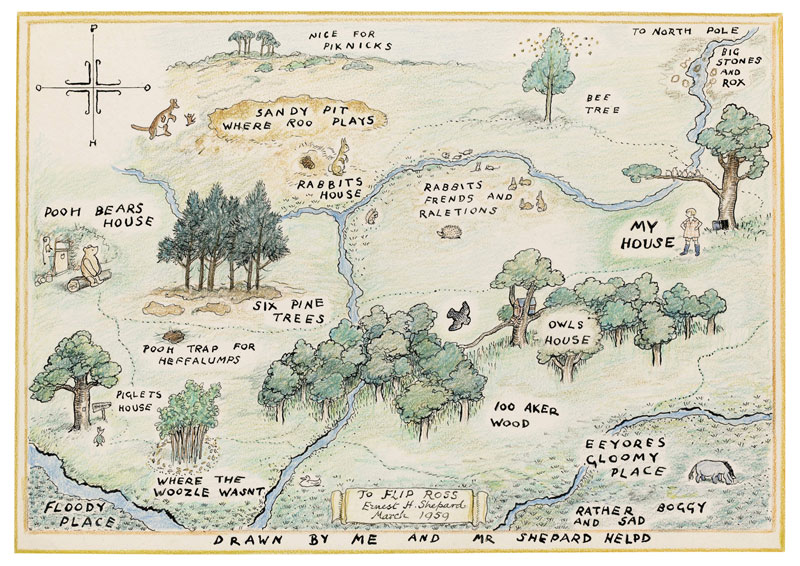
    one map everyone's familiar withTo know where my characters live, I draw maps. A character who lives out in the suburbs in a townhouse is going to have a different outlook than the person living in the condo above their workplace. Even if you don’t go into your character’s daily life in your story– like their job, knowing how they get to work, where they work, where they live– understanding their life helps to develop them as a person. What does it say about a character who lives right above where they work? What does it say about a character who commutes 3 hours to get to work? Where your character lives helps you to understand why they live there, what they feel about where they live, and how where they live radiates into their personality. Where a character lives says a lot about who they are. For the next story you write, try mapping out the city and town in which they live/work/play, as well as where the story takes place.  If your story is set out in the country, and your character lives in the city, how does that affect them? Mapping your story will create a more realistic world for you and your reader.

  • Had This Been a Workplace, It Would’ve Qualified As Hostile
    They make stock photos out of these things?
    They make stock photos out of these things?

    Lately has been disgustingly claustrophobic– in the one room in the big house grandma keeps building rooms in, this is the only space I can stay comfortable in, and it has a draft. Venturing out means repeating the same conversation with grandpa every time he sees me (“Have you eaten yet?” “Yes grandpa,” even when it’s four in the afternoon), means tense silences with grandma or her criticisms at my disrespect (because she doesn’t know where I got my mind from, a mind to disobey, when she’s long-since schooled her son to be silent and stoic and just this side of slow). It means going to mother’s room and having fun joking around for a couple of hours then being disappointed at because I had left something in the room and she didn’t like me intruding on her space (she’s only got the one room, also).

    I have a space, cramped with stuff and used from corner to corner, but I can breathe in it. It’s just that sometimes, it got a bit cold, that’s all.

  • by Bailey (’15)

    1. Sheep. Ever since I was very small, since before I could even talk I have been terrified of sheep. So terrified of sheep that I vividly remember my mother trying to put me into a dress with a fuzzy appliqué sheep on it and screaming hysterically and not being able to articulate that the sheep was really REALLY scary. I don’t know why I have always found sheep so terrifying. They are what sweaters are made of so they can’t be all bad, right?

    2. Rabbits. When I was very small I was very scared that I was a rabbit. I have always had a hard time separating dreams and my imagination from reality and I was always so scared that I would not be able to tell when I was dreaming and when I wasn’t. (Maybe that’s why I understood Inception so well, because it is one of my biggest fears.) The way I communicated this fear to my mother was waking her up around midnight sobbing “Mommy what if I’m a rabbit and everything is a dream?”
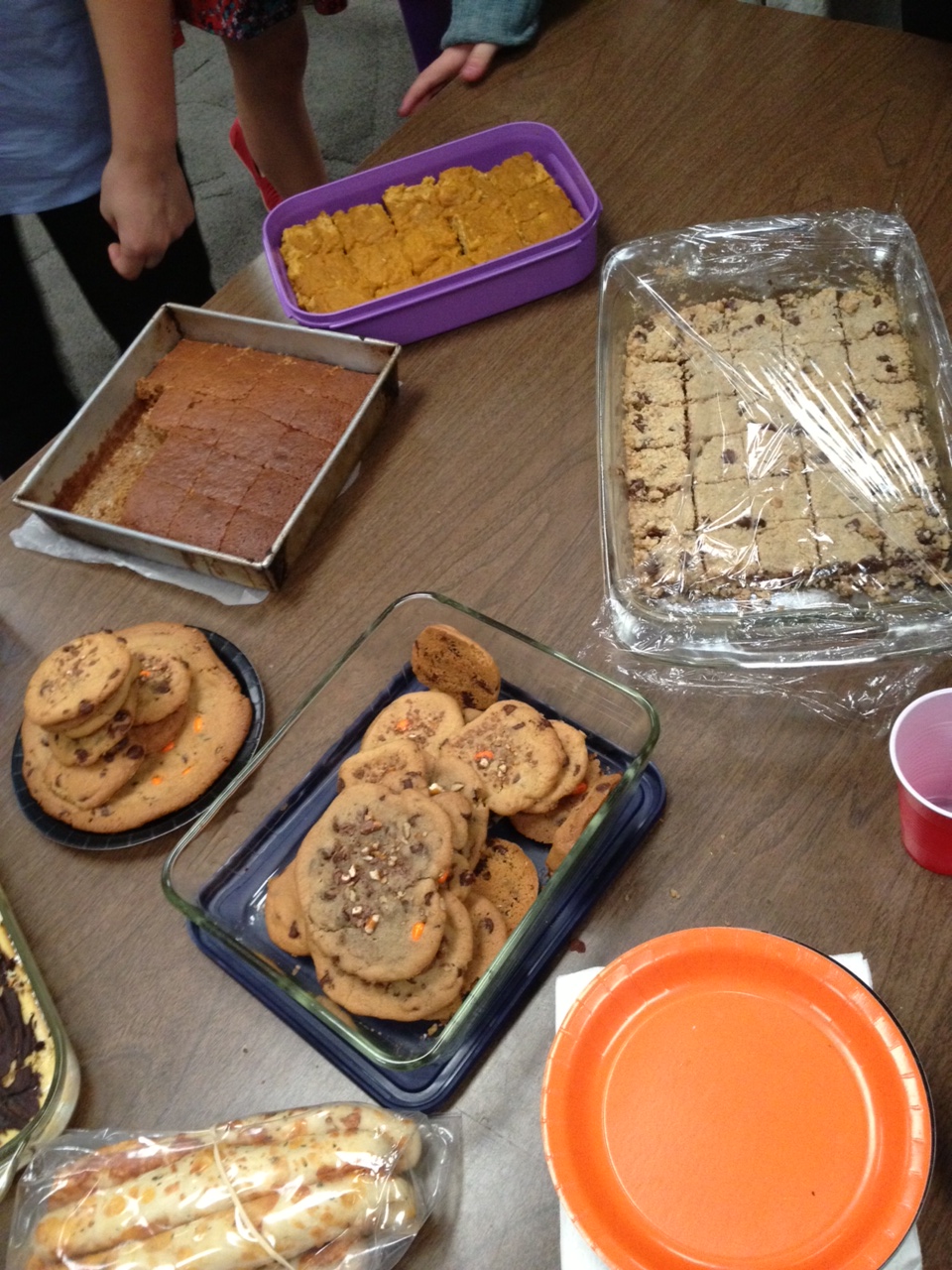
  • In Creative Writing, we have developed a system for knowing when things are going to happen. One of the sure signs of when weird things are about to go down is when you receive an email from Heather stating: “So tomorrow is our First Annual Creative Writing Pre-Thanksgiving Weird Buffet.”

    What exactly is a weird buffet, you ask? It is anything, and it is everything. It is innovation and love, food and mouths pushed to the limits. The weird buffet is where the tic-tac cookie was born. That’s right: a cookie with tic-tacs in it. The weird buffet is the bosom from which is born creativity and life and curiosity.

    “What if I put tic-tacs in these. . .”Image

  • Image

    Do you like bacon? sausage? All You Can Eat Pancakes? A chance to run into one of our amazing Creative Writing students? Then you should come this Sunday (or the next) to Sweet Inspiration Cafe in order to participate in SOTA’s Pancake Breakfast!

    This coming Sundays, December 9, and the Sunday after it (the 16th), there will be an All You Can Eat Breakfeast Buffet event to support the Artists-In-Residence program at SOTA. The events will take place from 8′ o’clock am to 12 o’clock noon, and it looks as if it is going to be a great time for all. There will even be students performing for the event!

    Location:

    Sweet Inspiration
    2239 Market Street
    between 16th & Sanchez

  • Help I Have No Writer Juice

    by Noa (’16)

    If you’re anything like me, you may come across a point in your life when you find yourself staring at a blank document or notebook page or Textedit (your free Word trial ran out), with an assignment due tomorrow and absolutely no idea what to write about.

    We should all just move to Canada.
    “…you should probably quit and just move to Canada…”

    You probably feel a bit drained, as if your supply of writer juice has magically evaporated into thin air and all that is left is a crumpled little shell of a person, banging your head against your desk in frustration and hating your brain and hating everything, especially other writers who probably have loads of writer juice stocked in the shelves of their brain while you don’t and it’s unfair and life is unfair and you should probably quit and just move to Canada because it’s only going to go downhill from here. Unfortunately, science has not yet discovered a cure for such thoughts, although there are a few websites that I have stumbled across on the internet (while procrastinating from said writing assignments), that I’ve found very useful:  

    http://oneword.com/ gives you a one-word writing prompt and sixty seconds to type down any ideas that pop into your brain. It’s awesome because it’s much less intimidating than staring at a blank document— you don’t have to worry about if what you’re writing is good or bad (you only have a minute, after all.) Also, once you’re done writing, your work can be published (don’t worry, you can do it anonymously, or you can use your real name) and you get to look at what other people have written too. There are all types of people on the site, some experienced and others not so much, and their writing alone may be enough to spark a little bit of inspiration.

    http://thestorystarter.com/ generates a random sentence for you to start your story with, and it’s (probably) not cheating because the sentence is generated randomly, so technically (maybe) it’s not plagiarism. Okay, I wouldn’t recommend copying the sentence word for word, but it’s definitely a great source for inspiration, and a lot of the sentences are weird enough to come up with some awesome plot ideas.

    And remember, “Perfectionism is the voice of the oppressor, the enemy of the people. It will keep you cramped and insane your whole life… Besides, perfectionism will ruin your writing, blocking inventiveness and playfulness and life force (these are words we are allowed to use in California).”- Anne Lamott

    “Almost all good writing begins with terrible first efforts. You need to start somewhere. Start by getting something—anything—down on paper. A friend of mine says that the first draft is the down draft—you just get it down. The second draft is the up draft—you fix it up.”- Anne Lamott

    Every writer's worst nightmare
  • Congratulations to Maya Litauer (’15), who is being published in Assisi: An Online Journal of Arts & Letters. Look out for her poem  “The Peach Fuzz Above Her Lip” in their 2012 Fall issue. Congrats!

  • We here at SOTA, and especially we here at the prideful department of Creative Writing are proud of what we do, inside and outside of school. We also like to show off when our alumni do newsworthy things. A little secret: we’re kind of narcissists. But that’s okay.

    Notable C-Dub alum, Sayre Quevedo, was mentioned in a recent news article celebrating the Youth Radio winning the 2012 National Arts and Humanities Youth Program Award from the President’s Committee on the Arts and Humanities. Michelle Obama presented the award to Youth Radio at the white house.  Sayre is now a (paid) intern with Youth Radio and has been working with them since his days as a student in Creative Writing.

    Congrats to all participants in Youth Radio!