CREATIVE WRITING

at the Ruth Asawa School of the Arts in San Francisco

Welcome! CW develops the art and craft of creative writing through instruction, collaboration, and respect. This blog showcases STUDENT WRITING and how to APPLY to Creative Writing.

  • Lately, I have been thoroughly enjoying playing with form in poetry. Our current six-week unit, poetry, has enabled me to freely experiment with the shape of the work I produce. We were recently instructed to write a piece about a vehicle of our choosing. The form of our work must correlate with the vehicle of choice. My poem describes a funicular’s ascent to the summit of a mountain. I wrote twelve rhyming couplets and placed them to depict the steady upward direction in which it travels.

    Take one last breath of sea-level air
    I promise you will need it to stay aware

    Place a cautious foot on wooden planks
    now is the time to give your thanks

    Don’t look down, please just trust me this time
    we are only beginning this climb

    Once doors close there is no turning back
    zone out to the rhythmic click and clack

    Snow covered meadows glisten to your left
    heartbeats seem absurdly fast, are you stressed?

    Why do your clever eyes appear forlorn
    for you should not be feeling such scorn

    This is a once-in- a-lifetime experience
    do not furrow your brows and appear so furious

    Atop the summit, you may sigh
    but to the village below, wave goodbye

    Hold in your nausea for one more second
    the end of the track is nearing, I recon

    Look! We made it to the mountain top
    wait to get off, your pulse will surely stop

    Go on, take a step through the door
    I cannot wait to dash off and explore

    Emptying its riders atop the peak
    trusty funiculars prove not weak

    Sequoia Hack, class of 2021

  • I had heard the phrase “Creative Writing One and Creative Writing Two” tossed around before, so when Heather brought it up at the beginning of class I wasn’t completely surprised. But being a freshman, I had no idea what it meant. It turns out, midway through the semester the underclassmen and upperclassmen separate into two different Creative Writing I and Creative Writing II. An artist in residence works with the upperclassman while the underclassmen are taught by Heather herself. Right now we’re focusing on poetry.

    I was surprised at how few people were in each group. Creative Writing Literary Arts has twenty-nine people in total, but it seems like twice as much when we are all together. So when we are split up, it’s quiet (which is good because we are working on poetry), and there’s more flexibility in what we’re doing than there was before. I really like poetry, I like writing it and reading it, and having over two hours to focus on it, is really fun and interesting. But the best part about smaller groups and working on poetry, is the fact that I get to share.

    Everyday when we start class, we push the tables in and settle in our seats, then whip out last night’s homework. And those who want to share raise their hands, and they do share, and we discuss it afterward. It lets me know what I did right, and what could be better. I now know how to properly analyze and read poems, and I have a better general understanding of language because of it. I also feel closer to my classmates, because we have shared our raw work with each other.  I am excited by this change, but even more excited by the prospect of graduating to Creative Writing II.

  • Finally, after a great and laborious four years, rife with chronic sleep deprivation, emotional turmoil, and the purchase of thousands upon thousands of pens that were immediately lost—either at the bottom of my backpack, my room floor, or to the grimy hands of my classmates, I, Harmony Sweetwater Johnson-Wicker have made it to senior year.

    Feel free to applaud. It’s been amazing to be able to chant “last year here!” in the halls with your friends and to terrorize freshmen, however, while I have the finish line just in sight, there is this scary thing called college applications that is casting a shadow over my joy(que ominous thunderclap).

    Along with college applications comes the terrifying personal statement. The personal statement is a dangerous beast that resists all efforts to be tamed through tireless efforts. It’s an odd creature, really, consisting of the egotistical words of self praise depicting how, “last summer I saved a group of drowning children and the ruler of the universe awarded me with the honor of being the most valuable human being ever born, and therefore you should accept me, me, ME into your college for a low price of fifty-thousand dollars a year, free of shipping and handling to which I will so generously pay.” As a senior, you are expected to master the art of highlight your best qualities without making it seem blatantly obvious. In a way, one takes on the appearance of packaged meat— all organic, free range, non-GMO, and SAT scores above 1200. And honestly, this has all become increasingly terrifying.

    I am constantly trying to think of what makes me such an indispensable commodity that is absolutely necessary in the greater context of the world around us. Recently, in Creative Writing, a former CW student taught a week- long unit. During her unit, she had us write artist statements. These pieces functioned as an in-depth exploration of why we write. Afterwards, we shared our responses, and I was truly impressed by how no one’s work sounded alike. Viewing the exercise through the lens of being a senior and having to produce personal statements, I realized how beautiful it was that we were able to tell such a diverse range of stories that demonstrated how we use our writing to process and understand our own beliefs, our school, and the environment we all live in. The experience simultaneously made me feel so small, because I realized that I am just a single piece of an ever- expanding puzzle and yet, at the same time, it too made me feel so large because my own puzzle piece, along with everyone else, is so uniquely shaped and colored..

    And while the personal statement still remains an odd creature (and remains to be written), working on artist statements has overall helped me approach my own story in a more forgiving manner and, unexpectedly, has made me wonder about how many statements have gone unheard and are just waiting to leap into the quilt made up of our species history.

    Harmony Wicker, class of 2020

  • With the onset of winter, the Literary Arts department has begun poetry, so for the past week Creative Writing 1 has been writing and analyzing poems daily. I have been enjoying the simplicity of theses exercises. Every afternoon I arrive for Creative Writing, and settle into the warm room for our careful analysis of a variety of styles of poetry.

    I’ve been hearing poetry for most of my life. My father would read me William Carlos Williams poems as bedtime stories, and I can still remember him telling me how Williams’s simple but precise language was what made each poems melodious and refreshing. Now, being able to discuss poetry with friends has been insightful as well as enjoyable. Reading poetry is also crucial for writing poetry. It’s hard to improve one’s own work without reading masterful examples to learn the craft. My personal favorite poem of the week was “An Atlas of the Difficult World” by Adrienne Rich, a freeform piece with the refrain “I know you are reading this poem,” that creates a comforting feel, assuring both the reader and writer that they are not alone in their appreciation for poetry. Imagery also creates pockets of worlds, familiar and unfamiliar.   

    For homework each night, we write a poem. Monday night was emerging from a blank screen and noticing the space around ourselves, Tuesday a blessing, Wednesday an invitation and Thursday an aubade (a poem about dawn and the morning). Though before joining the department I wrote poems fairly frequently, I have found formalizing the ritual and having a prompt as well as editing to be relaxing and informative. Most days there is an opportunity to share these prompts, and reading my work aloud for my classmates, while nerve racking was encouraging. We discuss everyone’s piece, which gives room for feedback. For me, sharing is definitely a stretch out of my comfort zone, but is also a positive and informative experience. I don’t know what to expect for the next five weeks of poetry, but I’m excited to continue to grow as a writer and make connections with the people in the department.

    Hannah Duane, class of 2021

  • On October 24th Creative Writing welcomed in Sam Hamm for a mini-unit on Humor. We began each of our classes that week with a ditzy episode of Looney Tunes, which was then followed by a discussion on an entertaining work of writing that we had been assigned to read the night before. Parodies of the famed Romeo and Juliet balcony scene and an amusing telling of an anecdote were some of the pleasant homework assignments we were given. Mister Sam Hamm recalled a memory for the class when a companion of his questioned whether or not an equation to make something funny is existent; which leaves me to wonder, what makes something funny?

    Clearly, what is funny to me is not necessarily funny to you, and this comes from an individual’s ability to personally connect to the joke. Perhaps the things that manage to get laughs from the majority of the human race include an irresistible puppy chasing it’s tale or an adorable babe doing something silly in all their cluelessness. Also, in order to understand the humor of a joke you must be informed what it is about; would someone who is unaware of Donald Trump be able to decipher why SNL’s skits on his mediocre management skills crack people up?

    When it came down to writing humor we were guided to write what we find funny. For the parody of the romanticized loved story of Romeo and Juliet I wrote Romeo’s part to fit the persona almost exactly replicating one of a hoodlum. I got much of my inspiration from what I could find on Social Media, what had been posted was never intended to make someone laugh, in fact it was meant to be taken quite seriously. Although, I am not sure how someone could take a dopey rant about taquerias as profound.

    What I have the most fondness for are inside jokes between my friends and me. Usually in the middle of the workday I will be sitting alongside my comrades, one of which will say something, innocently reminding me of what I share with my dearest friend, and will then prompt me to laugh seemingly unnecessarily. Although it is not a grand conclusion, I now grandly conclude that what results in our stomachs aching from laughter comes from a firsthand empathetic effect that jokes have as they poke fun at something we love or hate.   

    Luna Alcorcha, class of 2021

  • A Parody by Liam Miyar-Mullan

    I wrote this because we in creative writing were learning about parodies in a Humor unit taught by Sam Hamm. I think it is especially for those who know the geography of the West Portal area well. It is inspired by the neighborhood’s blandness and simplicity:

    A (West Portal) Parody of the Romeo and Juliet Balcony Scene

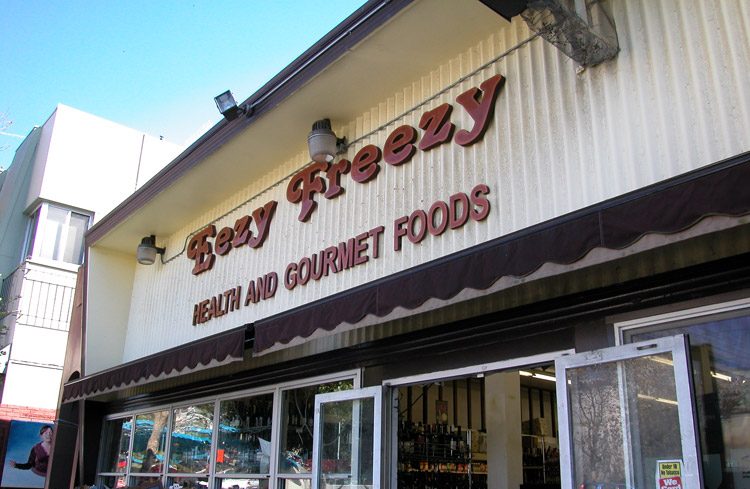
    O dearest Juliet is it you that comes wrapping down that Chase-bank stairwell: that runs off the wide Portola highway like snow off of a hill. Yes, that is what I thought when I once again found myself upon the metal rump outside Eezy Freezy, where I have rested many times and waited for my Juliet. Outside the Italian restaurant and outside the Church. Waiting, waiting: thinking of the train station and of Trains and Rails, drinking a cold rock-shandy, praying to God by the old Scottish Rite: waiting for my Juliet to come down that familiar Chase-bank stairwell. For when she does she’ll be standing by the Rite and I’ll be subsided into the banks of the forest. She will call my name like she has done many-times-before, and I, as I most-normally do, will calmly and affectionately say her’s: Juliet. That is what I will say. I will say how was the Chase-bank stairwell and the hot metal rump outside Eezy Freezy, and how do you think of the whiteness of the Rite in the hot sun. O for the trains are constantly passing through that area, sending large vibrations and stutters across the streets and fields and into the trees. And from some Boughs I’ll sing as in the good song: Their’s is a land of Hope and Glory, and mine is the Green fields and the Factory floors.

    Liam Miyar-Mullan, class of 2018

  • When introducing myself to someone for the first time, I often find myself describing myself first as a high school junior. This, by default, means that I have completed ten whole years of grade level academics and am working on my eleventh. I am now sixteen years old, and, if you count Pre-K, I have been involved in some sort of schooling for exactly three quarters of my life. Recently, I have been thinking about how my high school experience has culminated. As a newly minted upperclassman, I have been able to review the past few years with all the wisdom of a middle aged parent.

    I remember freshman year as being in a constant state of confusion. My fourteen year old self was still reeling from the whirlwind that had been my middle school experience that everything was the biggest deal in the world to me. I was anxious about how I came off to my peers and unsure how I would strive in both my academics and art. By sophomore year, I had sunken to such lows that I feared I would never claw my way out. This was when I encountered a phenomenon known to the public as the Sophomore Slump, which is self-explanatory. I was morose at the idea of not even being halfway through high school and was unsure what the point of the content I was learning was.

    Now, I am nearing the end of my third month in the eleventh grade, a little less than thirty percent done with my junior year. I can no longer say that I am confused or unmotivated, as I have been here too long to be confused and the threat of colleges lingering over my GPA is enough to get me out of bed to do work past midnight. No, the only way I can describe myself is tired. I am tired of waking up at half past five to get myself to school on time, and I am tired of being awake until the early morning. I am tired of my caffeine dependency. I am tired of biting my nails, waiting to feel important and having stress dreams in which the grade book on Synergy has me marked down for assignments that don’t exist.

    I am so hungry to learn, and I am too exhausted to fill my plate.

    Charlotte Pocock, class of 2019

  • San Francisco Art & Film for Teenagers holds a weekly showing of a film at the picturesque SF Art Institute. The hike up the hill to the building is the ultimate test of faith, but makes for a great view. Prior to the film, you can watch the sun setting over the tourist district or look for stray cats under the bushes in the courtyard. There is always sparking water to sip as the lights go down in the theater, and an oatmeal cookie. The movie is paired with an animated short–often Looney Tunes, which aptly sets the stage for the war film or deep inspection of our human experience that follows. You are instructed to spend five minutes, not a moment less, meeting your fellow moviegoers.

    The great joy of Cine Club is that I will see movies there that I would not see otherwise, in different languages, set in the past and even the future. Many of the high-budget blockbusters in the American theaters of today are limited to one perspective. The movies shown at Cine Club are more than drawn-out plot progression and attractive CGI action scenes. They demonstrate powers of cinematography, well-written dialogue (or lack thereof… some of the films are more silent than not) and immaculate design. They do not lean on the guarantee of a happily-ever-after conclusion. These are films recognized as classics, critical to an education in media. Sitting in that theater, I have learned more about movies and about life than in any class.

    Attending Cine Club is an assignment for Creative Writing, but once I sit down and torture the little tables on the armrests into a horizontal position, I can’t help but feel content. I am surrounded by people who aren’t just there to see a movie, but to find some kind of meaning in art. And later, while churning out a reflection on the movie I have seen, I feel that contentment again.

    Rae Dox Kim, class of 2020

  • I suppose it is customary for there to be one blog post about the show each year, and this is it. Simply, the Creative Writing Department here at The School of the Arts puts on two shows a year: a cumulative performance in Autumn and a playwriting show in Spring. Although the cumulative performance is at the beginning of the year, it is a place for students to showcase their best work. In this case, the upperclassmen have the upper hand as they have endless amounts of work to choose from, whereas the freshmen have about three pieces. We workshop tirelessly for a week, memorize, and then endure a grueling rehearsal week. I have found this process rewarding both times; it was satisfying to see it all come together.

    This year’s show, titled “Metamorphosis,” was quite a change for the Creative Writing Department as it was our first show in collaboration with our new pathway, Spoken Word. None of us knew what to expect, having a show with over forty performers, a new teacher, and a group of students that we had hardly interacted with beforehand.

    On the first day of rehearsal week, Creative Writing as a whole crammed into the Literary Arts room like elephants in a closet. It was our first time coming together to work toward a common goal and I looked forward to see what was in store for the coming week. The days of rehearsal week blended together: we started with a warm-up each day, then split up for the next few hours while the first act of the show ran. I was one of the last people to go on, so I found myself staying until seven or later each night. In contrast to the chaos of the afternoon, the nights in the theater were relaxing. Few tech students remained, and only a handful of Creative Writers.

    Colored lights danced across the stage almost hypnotically and one night, I even found myself drifting off backstage as the ocean-themed pieces were read. During those nights I stayed late in the theater I wished more than anything to leave, but, looking back, I realize this was the most meditative time of my week.

    Rehearsal week truly was an important experience. Not only did it cause me to become more familiar with my own work and hear the voices of my peers, it was a time for me to grow friendlier with my classmates of both my pathway and Spoken Word. The range was remarkable. I heard everything from pieces about the Queen of Landfill to those about self-image and discrimination. There were pieces about anxiety, shape-shifting, and a skit following a girl trying to come into herself as an alien. The audience responded with wild enthusiasm and backstage we cheered silently for each other.

    The experience of the show made me appreciate the beauty in having two pathways; Spoken Word gave me an entirely new perspective into how broad the term “Creative Writing” is. Both pathways have much to teach each other.  It is clear that this is the start of our metamorphosis.

    Eva Whitney, class of 2020

  • October Heat by Xuan Ly

    “It’s like a microwave in there,” Heather exclaimed gesturing towards her office. The main classroom is no different. Within the first months of school, the Creative Writing room became notorious for the heat trapped inside; so being stuck in the there for three hours everyday isn’t always pleasant. San Francisco’s unorthodox October heat also added to the issue. Not only has the autumn sun kept us cooking in the Creative Writing “microwave” for most of the school year, but the collateral damage of the recent wildfires, turning North California into dust, gave us no choice but to keep the doors closed.

    Over the past week, the Northern California fires have been unstoppable, spreading smoke and ash into the atmosphere that blew down the coast of California. This has affected the quality of San Francisco’s (among other cities) air, turning the condition to “Code Red: Unhealthy” in a matter of days. At school, many students began wearing facemasks and were heavily advised to stay inside. This meant no one dared to open the back door of the CW room, even when it became unbearably hot.

    Despite the lingering heat and suffocating atmosphere, CW continued to prepare for our upcoming fall showcase: Metamorphosis. In groups of four, we would read and revise each other’s work through a process called workshopping. We repeated this process for three long days, sculpting our pieces to the best it could be. Then all thirty of us practiced performing our piece in front of the Spoken Arts director, Rahman. After listening to each performance, he would give tips on how to improve our presentation.

    Most afternoons, the smoke would cause the sun to glow red, similar to the fluorescent color of lava. “The world is ending!” students screamed as they studied the sun and dodged floating ashes. As the radiating orb began to set in the evening, magnificent shades of purple, pink, and orange would illuminate the sky like a light show, changing as darkness loomed above. Before the sun disappeared, many people were able to snap photos of the beautiful evening because of the warm October air. Even though us San Franciscans aren’t used to weather over sixty-five degrees, it was nice to see something other than blankets of gray fog.

    Xuan Ly, class of 2021