CREATIVE WRITING

at the Ruth Asawa School of the Arts in San Francisco

Welcome! CW develops the art and craft of creative writing through instruction, collaboration, and respect. This blog showcases STUDENT WRITING and how to APPLY to Creative Writing.

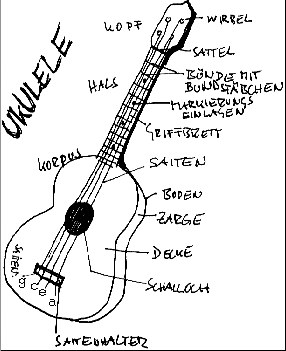
  • Learning Hawaiian Ukelele

    by Olivia A. (’14)

    I’ve played music since I took up the violin in fourth grade. Until this summer, I hadn’t deviated much from my training in classical music (“I Kissed a Girl,” “Eleanor Rigby,” and the My Little Pony theme song being notable exceptions). Over this past summer I realized that I was completely fed up with the attitude towards music of the classical musicians around me. I enjoy listening to a lot of classical music and I love a lot of the people I know who play it, so my reasoning was not so much rooted in the music itself or the people themselves. I quit viola because I personally couldn’t handle the competitive, judgmental musical culture that I was experiencing. It was difficult to quit—I have always been told to choose something and stick with it. That mentality, I’ve realized, often doesn’t suit my distracted, indecisive nature.

    I quit my private lessons, returned my viola, and decided to try something that is nearly the polar opposite of the musical culture I had become used to—traditional Hawaiian ukulele. This style of ukulele is primarily rooted in both the meaning of the words and in the purpose of the music as a component of hula dancing. My teacher treats the lyrics as poetry, explaining how the references and symbolism in each song relate to aspects of Hawaiian culture and history. For example, in a song called “Puamana,” the English translation of a Hawaiian line is simply “the bright moon glistening.” However, one word in the Hawaiian text, “kōnane,” is actually the name of an ancient Hawaiian board game similar to checkers. White and black stones are moved around indentations in a large slab of rock, creating an effect likened to the reflection of the moon on the waves.

    My experience learning Hawaiian music has been entirely different from my experience with classical western music. The process is much calmer, in general—I’m not constantly worrying about people judging my skill level. However, that isn’t to say that Hawaiian music is easy to play. It is difficult to strum, change chords, and sing in Hawaiian with correct pronunciation simultaneously.

    I always look forward to playing the ukulele. I’ll pick it up and accidentally play for hours without realizing that I’m practicing. Similarly, I often don’t realize that in learning the music, I’m exploring Hawaiian history, culture, and poetry. It’s all begun to blend together in my mind—the way a song can reference the leaves of a tree that grows nuts whose oil can be extracted to create candles likened to a lighthouse on an island with a history about the Spanish cowboys who lent the song its Hispanic influences that influenced the culture of the island, that informs the poetry of it—I’m learning to see these islands through the songs, and I wonder how I’ve managed to learn anything in any other way.

  • You Get ABS, and You Get ABS, Everybody Gets ABS!

    It’s a contemplative day in life when you realize you don’t have abs to spare. Or any abs at all. When you’re just a squishy tummy that cats like to sit on.

    A squishy tummy with a brain, because while I may not have abs to spare, I certainly do have ABS to spare. A.B.S., or Angsty Backstory.

    Angst (n.): an intense feeling of apprehension, anxiety, or inner turmoil
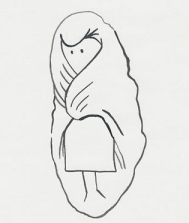
    Backstory (n.): a history or background created for a fictional character

    Now, before you judge me for regressing into tweenage blues, let me explain. Regardless of your current-day characteristics, you have experienced emotional turmoil in the past; that is simply a fact of humanity, that we always seek the ups and downs to map out the full spectrum of living. Whether this is through direct or indirect experiences is up to the individual. That is what I mean by angsty, those factors for physical, intellectual, or moral change, not OMFG parents wont lemme stay out until 9 parents sux.

    In Creative Writing II, we are working the Fiction unit from the literal beginning: Your character is a child, make it happen. How old is this child? Who does this child live with? Does this child’s surroundings affect his or her view of the world? What does this child believe in? And beyond (or beneath– depends on how you look at it) those, does this child like hot or cold weather? How does he or she turn the pages in a book? Does he or she wear socks to sleep?

    As a self-identified fiction-writer, this is well within my comfort zone. I name my character (Delilah, or Lilah for short), develop her voice (she’s eight years old, and tries to act more mature like her older sister, whom she admires very much), and decide on her surroundings (parents are divorced, live with Mom, older brother, and older sister). I cocoon myself in bed and think that Lilah likes hot weather because hot days are brighter and she can see more; she separates the pages by the top right hand corner because she doesn’t want to get spit all over the book; she sometimes goes to sleep with socks on because she forgot but always wakes up with them kicked off and lost in the sheets.

    Here is where I hit a rut.

    from Stop MOTION Mission

    There was no way I could keep on going with Lilah’s character if I didn’t know about her family, the people who have influenced her: Why did Lilah idolize her older sister instead of her brother? What are her feelings on her father? Of course, those raised further questions: What are Lilah’s siblings like? Why did her parents get divorced in the first place?

    Maia introduced to us the “Why” game, where one continues asking “Why?” to every answer to every question. She intended this to be a source of inspiration, I think, fleshing out the little details so that we can sink our teeth into one and blow it up to a full story. Little did she know this was to be my Downfall.

    Now, I know everything about everyone (I can feel my hair growing bigger as I write). I know the older brother’s name is Allen and he likes arts and crafts and really doesn’t care for judgment, I know the older sister’s name is Chris and she hates being called Christina and she’s the student body president of her high school, I know the mother divorced the father for making a decision she couldn’t bear to make, I know the father remained desperately in love with the mother until the day he died. I also know that want to write a short story about what Lilah thinks about her Mom’s smile. But what about everything else? Where do I include the fact that Chris’s favorite animal is the arctic fox? How about that Dad knew how to tap dance? What about when Allen sold his first commissioned painting?

    And that’s what hurts the most (Cascada, hello 8th grade-dance flashback), to take this character that you’ve detailed all over, and presenting only a sliver. And it’s never the sliver you want. You move the spotlight over onto one part for an easier perspective, and one character’s arm gets lost in the shuffle. You point out everybody’s eyes, but you miss all of their mouths and ears. You want to talk about the shapes, but you have to do so at expense of the colors, the composition. Sure, you can try your darn best to show everything vital, everything that makes up the whole of your work, but it’s the fine line between fitting everything snugly into a suitcase and stuffing your shirt inside your mug which is inside your jacket pocket. It makes me infinitely sad that you can’t know the entirety of my babies’ stories within one piece of writing.

    I guess, though, that’s another fine line to tread, between the raw inspiration and the refined outcome. What do I want my audience to know, the telling of my characters’ emotions, or the showing of my art, portraying a moment in their lives? The answer is, of course, clear, as it is my self-decided path of a Creative Writer. It’s a sacrifice I– and most other fiction writers, I dare to say– have to make.

    Of course, I can also write the stories, then write essays about my stories under a pseudonym. What do you mean, pathetic?

  • by Lizzie (’14)

    Do the mind and brain exist as one entity or two, or is there no separation whatsoever? If there is no separation then that would mean there is only the brain since the brain is physical and tangible and the mind is visceral.

    However, if they coexist, believing in one or the other would not be wrong. Like looking at an optical illusion, seeing one thing rather than the other doesn’t make you wrong, it just limits your cognition. Sure, you can only really see one at a time, only the young lady when it’s not the old woman and vice versa, but if you can recognize that both exist then you have reached full understanding.
    Knowing that the mind and brain exist simultaneously breaks down all facades that one surpasses the other. I can believe in the mind for the time being and then go back to believing in my brain, all its axons and dendrites, all its chemical reactions that enable my ability to perceive the mind. And once again back to the mind, thinking about the brain as an idea as a symbol and not the separation of lobes and the thalamus.

    Under the brain or the mind, your perception changes. In the context of my brain, I will think about my brain much differently than I would think about it under the influence of my mind and vise-versa. Yet is one perception greater than the other? Well no, if you are thinking in terms of them existing together. If the mind and the brain act as one entity than each of their impressions present some truths. Believing wholly in one over the other will lead to lies.

  • by Abigail (’14)

    Poetry Out Loud is a national contest created so high school students have a chance to get to know the art of poetry better, recitation-style. Along with several other CWs, I’ve been doing it for two years, and I recommend it to all of you–especially to all those freshpeople who haven’t tried it before.

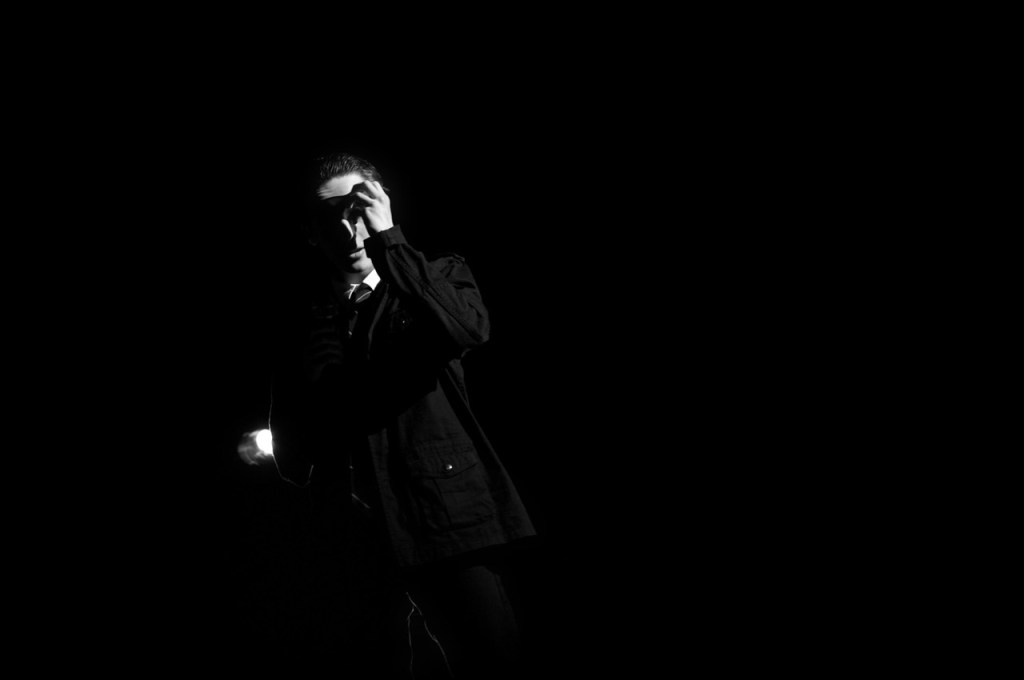
    Here’s how it works: You memorize two poems (from well-known authors, not ones you’ve written) over the course of perhaps six weeks, and you learn to recite them creatively. Body movement is not involved in these recitations, and they are not slam poetry, but they are completely different from what we do when we CWs read our own work.

    Local poet Joan Gelfand helps you and your fellow SOTA competitors to prepare, which you do during school hours. Sometime in February, the San Francisco competition is held. You recite your poems in front of a panel of judges. If you win, you go on to the statewide competition in Sacramento. If you win there, you compete nationally.

    In my experience, people don’t do POL to win–they do it because memorizing and reciting poetry transforms it. The poems become yours, because you have learned them and built upon them. Who could say no to having a hand in the way the world thinks about Sylvia Plath or Robert Frost? Poetry becomes a familiar, yet completely unique art form. You’ll keep the poems you’ve learned by heart with you forever. POL has addicted me to the practice of memorizing poems; so far, my total score of poems committed to memory is 12 (and counting).

    Plus, you get the opportunity to meet important figures in the modern poetry world. Last year when I made it to Sacramento, I met Dana Gioia and Juan Felipe Hererra, the former of whom invited me to recite one of my POL poems at his San Francisco reading, the latter of whom agreed to visit our class this year. Just talking to them gave me a much better picture of where US (or at least California) poetry is today.

    To get a better feel for what POL recitations are like and to view the rules in more detail, check out the website, where you can find videos of performances from previous years: http://poetryoutloud.org

  • by Noa (’16)

    We’re only scaring on alternating Tuesdays.

    I’ll let you in on a little secret: When I was in eighth grade, I was actually kind of terrified of shadowing. Not just because I was already terrified of all things involving high school (I didn’t even want to THINK about my portfolio until I absolutely had to), but also because everybody seemed so much taller and older and scarier than I was used to. Also, I had a sort of justified fear of getting completely ditched by whomever I was assigned to follow around, as I had been the first (and only) time I shadowed a high school. Obviously, this unnamed high school (*cough—Brandice—cough*) did not have as awesome shadow buddies as Creative Writing shadows have! Not only, as I have experienced, do the shadow-ers of Creative Writing seem genuinely awesome and well-read and writer-y, but the Freshman, as well, are really glad to have them. I mean, after having experienced the shock of being yanked from the eighth-grade throne of middle-school reign, it feels really good for our egos and our hearts to finally have something to show and teach a younger person, versus being the very small Freshman who has to ask about how to get to second period. Also, we have a panini press, which all the shadows seem to have loved. So, any eight grader who may have stumbled upon this blog, come shadow Creative Writing! We’re not scary, I promise!

  • by Avi (’15)

    It’s only unrequited on a good day.

    In Creative Writing we are all familiar with the process of submitting. Also we are very familiar with that fill-in-the-blank rejection letter. When submitting work you must ask yourself, what am I submitting? Are you submitting a poem? What kind of poem? Who might be interested in this poem? Once you have decided upon your audience you must search for the publication place that has the audience that you think would enjoy this poem. For instance, your poem about unrequited love would not fit on a website focusing on humorous writing. There is a website called duotrope.com which allows you to apply filters, fiction or poetry, style of writing, and helps you find publications that have the audience your piece seeks. Your writing is more likely to be accepted at places that publish work similar to your style. There is a huge diversity of publications, and it is very likely that at least one of them will contain writing that interests you, and you will follow in the future, and will be an excellent place to showcase your work. This is your writing, and where it’s published matters. Read a the blog or publication, and then evaluate whether your work belongs on that site. The sites are lucky to get your work, do not be discouraged, when you are rejected it does not mean that your writing is not good, it just means that that website does not have the right audience for you.

  • Poetry & Symbolism

    by Nick (’15)

    In his essay “The Concept of ‘Romanticism’ in Literary History,” René Wellek quotes Earl Wasserman:

    “the creation of a poem is also the creation of the cosmic wholeness that gives meaning to the poem, and each poet must independently make his own world picture, his own language within language.”

    This, says Wellek, “justifies the romantic concern for symbolism.” Because of course language itself is symbolism—at least in the view of C. S. Peirce, who tells us, “Any ordinary word…is an example of a symbol.” That is, words are conventions, shared denotations for a certain thing; language is a system of conventions of meaning-making. Thus the concern for the personal experience, and the concern for the personal language, are inseparable in writing; and the personal language inseparable from the personal symbolism.

    But symbolism, as a tool for meaning-making, is also a way of ordering, particularly a way of ordering a “world picture,” by forming connections between things, and so imparting to them certain values, meanings, traits, etc. Symbolism in this sense is easy to equate with Adam Kirsch’s “world poetry,” poetry of “judgment” which “imposes an order upon the world.” It is this judgment which some have sought to escape—prominently the Imagists, with their focus on the object, freed from imposed meaning: “the object is always the adequate symbol.” Kirsch himself, in his essay “The Taste of Silence,” advocates a “poetry of earth” which, in direct contrast with the romantics, “imagines the artist not as a creator, but as a witness.” (Yet if artistry is not to be an act of creation, what is it?)

    Even if we think do think of the artist as a creator—as the creator of a “cosmic wholeness”—can we not abandon the artifice of symbolism in order to closer approach the actual, to find the haecceitas of the thing, or at least, the personal experience of the thing? For this is what it must be, Olson’s energy transfer, the idea of reaching actuality is flawed, judgment cannot be rescinded because perception is judgment. But the haecceitas, the thisness of the experience, how do we find that, are not symbols rightly impositions upon it, inconvenient barriers erected by the separation of experience?

    No: Kirsch is right, as long as the artist is a creator, there can be no freedom from symbolism. The very act of creation is an act of ordering—imposing an idea or conception upon something else. Conceiving a tool from a rock, music from an instrument, etc, are all orderings—manipulations orchestrating the world according to our conception. Kirsch is shortsighted, though, in imagining we can escape the imposition of world-order simply by refraining from conscious “world-building,” by stepping into the role of the observer, just as the Imagists are shortsighted in thinking that the object can be freed from the symbol: language can never be freed from symbolism, because language itself is a system of symbols.

    WHAT’S MORE—the object is itself a conceptual division. Why do we apprehend an object, a lamp say, as one ‘thing’? It could equally be regarded as any number of things, any of its components could be (and will be) regarded also as “objects,” down to its beams, atoms, particles, halves, thirds of particles, nailscrews. BUT, we have the idea of its thingness, of lampness, that is, we apprehend the lamp as one object because we have the idea of its objectness.

    The very fact that we see a LAMP or whatever object shows the the judgment, the conceptual action, inherent in perception. Obviously there is no “objective” integritas. Which can be boiled down to: all perception requires a perceiver. That is, we can only apprehend by the mode of our own apprehension.

    It comes back, then, to the question: does poetry communicate more than the language constructing it? Can music be free from symbolism? It certainly relies far less on convention and symbol than does language—is far more universal. But also, does poetry communicate more than either musicality or semantics alone?

  • Junior Giorgia Peckman is going to be published in The Ilanot Review. Congrats!

    That’s the Chicago way.

    Giorgia

  • by Luca (’16)

    Wes Anderson’s movies are charming and colorful, albeit very similar. They have funny captions, dysfunctional families, and mysterious narrators. But they all have a marvelous take-away feeling: the sensation of being warmed up inside. All his tales leave us with the need to enlighten everybody who hasn’t seen a Wes Anderson film, and Moonrise Kingdom is a good place to start, with a beautiful story about two young lovers running away on an island in Maine. This movie is very light-hearted and has a fantastic cast that include Bill Murray, Bruce Willis, Tilda Swinton, and Edward Norton, all who play their part fantastically well. The two kids, Suzy and Sam, were pen pals until they formulated a plan to escape from their respective homes and ran away into the wilderness, never to be found by their crazy parents ever again. The smile that this movie puts on your face will linger until the very end. The only problem I can see with this film is that it is a little too long. It has several perfect places to wrap things up but then continues, overstaying its welcome just a tiny bit. Also, for a pretty mellow film, the pyrotechnics start in the final act as the boy scouts are struck by lightning, the scoutmaster’s tent explodes, the Church steeple is also blown to smithereens and the movie ends in a completely ridiculous fashion. The movie unshackles itself from reality entirely but sometimes, especially in the grand finale, it feels like a little too much. This movie is extremely fun, extremely colorful, and extremely sweet. All in all, it is a fantastic film.

  • by Josie (’16)

    With each coming school year, there is more and more concern over the state of San Francisco’s public education. Whether it is the budget or number of kids failing to graduate, there always seem to be problems with public education. As a high school student involved with the public school system, I believe there are multiple ways education can be improved such as campus beautification, larger budgets, and better ways to motivate kids to stay in school.

    This year, the SFUSD (San Francisco Unified School District) has had an overall budget of $623,53,969 to spend on approximately 55,000 students in the public school system. This budget is divided into two parts, restricted and unrestricted funds. Restricted funds are earmarked for specific things such as special education and child nutrition. The unrestricted funds are for general education. 83.5% of this budget is used to pay school staff. 12.2% is used general school operations. 4.3% is used for books and student’s supplies. Since 1978, public schools have relied on the California state budget for funds. In 2008, Californian lawmakers cut school’s budgets by 7.2 million dollars, but even after these budget cuts and depletion of their reserved funds, the SFUSD is still in debt by 18.6 million dollars. This means that there is absolutely no money for the children of San Francisco’s education. This means to receive a well-rounded, well-funded education, children will need to attend private schools which on average costs about $30,000 per year, which means that the lower class who cannot afford these prices will be stuck with a poorer education. If the SFUSD can find someway to create better funding or reprioritize what is most important to spend money on, then perhaps public schools in San Francisco will not be as lacking.

    This is how we’re spinning the story.

    Another fault of San Francisco public schools is regarding the motivation of students. Unless you really love learning and can appreciate the lessons of school, then public schools offer no interest to you whatsoever. Perhaps if the SFUSD is to modify the schedules for students, then we would be more inclined to stay in school. Waking up before the sun has risen, riding on a packed bus to a windowless classroom where you must sit for seven hours a day, breaking your back from carrying loads of text books and binders back home and then staying up into the wee hours of night to finish your homework is not a very appealing schedule. Maybe if school started later and did not involve so much after schoolwork, students would be happier. Campuses can be modified too. When I arrive on an ugly, cement, cold, uninviting, windowless, fluorescent-lit campus, I feel no motivation at all to go to school. If the campuses involved bright, warm colors, more trees, perhaps a window that opened, I would feel more inclined to return to campus.

    The SFUSD’s mission statement is as follows: “The mission of the San Francisco Unified School District is to provide each student with an equal opportunity to succeed by promoting intellectual growth, creativity, self-discipline, cultural and linguistic sensitivity, democratic responsibility, economic competence, and physical and mental health so that each student can achieve his or her maximum potential.” Can public schools really achieve these goals with plummeting budgets and failure to keep kids in school? If the SFUSD can increase their budgets, create better campuses, and motivate kids, maybe there is hope for San Francisco’s public education.