CREATIVE WRITING

at the Ruth Asawa School of the Arts in San Francisco

Welcome! CW develops the art and craft of creative writing through instruction, collaboration, and respect. This blog showcases STUDENT WRITING and how to APPLY to Creative Writing.

  • by Colin Yap (’16)
    From the Sarah Fontaine Unit
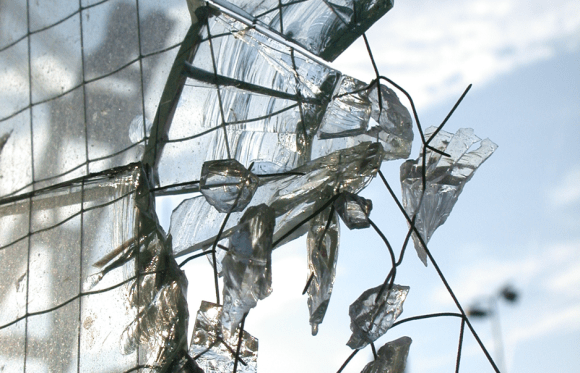
    Picture 26

    In the middle of the ocean, on a circle of land jutting from the blue haze of sea, lies an island. In the center is a city of glass and steel, resting upon fields of concrete. Vertical shafts of glass and metal extend from the ground like trees in a jungle from center of the city. When you stand from very far away, these buildings look like shiny little beacons. You can see the humans within them, standing at the edges of their little boxed-in-rooms, looking out into the distance.

    The ground is covered in shards of glass that falls upon the sidewalks. The buildings rise steadily taller until they reach the center of the city, where a tall needle extends into the sky, the tallest tower in the island, reaching into the sky like a hand towards the sky and whatever heavens may lie there.

    In the tallest room of this tallest tower lives a very old man. Let’s call him The Loner.

    The Loner is one hundred and ten years old. He lives in the silence of solitude and spends his days staring into the grand old distance. Old distance that never seems to change, the ocean churning constantly. He sits in his wheelchair and waits for someone to arrive.

    He is the oldest living human being in the world. The medical experts have forgotten about him. The Book of World Records has forgotten about him. All friends and family he has ever known and chose to love has left. He sits in his solitary tower. He can speak, but only in the gravel sounds he produces from his mouth. No one is high enough in another glass tower to meet his eye and say hello.

    Once upon a time he was remembered by those who saw him. No one sees him any more, and no one remembers. He exists only in body and not in the mind of any other living person.

    He is set with the unfortunate affliction of waiting. The Loner waits patiently for a knock to come upon his door. For someone to remember he is a person, that he still exists and wishes to continue to exist.

    Hopefully, he has lived a short and happy enough life, and has not grown cynical. Maybe, just maybe, he still believes. Believes that love and longing is not a condition coming from not wanting to die alone, but a condition that comes from not wanting to live alone.

    Surrounding the city lies the ghettos, resting on the outskirts of the city of glass. Woman lives here. She is a tall and skinny, a thirty year old with two kids crawling up her legs. She chose to have them, and she chose the men with which she had them. Woman never looked their fathers in the eye.

    The children are covered in dirt and scabs and scars. They have thick brown hair and white eyes that never cease to look forward, piercing through whatever lies before them. They do not cry.

    The houses in the ghettos are made of thick adobe bricks stacked up, one by one, red and brown and hard. The houses are short and squat and sprawl across the land where the glass buildings start to diminish. They extend in every direction, upon and down across the plains until the sandy beach starts. In the morning the men and women who live along the beach, who have thick hair and strong arms, walk from their houses to the sand. They push their boats into the water and spend the day from sun up to sun rise in the water. The sun emerges from the water and sinks into the water. The fishermen drag their boats upon the sand and leave them in the nighttime.

    Woman spends her nights weaving a long rug of gold and red and silver colors. It is for the plain rooms of her house, so that she can dress the brown floors with color.  She works as a clothes washer, and runs a Laundromat in the day time. Even the Laundromat is made of earth bricks. Few come to wash their clothes, spending so much time in the dirt.

    Woman leaves her kids at the school. Once upon a time at the school a fight broke out between her son and another child. Her son, let’s call him Boy, was called an ill-bred faggot by another boy. The boy who called him that ended up with a broken jaw and two missing teeth.

    When she was called into the school, Woman did not apologize, and though she did not speak to him, or encourage him to do the same, her son stood with the same distant disposition.

    In an event that may or may not have been related, someone set fire to Woman’s Laundromat that night. It was noted in the police report that the child who Boy had punched in the face was the son of a man who considered himself a local thug. He found Woman’s silence unforgivable.

    After the fire ended though, the building still stood. It was stained black with soot, yet still stood. Woman did not cry.

    The trains run through the glass city like veins. They stop at the outskirts however. There was a man sleeping at the back of the trains. Let’s call him Man. He was sleeping at the back of the train, collapsed upon the ground, not even on any of the chairs.

    He awakes to the sound of the train conductor walking up to him, “are you okay?”

    “Yea. I’m fine. I’m fine.”

    A light is shined in his eyes, and Man recoils, falling against the ground. In the distance are the steamy buildings and the constant hum, the high pitched squeals and motion that would continue long through the night, into the daylight.

    “Alright. This is the last stop. You have to get off here. Trains have stopped running, it’s time to go. Come on, get up.”

    In the distance, what Man hears is the red light. If you spent enough time among the outskirts of the glass towers, and you looked hard enough, you would find the district for prostitutes and drugs. No one is ever introduced to it; rather, on some Wednesday night, with nothing better to do but get drunk on cheap Whiskey and stagger around in your best set of work clothing, you find it, and the red light finds you.

    In the musk of steam and smoke, among the bamboo doors and wooden buildings, you would find uppers and downers, snakes and loose women and loose men. The village of night is a village of alleyways and neon signs. The buildings could easily catch fire, glazed with sweat and oil, made of bamboo. In the desperation of night, you could find something, anything, something unlike the constant boredom of  night.

    Yet, if he could, Man would not head out into the distant glow of the red light. He would follow the dirty paths of the ghetto, guided by the pinprick lights in the sky and the sound of ocean waves nestling into the sand. The air would be cold, and he would be tired, and his legs wouldn’t work, stumbling a little bit as they hit the ground. He would keep on going anyway.

    He would walk a long time until he came to the ocean. The sun would start rising. It would be there that he would curl into a ball, lie on his side, and watch the surf foam as sunlight shined through the Eastern sea. It is there that he would lie down with the willingness to die, watching through tired eyes the sea burn up the land and him with it.

    This is all if he had not, five minutes later, walked off to the red lights that would never cease to burn in the cold night. It is there that he wants to travel to, if only not to be alone once more.

  • by Avi Hoen (’15)
    From the Sarah Fontaine Unit

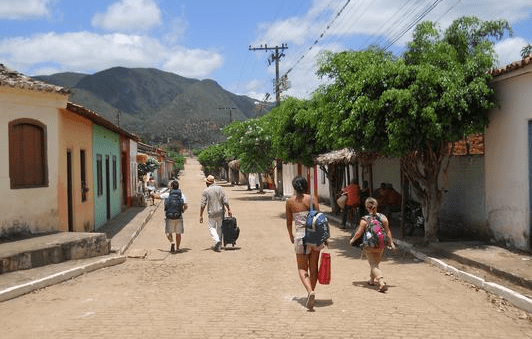
    Picture 28

    The world is stupid.  No it’s not.  Well it kind of is.  It sucks sometimes.  When you’re on top of it, it feels awesome.  Not awesome as in “new pair of shades,” but awesome as in, “a bird just gave birth to an elephant.”  That kind of awesome.  But it’s only “elephant-birthing awesome” some days.  Most days, it’s “bird birthing cockroach” awesome.  Not very awesome.

    Today the world birthed a bird and that bird birthed another bird so it isn’t very special today.  There are a lot of birds being birthed in the world.  Some birds are awesome and some birds just shit on your car.  A year is like birds.  Each day is an egg.  From each egg you don’t know what kind of bird is going to hatch.  Today could be a “white-throated kingfisher” day, or today’s egg could be scrambled and stuck to the frying pan.  As I said you never know what kind of day it will be.

    Birds live on the world, usually they don’t live on top of.  Birds get the short end of the feather.  But know that some bird out there had an amazing day.  Be sure to know it had a great time eating berries and shitting on your car.  The world is full of chain reactions like this.  Bird eats.  Bird shits.  Shit on you.  Bird is happy.  You feel like shit.  You shit on someone.  You feel happy.  Someone feels like shit.  The world is one happy piece of crap.  Get used to it.

    I got used to this bird eat bird world when I was little.  I always knew I was an insignificant little red berry, soon to make it into a bigger birds stomach.  Maybe that bird would be Big Bird.  Big Bird taught me the world.  Elmo has one messed up world.  I hope a bird shits on Mr. Noodle.  I take that back, I didn’t watch much TV as a child, probably because most kids shows were like that.  A three-year-old shouldn’t be filling their head with singing cloth puppets.  A three-year-old should be filling their minds with enlightening thoughts, such as Icarus and how trying to be something you’re not is just a stupid waste of time because we are all gonna die and melt away when we get to close to reality.  Sorry, those would be horrible thoughts for a toddler.  Maybe they should keep their minds on T.V. and birds.

    When I was little I had a bird feeder.  It hung from the tree.  Then one night a raccoon came and ate all the bird seed.  As I said, birds always get the short end of the branch.  It’s the circle of life though.  Actually it isn’t.  Hardware Store Brand bird seed has no place in something as significant as life.  Except it does.  I eat food from a grocery store too.  I do not partake in the natural circle of things.  Therefor I am a bird.

    Life sucks for birds, some days.  Life sucks for me, some days.  It depends what kind of eggs I buy at the grocery store.  Free-Range, Organic, Cage Free.  Life is full of options.  I also have the option of buying the Caged eggs.  Funny how they don’t specify on those packages that the chicken never saw the outside light.  Of course when I shop at the Costco I have all these options and more, but the assumption is made that I am going to feed the entire flock with 18 dozen eggs.  That probably stems to the idea of cannibalism.  It would be a bad idea to feed eggs to birds.  I feel bad for chickens, their young is always sold off, and what isn’t eaten by the humans is given to the pigeons who don’t know what they are eating.  Pigeons truly are “chicken-brained,” I don’t blame them for being content with their stupidity, I wouldn’t want to know if I was eating monkey fetus.  Makes it seem like pigeons have a pretty good life.

    Maybe I’m a pigeon and I can peck morsels of Doritos from the sidewalk cracks.  No roses, just chips.  Did you hear about the pigeon that grew from the crack in the concrete.  You probably didn’t because it didn’t actually happen.

    A lot of things in life don’t actually happen.  In fact most of the world doesn’t actually happen.  It’s a whole sea of thought, full of fish getting eaten by birds.  What actually happens is just bird shit.  Damn.  Oceans seem pretty bleak now.  I’m sorry for blowing your mind in depressing amazement.

    I read some bad rhyming poetry in a book that went “A geek with a beak will have a life that is bleak, don’t be a geek and speak what you think.”  I never actually read that.  I don’t need to cite a source.  Birds probably don’t use quotes, or MLA 7 or APA, or EasyBib.  If I am a bird I can sing my own songs, that I make up in my bird brain and sing them from the branches of the world.  No citation needed.  Unless… do mockingbirds cite what they sing.  No, they probably don’t.  The way they find love is a whole lot of bird shit.  The way people find love is pretty stupid too.  As I said earlier, I am a bird, therefore people are birds, and the world makes the same amount of sense as a fresh splatter of bird shit on the sidewalk.

    Birds should probably be recognized because they are related to dinosaur ancestors.  Which is pretty cool.  That’s only if you like dinosaurs.  When I was little I told people Rumpelstiltskin was my great-grandfather.  No one believed me.  I didn’t believe me.  A bird might have trusted my statement for a minute, but even a bird brain is smarter than a  lie.  Besides, birds are related to dinosaurs, that has to count for something.

    OK, it probably doesn’t count for much.  I mean, look at how we treat dinosaurs.   When we find a dead one we display it, and when we find a decomposed one, we drive cars.  It might be a double standard.  One day, birds will be the source of petroleum gasoline, and also petroleum jelly.

    You know what’s crazy, is that during the oil spill, the birds ancestors, the dinosaurs, killed the birds with their decomposed fossil fuel!  Talk about a great way to avenge your death.  So I guess having dinosaur ancestors is a double-edged sword.

    My guess is that birds have a hate-love relationship with swords.  Actually, they probably just hate them.  Swords are only good to kill birds, birds would need opposable thumbs to use them properly.  Video games lie.

    As Peter Griffin agrees, “the bird is the word.”  I’m not sure if this has any relevancy to birds and the world, but words are also the world.  Words are the sword that the birds can’t use.  Blue Jays can’t say great words like “hootenanny,” “cautious” or my personal favorite “cooties.”  Despite birds not speaking words, they communicate in their ways.  This enables them to be functional members of society.  Just like you and me.  In fact, I would go so far to say that they are more functional in society then the average human being.  After all, they understand the defiance of gravity.  And if life has taught me anything it’s that gravity brings you down.  Unless you are on the moon.

    Scratch that, birds don’t teach us diddly-shit, except what shit is.  WAIT! So, basically if the world is shitty, and birds are the all-mighty creators of shit, then technically speaking birds are god. HOLY SHIT!

  • by Hazel Mankin (’13 )
    From the Truong Tran Unit

    My goodness
    Look at you
    Honey, you’re looking so sweet there
    In your thin summer dress
    I just want to wrap my arms around you
    And gouge your spine right out of your back
    Darling,
    I’ve never wanted so badly to
    Peel back a person’s skin
    Just to see their veins,
    Their blood pulsing along those crucial little footpaths
    I could just sink my thumbs into your eye sockets,
    You precious thing
    You are a treasure, my love
    I’ll bury you deep in the damp
    So no one can take you from me
    The way your mouth stretches wide when you smile
    Makes me want to pry out each of your teeth
    To hang from my ceiling like stars
    I want to
    Plunge your face into ice water
    And hold it there
    You know I just love the way you move
    When you’re fighting for air
    No, I’ve never seen anyone move with the grace
    You’ve got with five broken ribs
    Baby,
    I’m going to lay you down in your grave
    Ankles tied and that silk handkerchief
    Stuffed in your mouth
    Your eyes are green and glistening as gems
    When they’re wide with terror
    You look so elegant
    Laid out there
    I’m always going to remember you
    Just like this.

  • by Luca Foggini (’16)
    From the Sarah Fontaine Unit

    One fine morning in the Orion Arm of the Milky Way Galaxy, a small blue speck swirled with all the bearings of life. It had on it that elusive combination of hydrogen and oxygen, one that brought about the stirrings of protoplasmic sea-life, spineless, half-alive sludge that was scraped off the sea-floor by the ever so gentle roiling of waves. On  February 15th in what would later be called the Mediterranean, George, an early ancestor of the mud skipper, tentatively walked onto dry-land, wading into tide pools to keep himself moist. His brain was the size of a speck of sand and his thoughts rung out in broken syllables: Must…dry…dry…must.

    His family, Mary, Millie, and George Jr. waited near the verge of the ocean, where water met shore, with heads poked out with expectance. They gurgled in unison. Hulking, transparent invertebrates float behind them as bottom feeders scoured the sand below.

    George was the first mud skipper to ever leave the water, his unadapted fins slowly dragging him along. He would have shriveled up if it hadn’t have been for a gentle rainfall that provided a puddle for him to stay in for a while. The puddle was enough to provide comfort and he looked above through the mirrored surface of the puddle to see many other mud skippers shuffling out on feet unfit for land. George squeezed out a stifled thought: Happy…sleepy…dream.

    George slept and he dreamt.

    George awoke again. He coughed on brackish water, smelling the peat and muddy miasma of a bog. Then he realized with quite a start that he could no longer breath. He gulped down water, choked on it, and felt a burning sensation in his gills. They were no longer gills though, they were something else. And their need for oxygen initiated in a survival instinct in him that made him kick his way to the surface. Breathing in air for the first time was just as much of a trauma as realizing he couldn’t breath water. It felt cold and fresh, as water felt when he could breath, but different this time, without the substance that water had. Crawling onto land by grabbing on a tuft of cattails, he had another realization: his fins. They were no longer fins, but had rather splayed out, with fur and five long appendages. After crawling onto land, he realized that he had legs too that awkwardly carried him along. His balance was completely off and he waggled unsteadily for a while, slowly acclimating to his new form as his ears rung uncontrollably, picking up on the guffaws of jungle life. His thoughts were a cavalcade of questions, slightly more well-formed than before but still plodding. George ventured forth on his wobbling legs, feeling the scrubby grass and ferns that were scattered on the jungle floor. He noticed a puddle and looking down into it, could see the reflection of his face. He recoiled back from the puddle, horrified from his appearance. A rustle of branches called his attention to several creatures that looked like him, swinging across the branches, and he beckoned them with a harsh, grating cry. They turned to him attentively and swung down by his side. He spoke to them with a prior knowledge that was not his. Where…am…I? The creatures consulted each other with inquisitive gazes before responding to him, You…are…home. George search through his cluttered mind for another query, What…am…I? The creatures considered the question and answered, You…are…one…of…us. They looked him over and said, Follow…us. George followed them close behind, grasping the tree that they were climbing up uneasily, losing his grip for a few seconds and then quickly regaining it. He reached the top where he was greeted with apprehension from many eyes that pierced the shadow with their gleam. They spoke in many foreign tongues, feeling his fur as he walked past them. One of the creature offered him food, an orange, sticky substance. He ate it and showed satisfaction out of courtesy to the elder who smiled briskly in the dusking light. The creatures lost the interest they had before and ambled to their respective sleeping places, settling down into their soft beds. The elder offered him a spot to sleep and George accepted gratefully. He lay down on his bed. His mind was too feeble to wrap around the strangeness of his experience. It was merely an afterthought, one that he forgot the minute he closed his eyes.

    George awoke again looking up at a pulsating, pink membrane. He heard a whooshing sound, one that filled his ears. He raised his hands, or tried to raise them because it was a great effort. They were limp and leaden and fell again at his side. His eyes were ineffectual. He could not open his eyelids and could only see because his eyelids were so thin they were transparent. He heard the beating of a great heart, one that reverberated against the walls of his great, pink room. The repetition was soothing and as he listened to it, he fell asleep.

    Instinctively, he looked to see if he was different when he awoke. He could not see anymore, his eyelids tightly pressed together and impossible to open. George heard noises, the steady unchanging beat of a heart, and another noise. He realized he could open his eyes again and he observed his surroundings, basking in the warmth of the pink room. Suddenly, light blinded him from all direction. George screamed, as it was freezing cold outside of his pink, pulsating domicile. He was being wrapped in something soft and he felt the feeling of movement as he was moved to another place and held in somebody’s hands. He was moved again to a warmer place and dozed immediately.

    Time passed, cartilage ossified, teeth grew, the first tentative toddler steps were taken, and soon enough George was walking. His intelligence expanded as he saw everything with new eyes and a fresh mind. He learned the alphabet, the multiplication tables, algebra, history, language arts, cursive, reading, new languages, calculus, and then he was released. Childhood was over and he stood after graduation, frock and mortarboard held in hand. This was the junction of life where you left the pettiness of college problems and moved on to real, adult ones. Your way was no longer paved. You had to make it on your own. Beyond George was the ocean, just beyond the vertiginous sea cliffs. He looked at it and it sparked something long gone in his head. He thought for a moment and didn’t care to remember whatever it might have been that he had forgotten.

  • by Olivia Alegria (’14)
    From the Sarah Fontaine Unit

    “When one has reached the highest possible level of excellence, there is a ceiling that keeps him or her from rising up so far that he or she does not float away entirely. Absolute possible perfection is a hotly debated concept, but most parties have agreed that it is nearly impossible to achieve, as proven by the multitudes of people who have obviously left large amounts of potential energy dangling in the ether. It is a little-known fact that Benjamin Franklin developed the first machine whose purpose was to measure the potential energy carried by the possibilities of a singular human being. It is widely considered to have been an unsuccessful model, yet it can be said that there is no possible way of proving its results to be inaccurate.”

    “There are two men in front of me on the bus talking about music and art. It would be nice if I were able to talk about such sophisticated things. I’ve always thought I must have the mental capacity for it—I am intelligent enough, I just need to know how to tell good art from bad. I also need to make enough money to buy the art, ha ha. But I feel like I could get somewhere, like I could understand something important that I’ve felt for such a long time, something inside of me. It’s such a strange thing to know some way out, but not know it. I don’t want to stop thinking today, because I believe in luck and I think I’m in the middle of a mental domino trick that spirals in to the big Thing I must understand. I am going to my friend’s farm from college. I am on a Greyhound bus. I can’t stop thinking or else it will go away. It will make me so happy I won’t have to worry about romance or money or other things I want. I will be whole and uncorrupted, and I will be fine with myself, and I will know the right way. I mean this is optimistic obviously, I don’t know how anything could possibly work out, and obviously looking at the circumstances I am probably wrong, but I am a hopeful person. The guys in front of me are still talking about art—such stamina! I think art goes well with wine. I will take a wine-tasting class someday, so I can appreciate it fully. Apparently, with the right training, you can taste whole other worlds in things like wine: spring orchards and lemongrass and maybe even some meat dishes. Maybe I will teach a wine-tasting class someday. The woman walking down the aisle to the toilet at the back of the bus has callused feet, which I can see because she has taken off her shoes. Maybe she is a tired saleswoman, and she is having an affair, and she is truly in love though she will not admit it to herself that her life could be so complicated, yet so hopeful. I think I would like to be a good judge of character.”

  • by Justus Honda (’15)
    From the Sarah Fontaine Unit

    rumbling bustle in a café at 7 o’clock in the evening,
    cardboard cups and porcelain mugs click and tap on marble
    tables, drawling voices reverberate off dimly lit walls.
    silent people filter through.
    someone walks in with music under their hat and
    oceansound in their pocket. everyone, it seems, has simple
    unapparent secrets. out of sight a slightly damp coatpocket
    carries a tiny conch, tarnishcolored with the cacophony of
    the sea in its spiral inside.
    watches tick voices mingle automobiles buzz and groan
    newspapers and magazines rattle cellphones whine and in
    the everpresent din in the pocket of an unnamed passerby is
    a tarnishcolored conch, intricate mazework innards infused
    with oceansound, projecting the memory of the turbulent
    sea—
    people breathe and cough. the espresso machine sighs.
    coffee is acidic and bitter going down but is never
    regretted. far off a wave crashes but no one hears.

  • by Maya Litauer (’15)
    From the Sarah Fontaine Unit

    My writing practice is never what I want it to be. I constantly feel as though I could be doing more writing, more journaling, more editing, spending more time on my practice. I feel guilty all the time for not being my most-perfect self, for not putting in the time and the effort to improve. Because that’s what writing practice is, really – improving. Even ten minutes a day of free writing would help; I don’t have to write novels or complete poems. But for some reason, it doesn’t happen. I don’t improve as much as I hope to, I write less (and less profoundly) than I think I should, I make edits so small they can hardly be seen. I feel guilty for not sticking to my own standards even though I know I have the power to change.

    But perhaps the problem is not in my inability to change, but the fact that if I am constantly striving for some enlightened practice, I can never fully practice my practice. In other words, I can only improve if I am present in my writing, and I cannot be present in my writing if I’m grading it on a scale of how much better it is than a day or two or a month before. Perhaps I need to let go in order to let my writing practice flourish, so it an be its fullest self and I can fully devote myself to it.

    But then, maybe I’m not devoted enough to try to overcome these obstacles because I don’t know how there can be payoff for something undesired. It isn’t like I want to become a professional writer, or get published, or even earn a degree in creative writing, so is it even worth it to improve? I know that sounds lazy, and maybe it is. Maybe one of my obstacles is that I make excuses to let myself off the hook. The hook is feeling like I’m too self absorbed to be honest about anything in my writing other than my petty angst. The hook is feeling like I’m not worthy of improvement because I think of myself too much to be selfless but I don’t really care because I’m so busy worrying that I’m not experiencing life fully, and then that sounds selfish and unworthy. What I mean is that I question whether writing about my teenage problems constitutes as writing, and whether that kind of writing counts as improvement, and whether I even deserve to improve if that’s all I write about.

    But maybe I over-think things (this is not a maybe, I know I do). It all comes back to letting go, letting the writing take me where it will, without judgement and without control. Self-censorship is the worst kind of censorship, but it’s also the hardest to get rid of. Maybe this will help: take a deep breath before writing, imagine my fears and expectations melting away, and put pen to paper in the most honest form of expression.

  • Well readers, it’s that time of summer again–the time of summer you don’t quite admit is there because summer exists as a timeless entity anyway: summer is halfway over. Actually, it’s a little more than halfway over. In a month and a week we’ll have to fill our backpacks with pens and notebooks, and finally sit down to finish that summer reading.

    As the new school year approaches, we are proud to bring you some pieces of work from last year that we created with our artists-in-residence. Summer is a time to proceeding forward with life, relaxation, and activities that got thrown to the sidelines during the school year. Summer is also a time for reflection about the writing we’ve done and the writing we hope to continue to make. Enjoy!

  • This show has taken over my life:

    I’m not post-Season 3 yet; give me a week or two

    M*A*S*H is a TV show spin-off of a movie with the same name, about a group of army doctors during the Korean War. The picture above is a perfect depiction of this SitCom-y show, filled mostly with situational (thus dark) humor and spiffy one-liners. Example: in the episode For the Want of a Boot, main character Captain Hawkeye Pierce trades favor for favor for favor, creating looping chains of exchanges, all for the want of a boot without a hole in the sole; the epic mash-up of realistic bad situations and even more realistic relatively-good-humored handling of said bad situations.

    Now, this isn’t going to be a long post, ’cause I’ve got to get back to watching M*A*S*H, but I’ve taken to profiling myself through the things I like, such as books, movies, or– in this truly inspirational case– TV shows.

    So, dark humor. It crosses lines of social niceties and make you feel like a rebel for getting the joke about necrophilia. Bryan Fuller’s Pushing Daisies is next on my To Watch list (after watching Hannibal and needing emotional shelter). Now, anyone who’s discussed philosophy with me probably thinks of me as an optimist, and I do quantify myself as an optimist (with empirical data in metrics and everything). So why would I be such a fan of dark humor?

    (That was not a rhetorical question, but the rhetoric device hypophora, in which the speaker poses a question and answers it. AP Composition, whaddup.)

    Probably because dark humor is inherently optimistic. George Carlin said that under every cynic is a disappointed idealist, and the optimistic dark humor-oxymoron seems like the inverse of that. Humor inspires joy, that’s fact, and cracking jokes in order to cut open red white and blue-blooded teenagers is a coping mechanism. Go ahead, open the letter– they can’t draft you again. They’re old enough to pull triggers but not old enough to drink? Heard Eisenhower’s running for president; man, the things people would do to get out of the army.

    Coping is optimistic because coping means survival. Not necessarily survival of the person you once were, but if the main parts are still there we can put it back together, no one will even notice the scars with the right turtleneck. Recently, the suicide note of Iraq veteran Daniel Somers went viral, drawing attention to the heart-breaking statistics of veterans’ suicide– one every 65 minutes (Huffington Post). Healing’s not easy in the first place, but when people aren’t allowed to heal at their own pace or when they heal wrong, that’s when the Bullshit Meter hits the stratosphere. Terrible things happen, and sometimes there are people to take responsibility for it (or should, but let’s not even get into that right now), sometimes there aren’t, and people get hurt. Given the love and support they need, people heal. We’re not allowed to call other people’s scars ugly, we are notnotnot allowed– I say this with the utmost solemnity and simple comprehension of a child, where I cross my heart and not my fingers behind my back.

    I said this post wasn’t going to be long, clearly that was a lie. Self-reflection can go a long way, y’know. Literally. (Badum tish!)

    Post-Season 3 M*A*S*H– I’ve been warned– will be heartbreak everywhere and breakdowns and hurt. Good. There is a quote out there somewhere about art portraying history better than any official document could; All Quiet on the Western Front taught me more about World War One than my history textbook. (This is probably my only tie-back t0 CW-related matters.) It’ll hurt, but hopefully, innate optimism will get me through.

  • Image

    Congrats to our very own Giorgia Peckman (’14) for an Honorable Mention in the Discus Awards! She’s been rewarded $1,000 from the judging panel.

    Also for a recent publication in The Whistling Fire, her poem “Sundial.”