CREATIVE WRITING

at the Ruth Asawa School of the Arts in San Francisco

Welcome! CW develops the art and craft of creative writing through instruction, collaboration, and respect. This blog showcases STUDENT WRITING and how to APPLY to Creative Writing.

  • Picture 95by Mykel Mogg (’14)

    Volunteering with the preschool readiness program at Excelsior Family Connections brings up personal challenges for me, specifically around power and teaching. My internship at Hoover last year also made me engage with this issue, but over almost two years, I have not been able to find peace with the level of coercion I am expected to use while teaching children. How can I, as an anarchist and a person who strives to take children seriously, be comfortable picking up a four-year-old and plopping her in a corner for not following rules? I don’t know whether coercion is necessary to all safe learning environments, but it is certainly a requirement for teaching in our current school system. I always try to be rational, patient, and respectful in the way I enforce rules with kids, but that doesn’t change the fact that I’m exerting power over them– power that comes from the fact that I happen to be older. I never bring these issues up in the classroom, but I think about them a lot. Obviously, there’s no single answer to question, “how do I fit into a system that isn’t in line with my values?” It’s an internal dialogue that everyone has to go through at one time or another.

    Besides thinking about power dynamics, my experience at EFC has been nothing but fun. I love showing up every Monday to see how the kids will interact with whatever toys and “science stations” we’ve put out that day, because they always subvert expectations. I’ve learned a lot about the benefits of a messy classroom. Je Ton Carey, one of the teachers I work with, is a big proponent of sensory play. She brings in big tubs of sand, leaves, shaving cream, water, and homemade play-do to the classroom for the kids to interact with. Their senses of touch and smell come alive as they get their clothes wet, rip up flowers, and dump sand all over the floor. This reminds me of the true nature of education: helping people discover what’s amazing about the world.

  • by Jules Cunningham (’14)

    Picture 94

    I’ve tucked me into a drawer now
    Empty harmonica cases only good for holding cigarettes
    New pens
    A ceramic ocarina that hits concert Ab and three-quarters
    a metronome
    muscle tape
    a watch out of power for at least 5 years
    2 broken notebooks
    god knows how much loose change
    I’ve tucked me into a drawer
    so I can walk away for a while
    pretend I’m made of pizza dough
    an iphone
    some stylish leather jacket
    maybe even a saxophone or two
    a few books of Classical literature
    and an instruction manual
    rather than 100 poetry and wicca and fantasy and comic books that I’ve kept and sold and bought again cause I couldn’t bear to see them running off with another lover
    rather than an old typewriter
    and a smelly blue bandanna
    and if I keep me
    locked up in a drawer
    I can look around my room
    and sooner or later I’ll see someone else littered across the carpet
    someone stronger and clean-shaven and worth at least 100 20s
    rather than
    12 quarters
    32 dimes
    45 nickles
    and 187 pennies
    Someone who doesn’t find a vodka bottle
    years old in his hiking gear
    and if he does
    he certainly doesn’t cry about it
    and if I close my eyes
    and don’t think about the me locked in the drawer
    where no one can see
    and where no one will look
    I can open my eyes
    believing that strong someone is me

  • Picture 89by Molly Bond (’15)
    From the Sarah Fontaine Unit

    My writing practice generally consists of deadlines and feelings. Because I am a creative writing student, I write the majority of my pieces as an assignment, which tends to be more difficult because given prompts do not always provide the inspiration necessary to write what I consider to be a “successful” piece. Sometimes, though, a prompt will awaken a feeling inside me, and I find the writing to be easy and fruitful, similar to the way I write on my own, when I am free of deadlines and prompts.

    Independent writing only takes place when I already have an inspiration. In this way, it is easier to begin writing, but because there is no deadline, I find it harder to finish the piece. Naturally, assignments are a higher priority to me, because grades are constantly on my mind—so my independent writing suffers from procrastination and many of my non-assignment pieces are unfinished. When I do finish these self-motivated pieces, however, I am almost always happier with the result because there is a definite “feeling” in the writing, because I wrote it with inspiration, not with the stress of a due date.

    Strangely, my most “successful” pieces have been written in very short amounts of time. My favorite poem was written in under fifteen minutes, although it is three pages long. I suspect this is because my writing is so centered in emotion that in order to express the piece, I need to use a stream-of-consciousness method which can only come with speed and a lack of self-censorship. My worst pieces are generally those that I have needed to edit countless times, sometimes completely overthrowing the plot or changing a character’s motivations entirely, trying desperately to get it to work. It is the effortlessness of the pieces that make them successful.

    Process aside, what I truly want to make is writing that makes other people want to write. I believe that art is a self-perpetuating medium; good art causes inspiration, which causes more art to be created. If a piece of mine were to cause inspiration in another artist, and the inspired artist’s work caused inspiration in yet another artist, I would be the instigator of a never-ending art cycle, and how cool is that? Not many people would disagree with me that art is extremely powerful, and extremely important. It connects directly to people’s emotions, and emotions are generally what decisions are based off of. This is why art has changed the world. This is why I want to create art, both directly and indirectly.

    My biggest obstacles by far are self-hatred, guilt, and self-censorship—and to a lesser extent, teenage laziness. In order to write something that actually expresses what I am feeling, I need to allow myself to actually feel it, without compulsively back-spacing every time I think I’ve made a cliché. This goes hand-in-hand with guilt, because every time I fail at writing a piece, I feel guilty that I have failed myself, and hate myself for my lack of talent. At this point, on the verge of tears and having accomplished nothing, the inevitable “screw this” pops into my head and I go and eat potato chips while crying over the fact that I don’t write like E.E. Cummings. Thankfully, though, that insatiable urge to write will inevitably wash over me again, and through trial-and-error I will eventually manage to crank out a piece of writing I find tolerable.

  • Picture 88by Amelia Williams (’13)
    From the Sarah Fontaine Unit

    I’m too lenient with my first drafts; I like my first drafts. (That opening sentence was a first draft; the semicolon was a later edit. I quite like it.) I churn something out, because I write in sittings. I am rarely stringing little scribbles and images and soliloquies together that I’ve accumulated throughout the day; it all just kind of comes out at once. I am a big fan of semicolons. But anyhow, I write in bursts. I write like turning the hot water faucet all the way and for those forty-five seconds the water is still cold. And I like how that aggravatingly long period of not-hot water looks, scrawled out on a page.

    I write by hand. I hate beginning something on the computer. It has no anchor, nothing tangible, no soil for all the following thoughts and (hopefully?) eloquent metaphors and musings to grow from. I like the feeling of my hand cramping and scribbling things out because I’ve written it too messily, in haste.  Perhaps I lied a bit when I said I write in bursts because I do take breaks. Maybe too many breaks. I like to do other things, other assignments or stretch my hamstrings or bob my head to crude rap lyrics. I really like crude rap lyrics. I also like snacks. I had dark chocolate-covered acai berries before I sat down to write this. I like the lingering taste, but now my mouth tastes like medicine. Like I said, breaks.

    I need a trigger. I imagine, at least when I am writing poetry, that the poem is some kind of changeling companioned by a feral, blazing dog-like animal. I actually don’t really think that but it came to mind and I wanted to write it out. Too forgiving of first drafts (a word from my teacher Heather, that is actually some other woman’s quote but I’ve forgotten her name (sorry) “all first drafts are shitty first drafts. Am I a narcissist to think my first drafts hold merit? I am probably just a last editor.). Really though I like my poetry to have a bite. I like my poems to be something a reader keeps around the living room of his or her brain, like something lovely on the mantelpiece or a nice pillow. Fiction is like a slow-burning candle of immersion and something a little dangerous. I find myself writing longer and longer pieces the older I get. I am not entirely sure if that means anything at all.

    Ultimately I try to write like I am talking to myself. If I had to impress myself, on a page or from the mouth, I would like to be entertained, and intellectually aroused, and perhaps a bit inspired. I try to sound smarter than I actually am (a big perk to writing is having the time to craft the perfect seemingly spontaneous banter that I am nowhere near as adept at in person). I really hadn’t put all that much thought into the process because it works like a muscle now; I want to write and I just do. I write to convince people to keep reading, to intrigue people into the mysterious caravan of my mind. I want people to read what I have to offer and, to be quite honest, decide I am worthy of fame. I don’t think I write to be famous, though. I write as if I already am. That is quite possibly the most atrocious sentence I have ever spelled out but there is truth to it in the sense I write to the audience I hope to have one day. I remind myself every word is a practice for grandeur.

    The bottom line is I write until I am happy enough to believe that if I saw my own writing in a bookstore, I would read until I creased the spine and looked around to make sure none of the employees saw me putting it back on the shelf.

  • by Noa Mendoza (’16)

    Picture 47

    Three A.M:   
    The microwave buzzes and Rory wipes a piece of lint off of his ironic Christmas sweater. He rests his head briefly against the crumbling cabinet wood, and then lifts his fist to punch the microwave door several times before it squeaks open with an exhausted groan. He stirs the steaming Raman noodles with a plastic spoon, pulling a tattered napkin out of his skinny jeans and tossing it to the floor. It’s Some Girl’s number from the party, probably the one with the ironically-not-a-sweater sweater that dipped to her belly button piercing.  The one who couldn’t spell “ironic” unless it was the name of another drink to shout toward the bartender.

    “It’s i-tonic,” he mutters to himself, then rolls his eyes and places the noodles on the floor. He has not yet found the means to buy furniture, and refuses to ask his parents for money. He has not spoken to his family in seven months in an attempt to convince himself that he is very successful and independent and absolutely swamped with writing and inspirational, adventurous friends with intelligence and worldliness soaked in every sentence they speak.

    “God, I should never try to pun. Why can’t I be goddamn witty? Is that really too much to ask for? Just give me something.” He grabs the noodles again, spilling a trail of salty water behind him as he kicks his shoes to the opposite corner of the tiny flat, then sinks into the lumpy mattress in the corner. He pulls his grandfather’s typewriter out of its case—an official, polished, dark green machine that looks most suited for an office building in the 1930’s, as opposed to a roach infested flat in Brooklyn.

    The woman pursed her cherry lips. “This ain’t no business for a boy.” He grinned at her, his crooked smile

    “God no. That’s terrible.” He groans angrily and pulls the paper out of the typewriter, tossing it into the middle of the flat.

    “Okay, right, Rory, you have one job. You were published in the New Yorker once—you can do this. You have to. Right, write. Write, write, writer, write.” He takes a bite of the Raman noodles and then places a fresh piece of paper into the typewriter.

    The first clack of the key sounds as the phone begins to ring. Rory glances up in relief, tripping over his tattered shoes in his haste to get to the landline.

    “Mom,” he reaches toward the phone, and then thinks otherwise, snapping his hand back. He looks away as the shrill call of the telephone echoes through the flat, bouncing off of the old mattress, the rotting wood cabinet, the impatient silver of the typewriter’s keys.

    “Loneliness is the key to creativity,” he murmurs uncertainty. “Maybe—no. I have to write. I’ve never had any choice. I have to be a writer.”

    The last ring of the phone dies as he loops back toward the typewriter, sinking back into the mattress with a loud squeak. His fingers rest lightly on the keys, desperately attempting to create some sort of believable voice on the page. He glances up again, and is met by the stale silence of an empty apartment. He begins to type.

  • by Lizzie Kroner (’14)
    From the Truong Tran

    Picture 45

    The semblance of my childhood
    composed of:
    1. Broken hieroglyphs bracelet
    2. Carved wooden music box
    3. Monogrammed brush
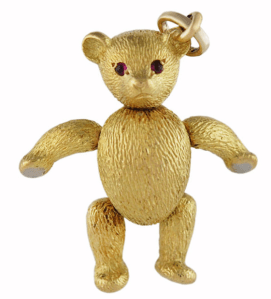
    4. Gold bear pendant
    5. Glitter mask
    6. Pink suede diary

    each without a time, date (to mark a reason why)

    Only
    the decayed pieces of
    days      circa: the beginning

    Springsteen while Dad drives
    booster seat bumping in the back
    hurtling forward
    up Topaz Way
    collecting components
    for a warped, withered timeline
    chronology askew
    like the burial and discovery
    of a grand empire
    1-6 reemerge in ruble

  • Picture 43by Abigail Schott-Rosenfield (’14)

    Birds ring the frame
    where the ceiling used to be.
    They stare, they dip their beaks
    into the empty cabin: the indented

    seat, the floor covered in gray
    prints.

    He worked alone—
    stepped hard
    and emerged often,
    removing rocks and other
    hard things.

    Break it up, break it up.
    Others will follow.

    They set their shape to the metal
    like a strand:
    one could not move
    without the others.

    Black birds
    employ the ruins

    as they took the corn
    when it was full and ripe

    and one black bird followed another
    into the fields.

  • by Olivia Weaver (’16)
    From the Sarah Fontaine Unit

    Picture 33

    There is no way to write. It happens. Usually, at the most inconvenient of times. Perhaps you are listening to your classmates do speed-reads as you prepare for your show that’s on tomorrow and some hidden dam breaks inside of your head and the words are flowing. You’d like to go and get your writer’s journal, but you’re on next to stage and cue and you have to swallow down all the inspiration and wonder. Words wait for no man.

    This is usually how I write. Something happens, maybe someone was particularly witty or I saw something touching, and lines form in my head. They jostle around and mix and swirl, and I do my best to remember them and write them down when I get the chance. I often forget them.

    If I know I have a writing assignment due very soon, I read something, or take a walk, or listen to music. I have authors I know will quicken my brain, and there’s a ridiculously large park near my home that I spend a lot of time in. My muse is sought out, poked, prodded, and otherwise bothered until it grudgingly allows me something that might be acceptable. This is how the worst of my poetry is created.

    On the rare and delightfully frustrating occasions in which the Muse is ready to work and I am not preoccupied with anything altogether urgent, I find that my hand will not write down anything fast enough. Even now, I am having difficulty putting feelings down on keyboard. But this is also probably because something in my room is on fire and it’s very distracting.

    What I’d like to do about writing is simply do it more. I don’t believe that I write enough. I used to feel awfully guilty about this, but I’ve come to be a professional at making excuses and making myself feel better. Sometime I write on the bus; it’s very charming. People think I’m strange or artsy. It’s really just because I haven’t got time anywhere else.

    Well, of course I have time, but nobody has time for having time anymore. Why would I write when I could take a shower? I need to sleep, and eat and finish my homework, and take the trash out and also call whatsherface about that thing that happened on Friday. And Christ, I’m not going to be a stereotypical writer and not go out with friends, because we’re going to have a Star Wars marathon and I’ve never seen all the movies completely and I know I never will if I don’t get it done soon.

    I should also probably sand my bookshelf and paint it, because at the moment it’s the only piece of furniture in my room that isn’t a dark color. Except for that dresser-thing, but that’s going out as soon as I transfer everything from the top of it to that new desk I got, which has a really scratched up surface but that’s alright because it was free, I think.

    Not to mention, tomorrow is Monday and I haven’t picked an outfit. I’d probably end up wearing all black because that’s what I have the most of, but I haven’t done laundry in way too long. Which reminds me…

    You probably get the picture. I have a distractable nature, especially when I’m under pressure. It’s a gift, I’d like think. I never stay down for very long.

    Something else I’d like to do about my writing? Besides more of it? Well, I certainly wish it was better, but that would require something undiscovered. I’ve certainly come a long way from when I first applied to the Creative Writing program here. I wrote poems that rhymed and my short stories were meandering and plot less. I believed that poetry could just be a jumble of words that sounded cool that people didn’t use very often and brought together and image. I didn’t really attribute writing to producing physical reactions, or emotional, or mental, for that matter. I was blissfully insensitive. I thought I knew what I was doing.

    I know now that writing is all about recognition. It’s about someone explaining your feeling to you better than you ever could. It’s pulling something out of you didn’t know was there. As a writer I’m a magician. As an eight grader starting off I was the kind of fool who got his magic kit mail order, waving his plastic baton with a towel tied over his shoulders like a cape.

    I still don’t think I have any idea what I’m doing. But that’s better, I think, than wrongly thinking I’m doing it right.

  • by Giorgia Peckman (’14)
    From the Sarah Fontaine Unit

    “And that’s what I saw when I looked out the window that day. All these words were living.” — Eileen Myles

    Picture 31

    Frances said, “I want to be God/Bring me good news.” That is the role I possess, desire and aspire to as a writer— possibly not even that, merely just one who makes writing. Call me a heretic, praise me so: I want to be a god. I want to take myself and by extension you, the reader, the apostle, disciple, preacher, pray-er, somewhere else. I want to write about all the good in us, and how painful and grotesque it is in the fact that it is so singular and so beautiful and at the same time it is universal and renders all who breathe these “living words” un-unique.

    That is the problem I face in making writing: it is impossible to be the kind of god I want to be— possibly because we are all gods in our own right and possibly because none of us are. God has left the building and we are left here to pick up the pieces and dissect them with the blunt knives we call words. They are not enough. I want to live outside.

    I want to fill pages that are the equivalent of screaming very loud in the middle of a lot of wind with your hair flying into your mouth and trying to choke you. But oh, my voice is so hoarse. I was born hoarse, never quite loud enough. We all are— disgusting, coughing mess of a species, of a mind, of a thought.

    The problem with ruling an empire, as gods tend to do, is that everything is alive, in its own context, not just the one we perceive it in, that we use to write about it— and the harder you try to present living things as they are, the father away you keep yourself from doing so. Only when you stop trying to be literal, factual, honest, do you produce something that is any of these things. When you’re telling the truth you always end up lying a little, but when you know you’re lying…well, things end up being a lot more honest than you expect. You end up clutching little morsels of truths in your palms and think, maybe even exclaim to whoever is keeping you company today, “What is this! This is true! But I swear I was lying through my teeth!” That is how all good writing is written— by lying and finding something true at the end of that fishing line of fallacy.

    I want to write about the things that are stuck inside of everything and everyone and I want to make the things, the living words maybe, that live in veins beside the platelets, into things everyone can hold and see and love. Everyone wants to be loved, even gods, even me (especially gods, especially me). It seems that I hope in some way that in presenting what they hate to them, like a cat returning prey to its people, they will love it, and by extension me, for bringing it, mangled and dripping blood, to their doorstep.

    But I can only do this a little bit, just like you can only see in the dark a little bit, or when you smash a bug it only dies a little bit, and keeps moving across your coffee table. You can only make things that don’t exist, or no longer exist, into things that do exist, in the here and now and present tense, a little bit. You can only do this a little bit, because no one is all god, everyone is just a little bit of god.

    The thing about writing is that you always have to be slightly uncomfortable, a bit ill at ease with the world. This trait is found in many forms in nearly all writers I have met. For me, it’s like wearing a dress. I hate wearing dresses and on the days I decide to for some reason unbeknownst to my better judgment wear a dress, I feel like I am constantly writing a poem, convinced the world is out to get me and that more importantly, that I deserve it. None of this is true, of course, or it is mostly untrue. What is true about it is that I am constantly writing a poem. Being a writer is not so much about the fact of writing as it is about a state of being, a state of constantly swimming through the living words that clog up the air. The fact of the matter is that everything that is ever going to be written is already written, it just hasn’t been put on paper yet. When I truly make a piece of writing, I do not feel as if I have just created something, I feel as if something that has existed in the ether of the places in people that no one can reach has moved through me and now resides on the paper. Writing is tampering with forces of the mind, a weird amalgamation of godliness and collective consciousness that uses people as a vessel of meaning, not the other way around.

    A lot of the writing I do is merely an exercise in articulation and discipline: preparation for the living words to travel through me. Training me as a preacher and maker of words, which brings me back to the ultimate trial and tribulation: I am no god nor will I ever be, and all I do is a Sisyphian attempt. Yet, it’s the attempt I truly love, not the ultimate goal. I only covet the good and try to render it so because it must be solidified into lights we can hold in the dark, amongst the bloody, messy mass of weakness and tissue we surround ourselves in. If I were the type to pray to something other than my own volition, I would pray to words, all of them, all of the living words, alive and well.

  • reprinted from SOTA Facebook feature, “SOTA in the City” regarding CW alum Sayre Quevedo:

    Picture 30

    SOTA SCHOLAR SOUNDS OFF:
    SAYRE QUEVEDO (CW 2011) can’t keep quiet– which is a very good thing.

    During his junior year with Heather Woodward in the SOTA Creative Writing department, Sayre blended poetry with politics as an intern at YOUTH RADIO in Oakland, a non-profit youth-driven media organization. Since graduation, he has continued with his involvement there.

    As Production Assistant, he helps manage the Youth Radio Juvenile Desk, which looks at young people and the criminal justice system. He has produced radio and print pieces for National Public Radio, The Huffington Post, Marketplace, and KQED.

    He attended and covered the 2012 Democratic National Convention in Charlotte, North Carolina and has traveled to Chicago, New Mexico, and New York in pursuit of opinions, facts and truth.

    This Fall, Sayre received a NEW VOICES scholarship, awarded to emerging minority radio producers to attend the THIRD COAST INTERNATIONAL AUDIO FESTIVAL. A co-host of the DIGITAL WAVES NEW MEDIA FESTIVAL at WNYC, he won 2nd place in the Multi-Media Slam for a piece of reporting for National Public Radio: “Would-Be Accountant Takes to Streets to Find Work.” His piece for KALW: “Making Sense of California Youth Sentencing Laws.” earned him a spot as a finalist in this year’s Media For A Just Society Awards.

    Recently accepted to The New School — Eugene Lang College of Liberal Arts in New York as a Fellow with GLOBAL CITIZEN YEAR. he will spend his freshman year of college in Ecuador living with a host family and apprenticing in the field of education, agriculture, environment, or public health. His current SUMMER CAMPAIGN, a short intensive challenge designed to hone leadership and community-building skills, is an awareness and fundraising effort to raise $2,500 toward Global Citizen Year’s Scholarship Fund, which helps fund annual travel opportunities for low-income youth.

    Sayre believes in “….audio as not only a creative outlet but a tool for change.” He’s speaking out and people are listening. He also believes in community. Support his challenge by subscribing to his blog and sharing the link.