CREATIVE WRITING

at the Ruth Asawa School of the Arts in San Francisco

Welcome! CW develops the art and craft of creative writing through instruction, collaboration, and respect. This blog showcases STUDENT WRITING and how to APPLY to Creative Writing.

  • I knew that I wanted to attend SOTA for creative writing after I seeing “The Nature of Offense,” the department’s 2013 poetry and fiction show. I was in the seventh grade. I know that for many people, their creative writing dream began years earlier. It seemed strange to me then, when I was meticulously planning my portfolio to audition for CW before most of my middle school peers had stopped to consider where they would move onto when those three years came to an end. I assumed that it was only me who planned so far ahead, but I have since come to realize that this is not at all uncommon for students who go on to attend SOTA.

    Now I have a six year ­old brother who is taking lessons in swimming, dancing, art, and guitar practically since he could walk. He is incredibly creative, always bubbling over with enthusiasm to show me his latest projects and drawings and stories. He has already decided that he wants to go to SOTA, to be in the class of 2027, although he hasn’t decided what art he is most passionate about. To me, this sounds incredibly unusual, and yet if my brother is thinking about high school already, other children his age must be too. That being said, I have never met anyone below the age of 13 who has one school that they are already passionate about, unless that school is SOTA. So what is it about the School of the Arts that’s got little kids excited for secondary education? Really, it’s not complicated. What creative young kid wouldn’t be excited about getting to spend 2+ hours a day just doing what they love? For kids like my brother, who thrive in artistic settings, I can imagine that it would sound like tons of fun.

    However, I think it’s important for everyone who wants to apply to SOTA, especially for creative writing, to remember that while every art department is fun, it also requires passion and determination. It’s easy to dream about going to SOTA and getting to explore an art form, but loving that art enough to practice it more than you ever will have before, and to find a balance between rigorous academic classes and that art is a challenge. Any student can thrive at SOTA with real motivation and love for what they do, but every department requires commitment.

    Since I began at SOTA, I have known that this school was special. There is an artistic and lively atmosphere here that I never tire of, and opportunities that you can’t find anywhere else. I have not once regretted the workload that I took on in coming here to pursue writing, or that I was so quick to decide where I wanted to attend high school. Any school that inspires excitement in children as young as my brother is rare and unique, and I know what whether or not he ends up here, or any of the other kids his age who are already decided on it, SOTA will continue to have some of the most inspired and inspiring artists around.

    Anna Geiger, class of 2018

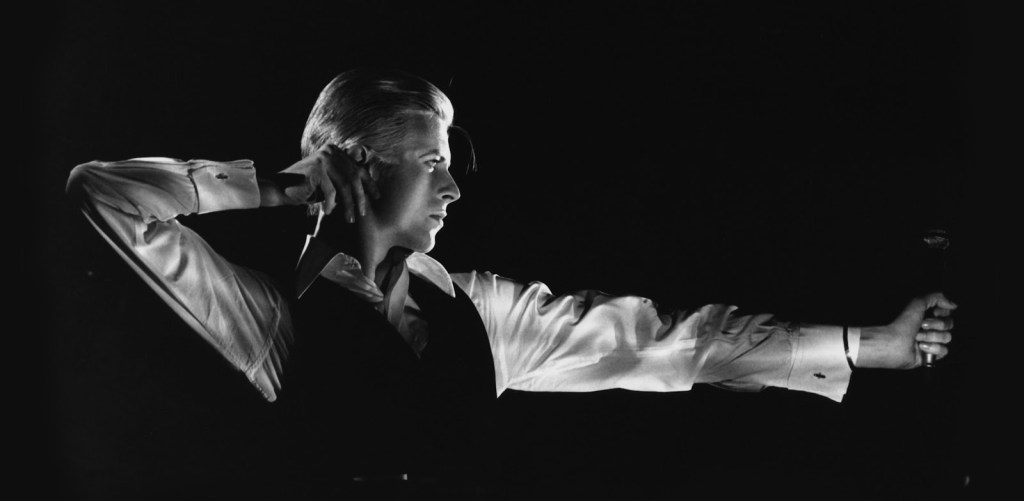
  • Bowie by Stella Pfahler

    The first time I heard David Bowie was when I was nine years old. I had been hearing him all my life—my father was and is an adamant fan, and so Bowie’s music was always around—but it was at the age of nine when I actually heard him. Before that moment, I had been going through musical “phases”—first it was Michael Jackson, then Queen, then Prince (I always have loved the glam ones). At first Bowie’s music left a figurative bad taste in my mouth. It was scary, nonlinear, unforgiving.

    Other than “Space Oddity” and the occasional “Life on Mars” or “Modern Love,” Bowie’s music was mostly absent from radio set lists. Then I discovered my dad’s records. I started with his 1977 release of Heroes and later progressed to Hunky Dory and Aladdin Sane. More recently, I’ve been listening to the back tracks of Low, Lodger, and The Man Who Sold the World.

    The thing that has resonated with me in his music is not the startling harmonies, outbreaks of brassy saxophone, or twanging guitar leads. It’s not in the in-your-face, often sexual songwriting, or in the promiscuous and gender-ambiguous manner in which he used to dress. The thing that I love about this man is his ability to change personas, to change himself, at the drop of a metaphorical hat—without ever looking back. This is the type of person that I aspire to be.

    David Bowie released his last album on his birthday, three days before his death. His album, Blackstar, was in a way a parting gift to his fans. It is moving to think that he considered the lives of people he has inspired rather than his own.

    I was angry when I heard of David Bowie’s death. I was frustrated, and I was in denial. I though that, if anyone should have immortality, it should be a man who changed millions of lives! He had made me realize that I could be as brave as him, as forthcoming. He made it okay to be a “freak.” He was a hero to me for years and years (pardon the expression, Bowie fans). The thing I wish for myself, as both a writer, and a musician, and human being, is to be somebody’s hero like he was for me.

    Stella Pfahler, class of 2019

  • Currently in Creative Writing Two, which consists of sometimes apathetic juniors and seniors, we have been in the midst of an exhilarating poetry unit where there are virtually no boundaries. Every day we work with our nymph-like leader Maia, who leads us through mentally stimulating exercises that invigorate our world-weary souls. I have never been this enthusiastic about a poetry unit before. This doesn’t mean that our previous poetry units haven’t been phenomenal, it just means that this current poetry unit fits some of our (admittedly more fiction-oriented) minds better. There is more room for creative interpretation and doing writerly writing things. You know–creativeness. I feel as if this unit has changed my perception of poetry, and has made me bolder. I’m excited to experiment more, and hopefully next year’s poetry unit will be just as good as this one has been.

    Davis DuBose-Marler, class of 2017

  • Feminist Poetry by Thalia Rose

    Last Tuesday, CW alumna Mollie Cueva (Class of 2013) visited CW1 and taught a lesson about feminist poetry and intersectionality.

    Definitions (convened by Mollie Cueva)

    • Feminism: the belief in the social, political, and economic equality of women
    • Gender: range of socially ascribed characteristics pertaining and differentiating between masculinity and femininity (and other)
    • Sex: the 2+ major forms of individuals that occur in many species on the basis of reproductive organs and chromosonal structure. may or may not agree with gender identity.
    • Intersectionality: the acknowledgement of the different and overlapping spheres of oppression/oppressional forces on a person’s life
    • Womanism: the acknowledgement of the specific discrimination and inequality experienced by black women

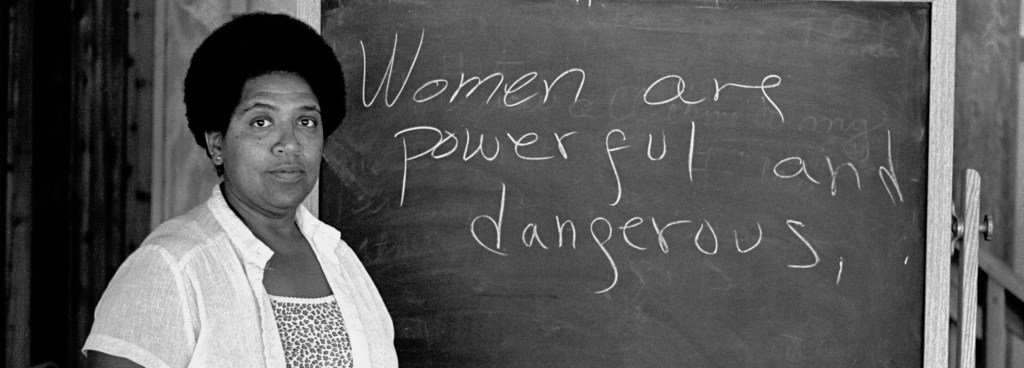
    After an introduction to feminist poetry with the definitions shown above, CW I read and discussed the essay “Poetry is Not a Luxury” by Audre Lorde. Poetry is Not a Luxury was predicated by a brief summary of the first two waves of feminism, which illustrated that while the first and second waves of feminism granted women the right to vote and opened up more opportunities for them, these early movements excluded trans women and women of color from the movement.
    In modern time, intersectionality is still often disregarded. It was important for us to discuss this, because addressing a problem is a step towards working out how to make things less unjust. It was beneficial to me that I could learn about my privilege as a white person (and feminist).

    Anna (class of 2018) pointed out how in last year’s poetry unit, the book we studied from was predominantly the writing of white men, and that it lacked diverse perspectives. Audre Lorde, a lesbian poet, presented different styles and ideas than we had read last year. In Audre Lorde’s essay, she wrote, “This is poetry as illumination… From which true poetry springs births thought as dreams births concept, as feeling births idea, as knowledge births (precedes) understanding.”

    Furthermore, we read “Translations”, a poem by Adrienne Rich. The poem introduces the concept of the nuclear family. The nuclear family concept prioritizes gender roles. It was initially created by sociologists as an oppressive device. The archetype of a woman as a docile housewife harms and isolates women. The poem mentions the sexism and internalized misogyny that is a result of the nuclear family concept.

    “The phone rings endlessly
    in a man’s bedroom
    she hears him telling someone else
    Never mind. She’ll get tired.
    hears him telling her story to her sister /
    who becomes her enemy
    and will in her own way
    light her own way to sorrow.”

    These two stanzas tell of an affair, presumably of the husband of the narrator and the narrator’s sister. The vagueness of the poem makes it so that what the husband says open to interpretation. It also brings a tone of powerlessness. In discussion of this piece, it was brought up that there is a double standard for men and women regarding sex. For women, there is “losing your virginity”. In life and literature, there is an odd fixation on virginity, specifically the breaking of the hymen during first sexual experience. Women are objectified as sexual objects in media and American culture, yet a woman with sexual desire is shamed for it. In the ultra-patriarchal world of the novel Chronicle of a Death Foretold, a newlywed woman is beaten by her husband once he discovers she is not a virgin. The man who took the newlywed woman’s virginity years ago is murdered by the woman’s brothers in a machismo sense of honor. Today, when a man has sex with multiple partners, he is called a stud. When a woman has sex with multiple partners, she is called slurs.

    “ignorant of the fact that this grief
    is shared, unnecessary
    and political.”

    With that in mind, Heather Woodward mentioned that when she decided to prioritize teaching over writing, she reflected on the decisions she had made throughout her life and realized that, for her, they all correlated with being a woman. She felt that, by being raised to be nurturing, teaching was the path she had naturally selected.

    Personally, being raised a girl, I had personal experiences with sexism and was weighed down by being treated as lesser. I had been silenced in classes, or spoken over by men who repeated my ideas. This year I’ve been practicing empowerment with statements like, “You interrupted me when I was talking” and “I wasn’t done with what I was saying” and “Don’t make comments about my body”.

    My relationships with others have been influenced by sexism. Even with girls, my relationships have been affected by internalized misogyny and the petty envy and competition that is instilled by it. I am woman-aligned agender person, yet feminism is still one of the most important things to me in my writing. I was shaped as a person from being raised as a girl, and from only having strong women figures in my life when I was growing up. I think that being raised a girl and facing discrimination from being assigned female at birth is why feminism is so important to me and in my creative work.

    Thalia Rose, class of 2018

  • Today was MLK day so school was not in session. Thus I had time to mull over what I wanted to write for this blog post, and somehow landed on the subject of mentoring. All of us in Creative Writing know how great Heather, Maia, and Isaiah are as mentors. They lead us through thick and thin in our art and help us to create and improve and learn about so many things. They teach me like my middle school geometry teacher never could (or perhaps never tried to) in a way that truly makes an impact.

    I’ve spent now more than two and a half years with these people, but sometimes it takes stepping back and reflecting to realize how much they have influenced who I have become. Now I wouldn’t say I am much of a playwright, or that I would gladly write a book of poetry, but dabbling in and traversing these arts through writing, reading, watching, and listening, has given me a stronger understanding of how I write and how I can improve while still retaining my own voice.

    It’s a humbling experience, one that I have discussed with many of my peers, because no matter how far we have come, there is still more to achieve, more strange surrealist ballads from Maia, or absurdist films from Isaiah or another of Heather’s never-ending supply of books. I am more than halfway through High School, but I can’t see the end of my Creative Writing journey. I know that the mentors I have come to know and the friends I have come to make will surround me for much longer than four years of secondary education.

    Clare Sabry, class of 2017

  • In the famous words of Forrest Gump, “life is a box of chocolates. You never know what you’re gonna get…” And I got into college! So that’s crazy. I’m sure many of you are awaiting acceptance yourself—to SOTA or summer writing programs or publications. And what I, as someone who has gotten lucky enough to get a great piece of chocolate (like the gooey, caramel dark chocolate kind) have learned is, to be honest, waiting is the worst part. The build up,the anxiety, the sleepless night before is the worst- but once that acceptance (or maybe rejection) letter comes, you know that it’s what was meant to happen. It’s amazing to know the hard work you put in before hand (whether that’s taking the SAT or painstakingly making an umlaut zone) is validated. So to all you waiting acceptance out there—I’m sorry it’s so stressful but it will ultimately be worth it! Que sera sera and all that.

    Noa Mendoza, class of 2016

  • These days, I have more homework than I know what to do with and, as college applications inch closer by the day, my stress has become something tangible in my throat. This is not unusual or unexpected. I am, after all, a junior in high school and I was told innumerable times before this year began that it was going to be a tough one.

    While late-night essays, last-minute hallway study sessions, SAT prep books, and lists of the 380 best colleges in North America are certainly exhausting, the hardest part of this year, for me, has been the decrease in time available to work on my writing. I find myself finishing homework late at night nearly every night, and by the time I’ve finished it usually takes a serious effort to sit down and pump out a short story instead of crawling into bed and falling asleep. Now, obviously, it would be ridiculous for me to try to write a short story every night under any circumstances, but watching both my free time and writing time evaporate as junior year progresses is frustrating to say the least, especially since I am always aware that every story I write now is a building block for the greater, more complete work I will do later. I resent losing building block after building block to the stress and sleeplessness that this year has offered.

    I do not know what the right answer is here. I have to do my homework. I have to think about college. I have to write. I suppose the only solution is to keep moving, keep working, and keep writing, even if I lose some sleep in the process.

    Emma Bernstein, class of 2017

  • In CW these past few weeks we’ve been preparing for the release of our zines, of which there are five differently-themed issues. On top of scouting for cool submissions, we were asked to conduct one interview. First we learned the basics of interviewing: how to stay cool and professional, how to engage, how to sound casual, how to get to the point, etc. Then we took a look at some examples via You Tube. The first one was an example of what to do. We saw a short exchange between Howard Stern and Jay Z, in which they talked about the rapper’s new book. Stern was very comforting and welcoming and the very obviously nervous Jay Z quickly became relaxed and confident.

    Then we took a look at what not to do. A grainy video of an interview of Mark Zuckerberg was probably the most depressing thing I’ve seen in a long time. If you can imagine standing on stage and interviewing the most famous technology celebrity on the planet and have EVERYTHING go wrong, this would be that interview. The woman interviewing began off talking quietly to him and giggling, almost like she was flirting with the poor guy. Then, she started telling a story, leaving him nothing to say or do other than nod his head and confirm the story’s truth. Eventually, he got fed up with that and decided it would be best to stare blankly into the woman’s eyes, leaving her blushing and flustered. The following two minutes were an explosion of squabbling and mob-like audience responses that overall left the place in an extreme state of awkwardness. I went home that day and proceeded to watch one million bad interviews.

    After days of practice, I felt comfortable with conducting my interview. My subject was a classmate named Floyd, who is famous at school for his eccentricity and creativity (this past Halloween he wore a rag and a mop of hair on his face and went as Jesus.) We talked about the apocalypse for a good twenty minutes and, using our new note-taking techniques, I was able to take good notes and transcribe it into a proper interview. The finished product, along with many other entertaining conversations, will be published in our zines next week.

    Liam Miyar-Mullan, class of 2018

  • Meet Your Cowboy by Josie Weidner

    I want to talk about a new ritual Creative Writing has adopted this week. At the beginning of class, we tear a little piece of paper from our notebooks and write our name on it (I prefer to use Josofinnne, Queen Josephine, Jojo) for Heather to collect. She then distributes our names to a different person in Creative Writing and gives us a prompt of something to write to them (Tell them a secret, What do you admire most about this person?) and then the paper is given back to its original name-bearer.

    One of my personal favorites was the prompt “What do you wish for this person?” On my piece of paper was written, “I wish you finally meet your cowboy.”

    As a senior, it’s getting increasingly harder to be present in school. With finals week fast approaching, and my own personal schedule growing more hectic, it’s even harder to be grounded and cognizant of other people, of my community. This little ritual, however, has helped me focus in Creative Writing, not to mention create personal connections with everyone in the department. It turned my day around when someone wished for me to meet a cowboy. I realized that, no matter how crazy things might get, I will always have the Creative Writing community, and I will always be valued for exactly who I am.

    I highly suggest this ritual for all kinds of group settings. It not only feels good to receive your paper, but it also feels good writing them. I love having that personal connection with one other person in the department, even if it is just for five minutes before class.

    I’ve been collecting my pieces of paper in an envelope, and when I’m feeling overwhelmed I read them. I’m looking forward to reading them for many years to come!

    Josie Weidner, class of 2016

  • As a high school student, it is easy to forget how much I depend on my parents. I rarely consider that they have lives outside of my own. Many may find this self-centered or selfish, but as a teenager, it is normal to believe that the world revolves around your whims. It only seems natural for my parents to fund my projects, drive me around, or wait for me to finish after-school activities. However, upon reflection, I’ve come to realize how hard it would be for me to live on my own and pursue a career in creative writing.

    Writing is a career that is notorious for not being extremely lucrative. Unless you make it big, or sell some organs on the black market, it is hard to live a relatively nice life in the Bay Area. That isn’t to say it cannot be done. There are plenty of writers who are successful, well- known, and have made a lot of money. Sadly, however, that reality isn’t true for all aspiring writers. For these reasons, I am in the perfect place as a young writer to explore writing to its fullest. This is all because of my parents.

    When I really think about this fact, I understand how much I need my parents’ support during these odd teenage years. They save me from the worries of the adult world and its issues. This could easily include having to take care of a child, utilities, food, or possibly another adult human being. My parents’ support allows for me to be able to focus solely on my passion and improve my writing so that I become better at my art. And sure, while parents in some ways can seem overbearing and slightly annoying at times, their effort in helping me with life is invaluable. This time of year forces you to think about all the things we have to be thankful for, and this was at the top of my list.