CREATIVE WRITING

at the Ruth Asawa School of the Arts in San Francisco

Welcome! CW develops the art and craft of creative writing through instruction, collaboration, and respect. This blog showcases STUDENT WRITING and how to APPLY to Creative Writing.

  • Why Everyone Should Reread Children’s Books, by Anna Geiger

    In the last few months, I have endeavored to find and read all of my favorite childhood
    books. This began on a family camping trip over a long weekend where I read my younger brother Matilda next to our campfire in the evenings. I enjoyed doing this so much that I continued to read to him after we’d come back home. We finished Matilda and then moved on to James and the Giant Peach, then A Series of Unfortunate Events, which we still have yet to finish.

    After two and a half years of trying to broaden my horizons with literature, I’d read Austen and Tolstoy, Neruda and Dickens, Hemingway, Proust, and the Brontes. Those authors and their books stretched and molded my mind, rooted themselves firmly in my psyche. I believe in the power that great literature can have for emotional and academic intelligence, but I found myself wanting to escape from the rigid realism and convoluted language which I couldn’t escape from in the books on my bookshelf. I found a quote by Emerson printed on a bookmark in a bookstore one day reading “I cannot remember the books I’ve read any more than the meals I have eaten; even so, they have made me.” This idea he proposes, of the books he has read “making” him, stuck with me. I have come to the conclusion that I am not content with this idea; I want to remember the books that have made me.

    I began finding and reading the books I loved from my childhood in linear order. I started with Shel Silverstein’s The Giving Tree and his poems from my copy of Where the Sidewalk Ends. I read Stories from the Ballet and the entire Little House on the Prairie series, then Eva Ibbotson’s Journey to the River Sea, The Star of Kazan and The Dragonfly Pool. I am currently reading The Hobbit and am nowhere near the end of this journey, but already I have experienced a vivacity of language, freedom of plot, and idealism of life which I have found sorely lacking the books I have read in recent years, and the pieces I have been writing. It is my hope that reaching back into the past to rediscover, as Emerson wisely said, the books that have made me, will allow me to become more knowledgeable of my literary self and point my creative self in a new, uninhibited direction.

    Anna Geiger, class of 2018

  • CW’s own Juli Roll, as San Francisco champion of the annual Poetry Out Loud competition, is appearing onstage tonight at the Mechanic’s Library with California’s Poet Laureate, Dana Gioia, at an event celebrating National Poetry Month.

    From the Mechanic’s Library Website:

    Mechanics’ Institute is honored to welcome consummate poet and arts advocate Dana Gioia as guest of honor to celebrate National Poetry Month. He will read and talk about his latest collection, 99 Poems: New and Selected. He will share his experiences traveling to communities and schools throughout California’s 58 counties to engage people of all ages in the pleasures and inspiration of poetry. Book sale and signing will follow the program.

    Dana Gioia will be joined by Julieta Fuentes Roll, Poetry Out Loud Champion for San Francisco County and a student at the Ruth Asawa San Francisco School of the Arts; and Margo Perin, San Francisco County Poetry Out Loud Coordinator.

  • Join the Creative Writing Department on February 23rd at 6PM for a night of poetry and fiction at Alley Cat Bookshop in the Mission. We will be reading till we drop as we raise money to travel to New Orleans this spring and attend literary festivals while creating new artistic connections to NOLA’s writing community. But we need your help! Donations are encouraged, but the event is free! Refreshments will be served. Help get us on that plane!

  • Written in response to the CW trip to the new SFMOMA

    a confusion of the senses. the painting looks like a song called taxi cab, like the sound of metal clinking against teeth, like what I wish I looked like from the inside.

    splattered. new. it’s art in its most basic form – as many colors as will fit onto a single canvas, smudged and smeared and blown together and apart, a paintball fight, someone shutting their eyes and relaxing. color is an exceptional thing.

    I sometimes meet colors that are anxious, sometimes ones that are angry. I have noticed that colors on their own are never happy. I think, maybe, my brain is trying to tell me something in that confusion, in that sensory experience.

    don’t let yourself be alone. you will be so much alone, but never quite happy. that’s what the colors say.
    calm, yes, excited. but never joyful.

    that comes in patterns, in the way the paint is splattered onto this canvas, in the way my imagination sees joy in one hundred complementary colors that dance together, in the way a hummingbird’s wings sound like the smell of baking brownies.

    home lives in color. that’s what entrances me most about art.

    in the end, all it is is music on a canvas

    all it is is a place to live in brightness

    all it is is childhood and paint-smeared fingers and color, color, color

    color everywhere.

    by Arin Vasquez

  • For the past month, Creative Writing has been in our poetry unit. In this unit, the sophomores have each taught a one-to-two day lesson surrounding their culture. This unit has been enchanting and delightful. Each new theme has been refreshing and taught me something new. I have been able to explore new cultures and writing originating from it, and my own writing has evolved with each new style. The sophomores give us poetry prompts at the end of their unit, a way to extend the lesson past the classroom and allowing us to experiment with writing on our own.

    These units have helped my poetical voice develop. Through workshopping and reading new pieces, my writing has improved immensely.

    Being able to explore the different poems from multiple cultures has opened my eyes to the different styles of poetry. With each unit, my eyes have been opened to exciting new voices and forms of poetry.

    If I were to teach my own mini-unit I would bring in some poems surrounding Middle-Eastern culture. I would bring in some poems, such as ones by Mahmoud Darwish and Naomi Shihab Nye.

    This unit is different from our previous unit, fiction, because in our poetry unit we have a larger range of diverse writers. In our poetry unit it has been much more personal and, while teaching us plenty about the culture, it has taught us about the person teaching the unit too.

    My favorite has been Solange’s unit which was focused African-American culture. Solange brought in poems and showed us music videos by artists like Solange Knowles, Beyoncé, and Todrick Hall. These were significant because she was able to compare contemporary African-American poetry to older works, and how both still combat the same issues.

    We get weekend prompts as well from Heather Woodward, our department head. One of the prompts was to write a poem having to do with a conspiracy theory. This was our first one given therefore the weakest of my poems this unit.

    When we turn in the prompt to the sophomore who assigned it, they read over and edit it. Then we fix the edits they had made. We’re to edit all of our poems from this unit and hand them in as a portfolio.

    We will be able to use the poems we have written for our upcoming poetry cafe. The poetry unit has been my favorite thus far. It has given me the opportunity to delve into different cultures and enhance my knowledge on certain topics, such as Native American dances and the history of Tagalog. I look forward to see what next year’s poetry unit holds.

    Dalia Harb, class of 2020

  • A Dip into New Waters by Eva Whitney

    The beginning of the school year was filled with outings, such as going to the Museum of
    Modern Art and the San Francisco Bay. These were to bring us closer together and build friendships between the Creative Writers.

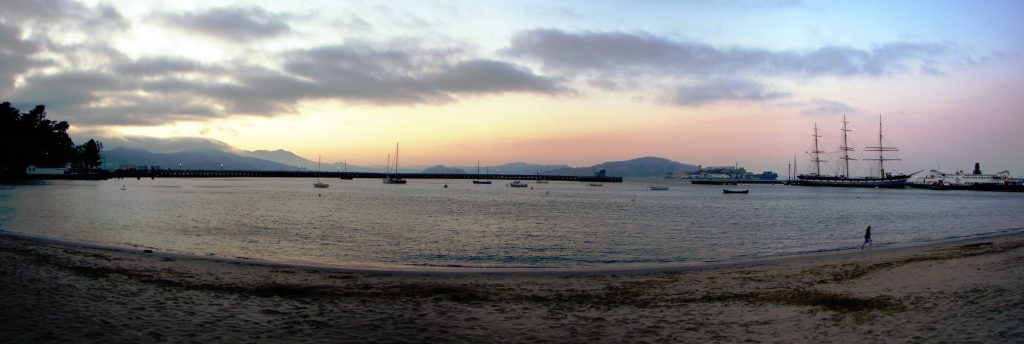
    On the Friday of the second week of school, the Creative Writing Department ventured to the tip of the city take a ritualistic dip into the water. We crowded on to the bus, huddled next to our new friends, towels and bathing suits stuffed into our backpacks. At the waters edge, we scrambled out of our clothes and barreled into the frigid bay. I was tentative, dipping my toe in at first to test the temperature of the water before fully submerging myself. I could only bear the water’s bite for a minute or so and then rushed onshore to join my peers. The freshmen stayed close to each other, whispering about the weather while the seniors balanced sophomores on their shoulders and splashed at each other. I reclined on the beach and watched as my new classmates rejoiced in the water. It was then I realized how fortunate I was to be surrounded by these people, not only as writers but as allies.

    We parted ways, leaving on separate buses. I got on to my respective bus with new friends, and thought of the next four years of my Creative Writing journey. The first month left me feeling optimistic about what was in store for me. I could not wait to obtain the same confidence the seniors had, both with each other and with the world. On the Friday of the second week of school, I took a dip into the new waters of the Creative Writing department.

    Eva Whitney, class of 2020

  • My family celebrates Christmas, Chanukah, and Kwanzaa over the winter holidays.

    We’ve taken to calling this mix match of holidays Christmachanukwanzakah, and I haven’t yet encountered another family who celebrates all three. In fact, many of my friends don’t know what Kwanzaa is. It is an African-American holiday not affiliated with any religion, and I’ve met people who think it’s a Muslim holiday from northern Africa.

    Recently, I was able to go up to Yosemite for three days to take part in a teen winter retreat at a Jewish camp I go to. The two nights I was there were the fifth and sixth nights of Chanukah, and also coincided with Ujima and Ujamaa, two nights of Kwanzaa. I had been planning to bring some candles or electric tea lights to light, but in the rush that occurred the morning I left, I forgot. I remembered once we were already in Yosemite, and asked a few staff members if they had tea lights or black, red, and green candles. They didn’t.

    So, when bedtime came around, I slipped out of the cabin to celebrate Ujima, the principle of “collective work and responsibility.” I ran into the counselor in charge of our cabin, who asked if everything was alright. I awkwardly told her I was celebrating Kwanzaa, which felt a bit odd after we had just lit the Chanukah candles. She nodded, and went back into the cabin.
    My family always celebrates Kwanzaa by singing a song called “Lift Every Voice and Sing,” also known as “The Black National Anthem.” I imagined a black candle for Umoja, the
    first night, a red one for Kujichagulia, the second night, and a green candle for Ujima. Then I sang the first verse of “Lift Every Voice and Sing,” quietly and a bit nervous that someone inside would hear. When I went back inside, the counselor asked if I could tell her about Kwanzaa the next day. I agreed.

    The next night, before we went off to bed, all forty-one of us (plus some of the staff members) participated in a guided meditation that was about spirituality. I mostly thought about my Jewish identity, and realized almost for the first time that I am very proud of being a Jew. Later, just as I was getting in bed, I remembered that I had forgotten Kwanzaa, and got back out of bed. That night, Ujamaa, represents cooperative economics. As I was leaving the cabin, my friends asked where I was going. I told them I was going to celebrate Kwanzaa, and they looked a bit surprised. So when I came back in after imagining the candles from the previous nights and another red candle for Ujamaa, then singing the first and last verses of “Lift Every Voice and Sing,” my friends asked me questions about Kwanzaa. I explained what I knew of the answers, and was again proud of my identity.

    Celebrating an African-American holiday at a Jewish camp was interesting, to say the least. When I was considering spirituality, I left out Kwanzaa, and focused mainly on Judaism. Kwanzaa is, however, a big part of my spirituality, and my identity as an African-American is just as important as my identity as a Jew. Although I’ve been celebrating both Kwanzaa and Chanukah for as long as I can remember, and we’ve even combined the names to speak of our winter holidays, I’ve always thought of them as separate. After celebrating them both on the same night, but one with a large group of people and one alone, I have a new perspective on the two holidays.

    Lena Hartsough, class of 2019

  • Bruce Connor: It’s All True by Ren Weber

    “I am an artist, an anti-artist, no shrinking ego, modest, a feminist, a profound misogynist, a romantic, a realist, a surrealist, a funk artist, conceptual artist, minimalist, postmodernist, beatnik, hippie, punk, subtle, confrontational, believable, paranoiac, courteous, difficult, forthright, impossible to work with, accessible, obscure, precise, calm, contrary, elusive, spiritual, profane, a Renaissance man of contemporary art, and one the most important artists in the world. My work is described as beautiful, horrible, hogwash, genius, maundering, precise, quaint, avant-garde, historical, hackneyed, masterful, trivial, intense, mystical, virtuosic, bewildering, absorbing, concise, absurd, amusing, innovative, nostalgic, contemporary, iconoclastic, sophisticated, trash, masterpieces, etc. It’s all true.”
    –Bruce Conner

    It’s All True at the SFMOMA is a collection of Bruce Conner’s work over fifty years as a Bay Area artist. It’s an almost overwhelming exhibit: a combination of experimental film, photographs, collages, paintings, etc. My vivid recollection of this exhibit is due not only to Conner’s ability to stretch far across many genres and medias, but also how well he carried it out.

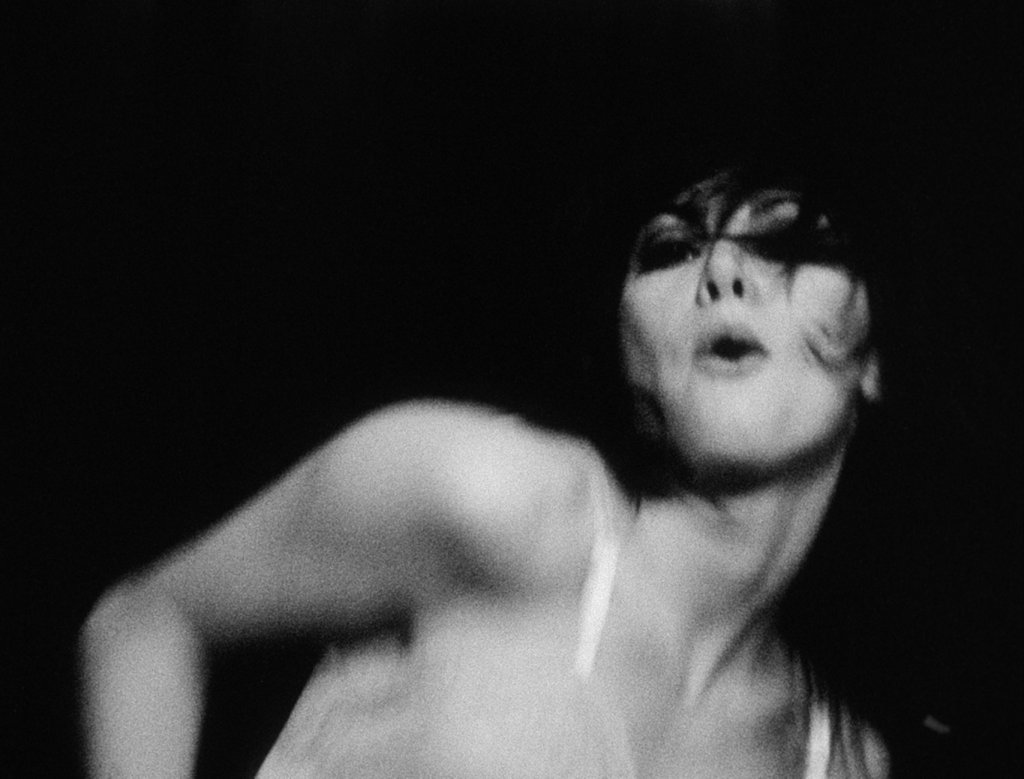
    His first film, A MOVIE, is a twelve-minute edit of old newsreels. The non-narrative film is similar to others in the collection: incorporating a washed-out, hazy black and white style and also having no story, rather a collection of images or one long shot. CROSSROADS, made in 1976, is an extremely slow-motion replay of an underwater nuclear test at Bikini Atoll in the Pacific. The intense slow-mo gives the audience room to capture every detail as the mushroom cloud descends towards the camera, expressing a deliberate destruction. Conner, who is clearly a fan of replaying and rewinding clips, includes this in BREAKAWAY, my favorite in the exhibit. The five-minute movie is a black and white rendition of Toni Basil (known for “Oh Mickey, you’re so fine”) dancing to her song, “Breakaway.” The entire film is made up of very quick shots of Basil, rapidly changing from close-up to far away, all moving quickly so she looks feathered and a flurry of white against the black background. When the song is done the clip and track rewind, becoming an eerie, indistinguishable gurgle.

    Besides the films, Conner showcased his paintings and assemblages, which often include different textures created with netting or fabric layered on photo collages. These pieces as well as his ink drawings have a distinct color scheme: monochrome, dusty brown, or beige. The exhibit has a wall dedicated to punk rock show photos, appropriately gritty and faded, and in the next room the “angels,” gelatin silver prints of human silhouettes with hands outstretched towards us. These collections of photographs, as well as his avant-garde films, relay a signature style of white figures against a black background.

    With many artists these days, I feel there is an underlying fear of “stretching oneself out too thin” in art. At SOTA, with separate departments, the idea is furthered that we should hone one art. However, if anything, Conner’s art disproves this in a way. His work is a full, vivid, synchronized range of art that surpasses the limitation of genres, blurring the lines and filling the gaps between them.

    Ren Weber, class of 2018

  • About Good Books to Follow And the Writing of Them

    Of Finn McCool of county Antrim it is said he was a giant, but I never imagine that he was very big at all, for it is not his strength that is intimidating, but instead his wit and his broth that stirred within him from a very young age, and so when he heard of the Scottish red-footed giant Benandonner and his challenge to fight, he said “Okay” and with many black hexagonal stones made a bridge to Scotland and called to him from behind a cliff’s side that he was there to fight him and that he had made a bridge from Antrim with his own hands because he did not want to get his shoes wet, and when old Benandonner appeared he was much larger than Finn had thought and so he ran back home to Antrim and to Oona, his wife, said:

    “Oona! For a Scottish giant named Benandonner is after me and he is currently crossing a bridge of hexagonal black stones I happened to make across the Northern ocean, and so I need you now to dress me as a baby and convince the poor man that I am our little baby son and you must also make a batch of griddle cakes and leave an iron griddle in the middle of one and say to him ‘Old Finn eats these all the time’ and perhaps then he’ll truly fear me and will never come back” And so this Oona did and she dressed her husband in baby’s clothes with even a little baby’s hat and sat him down upon a bed and when Benandonner knocked on their door said to him that Finn was out but that he would be home soon for a dinner of griddle cakes but in the meantime would he like to come in and see her baby son and also have a griddle cake, which I find very sweet and hospitable, and Benandonner of course said “Okay.”

    When Benandonner saw the little baby, who was funnily enough Finn McCool of Antrim, he said that he had never seen a baby so big and he then became very nervous indeed, for if poor Finn’s baby was so big then how big was Finn himself! And so he broke a large rock and said to Oona look how strong he was that he could crack such a rock and she said it was impressive indeed and if he would like his griddle cake now and Benandonner of course said “Sure.”

    Oona fed the red-footed giant his griddle cake and within it was the iron griddle itself and so when he bit down upon it out came three teeth and he said Damned is this, for if Finn eats this his teeth must be very big indeed and Oona assured him that this was Finn’s favorite meal and that never had he broken a tooth on it and she then fed a griddle cake to the baby, who was funnily enough Finn himself, but this time it was just a soft little griddle cake and had no hellish iron griddle within it, and so the baby ate it comfortably and it is then that it is said that Benandonner of Scotland wailed and screamed and ran from the house back to Scotland and destroyed the hexagonal black stones along the way so as to make sure old Finn never came back and then Oona and Finn laughed for many days.

    ☘ ☘ ☘ ☘ ☘

    I tell you the story of Finn McCool so as to explain to you what it is I mean to have a sure and definite idea of the broth within you, which I can say I do, and that is all I know now for I am only a certain amount of years old and am not very wise or experienced, in fact I was just born, and perhaps when I am much older I will write a good book so as to tell you how I think you should live and the procedures you should complete to go about doing so, and I reference now what I believe to be the greatest book ever written and a beautiful account of the sad pauper life: “’Tis said in the good books that describe the affairs of the Gaelic paupers that it’s in the middle of the night that two men come visiting if they have a five-noggin bottle and are looking for a woman,” and so I believe one day my book should be the same and will tell you how it is you should be looking for a woman. But alas, I have never found a woman myself and was just born and so don’t have much more to say about that now.

    Liam Mullan, class of 2018

  • I had been thinking about endings as this year’s first semester came to a close. I was relieved, but not satisfied. It was the last period of the last day and I stood in the center of the Creative Writing room, desks sloppily pushed together and a sole candle quivering in the corner of a windowsill. I thought I would have written more, written better. I wished my grades were higher. There was enough left of my list of wants that I wasn’t ready to move onto the next chapter of my freshman year.

    For my last story for the Fiction Unit, Heather and I discussed that I needed a different ending. At my computer I cried and screamed. I can’t do endings, I decided. I don’t want to write endings, or experience them, or think about them. Ever. My first semester went by so fast that the memories don’t feel like my own. It’s almost that I wasn’t fully present in the moments I can recall and the lack of awareness and appreciation makes them not count. I didn’t utilize the resources to improve my writing and I backed down from challenges. Looking back on that now, from after the end, is hard.

    What makes an ending bearable? It’s not a steadfast finish. The world doesn’t topple over from its axis. There’s always more to come. On the last day of school I promised that in Creative Writing I’d learn from my regrets. I realized good things could come from an end. Our Artist in Residence, Carson Beker had the class listen to When it Ends, He Catches Her by Eugie Foster. Foster wrote this story while ill, and used her ending to create something beautiful. Foster’s short story’s ending had something mine never had, a satisfying ending.

    So on the last day before Winter Break, Creative Writing never started. The students were dismissed. We cleaned the room one more time, wiping tables and erasing the whiteboard. I brought the last chair to its appointed stack. Looking around the room one more time, I plopped the chair on top.

    Samantha Friedman, class of 2020