CREATIVE WRITING

at the Ruth Asawa School of the Arts in San Francisco

Welcome! CW develops the art and craft of creative writing through instruction, collaboration, and respect. This blog showcases STUDENT WRITING and how to APPLY to Creative Writing.

  • During the summer before the beginning of my first entrance to high school and the Creative Writing department, I signed up to a program called SQUID (Summer Quarantine Undertaking Impulsive Developed). The program consisted of multiple writing workshops: Poetry, Performance, Playwriting, Nonfiction, Autobiography, and Fiction. When signing up for classes, out of all them nonfiction initially hadn’t quite piqued my interest. In primary school, it was undoubtedly the most boring genre to read for any third or fifth-grade student. The nonfiction books given were always the ones made by National Geographic and that they only ever listed details and facts about the penguins in Antarctica. There were only covers with largely font titles of “Lions” or “Parakeets” and nothing that ever caught my attention the way fiction titles have— nothing like the “Magic Tree House” or the “Harry Potter” book titles and covers would. 

    It was not until 7th grade in English class when we were first assigned to read “The Boy Who Harnessed The Wind,” an autobiography about William Kamkwamba who was the first to use a windmill to produce electrical energy in Africa. I remember reading ahead while the class was following along to the teacher’s read aloud because I was simply aching to know more: Was the windmill invention a success? Did it fail? Spoiler Alert, It was a success. I mean why else would it be made into a biography? Either way, when I was taken through the narrative of Willaim Kamkwamba, from the beginning where he is struggling to buy rice for his family back home and the build-up moment to when he was asked to fly out to America– I couldn’t believe it was a biography, nonfiction narrative book. It felt like fiction because it never dawned on me how one can explicitly define every moment that has happened in their life, other than the reason that it could have all been possibly made up. That’s when I was first introduced to the world of nonfiction narratives. 

    In Nonfiction SQUID class, we were first assigned to read “The Sentence is a Lonely Place” by Gary Lutz and some of James Baldwin’s essays. While reading through the essays I found myself underlining and highlighting every line. Each thought the author had, every emotion that processed through them in the narrative. I wanted to know more about their story, and even though I didn’t know them personally, it felt like I could resonate with them as if we were simply engaging in a friendly conversation about existential crises. Younger me would’ve loved this, learning about slavery or racism, about the journey of how one pieced their identity together in the first perspective. In primary and secondary school, we were taught about essays: research papers and analytical work. We were never taught about the other kinds of essays, the ones that picked at the author’s thoughts and monologue, the ones that offered the reader a set of lenses to see the same world through a different eye. While currently closing up the Fiction unit, I learned that storytelling can come in many various forms, and it’s not always fiction or fantasy, where those two worlds are unreachable or unattainable in a literal sense. Stories can oftentimes happen closer to us or around us more than we expected. 

    Tiffany Dong, Class of ’24

  • A video guide to Asawa SotA Creative Writing for prospective students with Xuan Ly, class of 2021.

  • Letting Go & Just Listening by Leela Sriram

    Translation is a key factor of life. We translate words in our heads when speaking. We translate the world by noting the colors and sounds that are seen and heard around us. We translate from language to language in spanish class. 

    Last weeks unit in Creative Writing 1 with CW alumni: Josie Weidner, Noa Mendoza-Goot and Violeta Sticotti, was all about how translation is not just translating from language to language, but a way to interpret the world and society and transform the world into how we see Earth and society from our perspective. 

    On the second day of “A Week in Translation,” CW I partook in an independent activity that let us free ourselves from the eye strain and headaches from the piercing bright lights that illuminate from the computer, and instead just listen to the world around us. A sound map charts down all of the intricate sounds created by the world around us, such as the echoes in the voices of hikers walking in Golden Gate park, or the scratching sound of a dog’s paws on a dirt path. This activity helped me let go of my mind and just listen to the world, and observe the sounds in the park that I hadn’t ever really paid attention to due to being caught up in my own thoughts. 

    After drawing out my sound map, I thought intently about the connection sounds in nature have to translation. The two almost seem completely incomparable, but translation is not as simple as speaking Spanish and then saying the same sentence in English. Translation is not just verbal, but also auditory. A large part of translation is connecting sounds to visuals and objects. Translation is just putting together one big puzzle that is understanding the world.

    Leela Sriram, Class of ’23

  • Decisions on the Cultural Heritage Project by Gemma Collins

    With the new semester just beginning, the start of the fiction unit draws near. This year CW 1 is starting off the fiction unit with the sophomore cultural heritage lessons. These lessons, carefully planned and culminated over the entire past semester, are crucial parts of the preparedness for CW 2. As of the past Thursday, the presentations have started. I spent a large portion of my time this winter break editing and perfecting my own lesson plan and coming up with my best idea on what to teach the group about. This was a daunting decision, considering that for most of the year, I was wavering between different subjects to talk about and contemplating what I thought would provide the most educational yet enthralling lesson. 

    When thinking about my culture, the foundation of the assignment, I found myself coming up blank. The presentation is centered around talking about ourselves, something I am not used to doing. The freedom of subjects to discuss was both freeing and confusing, as with the ability to pursue multiple ideas comes the dreaded need to make decisions for oneself. I never felt connected to any specific background, so when deciding my topic for my project, I decided to steer clear of the “culture/race/ethnicity” genre and into other possibilities.

    Then there were the options of music, but I am definitely not the most musical person. I spent winter break going back and forth until I finally solidified my idea. I thought about what I felt passionate about and began my project on environmentalist poems. The best plan I could muster, I found poems to use and began to build my powerpoint complete with writing prompts and a homework assignment all based on poems that make a call to action. Soon my presentation was complete and I just needed to survive the presentation. 

    A poem that I wrote while working on my project:

    A Walk

    I don’t know that I’ll be alive
    If the world is run hot and dry,
    Like a desert with a red sky.
    A red sky that possibly in the far reaches
    Of the atmosphere has one breath that
    Escaped my mouth when things were 
    Green for a little longer.

    I am here now in a little longer.

    When things were green.
    How long a little longer is, I’m unsure.
    I’m going on a walk today to
    Appreciate a the green
    Although I admit it will be hard not to be 
    Distracted by crusty gum on the sidewalk
    Or sewage smell at the bottom
    Of the hill. 
    But the walk is meant to be appreciative, so
    I better not get hung up on 
    undeniable bad things. 

    I run my fingertips in the rosemary bush
    Which I haven’t done in a while. 
    I may not know how long a little longer is
    But I know a while is 5 years.
    5 years but the fresh scent is still as sweet
    As my memory of it.
    I hear two parrots squawk
    In the tree above me, dropping red berries.
    Their noise isn’t exactly pleasant, but
    I find some joy in the raining red berries.
    I wish it still rained.

    Reach the top of the hill and look out at the view—
    Bunny shaped clouds and
    shimmery water and small waves
    the rolling hills 

    Can’t forget the city
    Downtown buildings twinkle
    I can almost feel the hot glittering
    Sidewalk,
    I look out at the view.

    In the corner of my eye

    I see the red rolling in.

    Gemma Collins, Class of ’23

  • Secret Santa & The End of the Semester by Jessica Schott-Rosenfield

    The fall semester has finally come to a close. Finals week in academic classes was spent reviewing, being gently reminded of gradebook status, taking tests. Creative Writing spent finals week tying up loose ends and bonding as a whole department for the last time before break. The week’s finale of holiday fun? Secret Santa. Secret Santa is a department tradition, and was a challenge this year, for obvious reasons. Though it took place solely on Friday, this last week and the week before were spent organizing a criss-crossing network of gift pick-ups and drop-offs around the city. Many parents volunteered time and their vehicles to the effort, all orchestrating what would culminate in a beautiful secret Santa experience. 

    Forming community in the department has been one of the foremost difficulties of this year, especially in terms of bringing the freshmen into the CW experience. A writing community has to be one built on trust, as we are constantly sharing our art with one another, allowing ourselves to be vulnerable and open to critique. In a workshopping group, it is far more difficult to share writing which might divulge innermost thoughts when one does not trust one’s peers to read the work without judgement. Without the bonding moments that creative writing usually partakes in, (camping trips, swims in the bay, field day) I was worried about how effective our attempts to bring everyone together this year had been. It’s hard to try and measure the strength of a personal connection through a computer screen. If I relay information, and it’s answered easily, with a smile, does that mean it’s been accepted well, or tolerated?

    Secret Santa rid me of all doubt. Not only the hour and fifteen minutes of live gift opening,* stray laughter, layers and layers of wrapping paper, but the week’s worth of planning, and driving to one another’s homes to leave parcels on front steps. I hadn’t been able to see the picture of us all, spread across San Francisco, on Zoom together every afternoon. Driving to dozens of neighborhoods around town and feeling a peer’s tangible presence was a relief of sorts. Perhaps subconsciously, the image of my fellow creative writers in my head was fading into something abstract. I’m so thankful that students and parents alike committed to bringing us all together on the final day of a laborious semester.

    *Props to Sequoia for giving me an absolutely stellar gift.

    Jessica Schott-Rosenfield, Class of ’22

  • I would say that poetry was fun. It was the first step in an enigmatic journey that has, most definitely, started off on too many wrong feet. My Eighth Grade was cut short by a demon sphere I couldn’t ever see, and whatever this is isn’t exactly filling the void. Then, I come here, and I trip on two rocks back to back, landing myself neatly above a drop into a ravine. Finally, after clawing my way back out, I’m greeted with my least favorite way to write. Sounds unfun, doesn’t it? All thanks to some real good paraphrasing.
    Poetry was a new experience. For one, I didn’t think I could write it at all during the summer. It turns out I can, and I should probably start trusting myself more. This unit opened my eyes to the possible beauty of poetry. Shame I wanted to close them immediately after reading the instructions for the sonnet. I might miss poetry, now that the unit is over, but I think the excitement of the new topic might eclipse that.

    Short stories are my thing. I don’t need deep meaning, or put in thought-provoking imagery. I can just make people fight it out for seventy-eight pages and call it a day. Fiction is freedom for me. It has no restriction other than the restrictions you create for yourself. Now that we’re moving away from poetry, I can finally put the Creative in Creative Writing to the max- or at least, I hope. It might be awhile until I can make people fight it out for seventy-eight pages.

    Whatever the next unit throws at me, I’ll be ready to enjoy it to the fullest. Motivation and confidence will replace reluctance and uncertainty, and I’ll be having fun showing off how good of a writer I am to my friends.

    Jesper Werkhoven, Class of ’24

  • Crows, My Muses by Emilie Mayer

    Starting in third grade, teachers would find novels concealed within my textbooks. Throughout middle school, I would write songs that I imagined One Direction could sing upon their reunion. Last year, I discovered that math quizzes are the ideal place to test out new poems. Other than providing evidence that I am not the most attentive of students— these instances show how I’ve used words as a preoccupation, something to fill the gap that the day’s mundanities leave within my mind. That is, writing filled that space until this year.

    This year is an outlier. I have little motivation to submit my homework assignments, let alone write a five page story. And while the first few months of Shelter in Place were filled with inspiration, recording an inexplicable experience, there are only so many poems you can write about staring blankly out your bedroom window. All this is to say— Netflix is running out of shows for me to watch, while my writer’s portfolio remains rather slim.

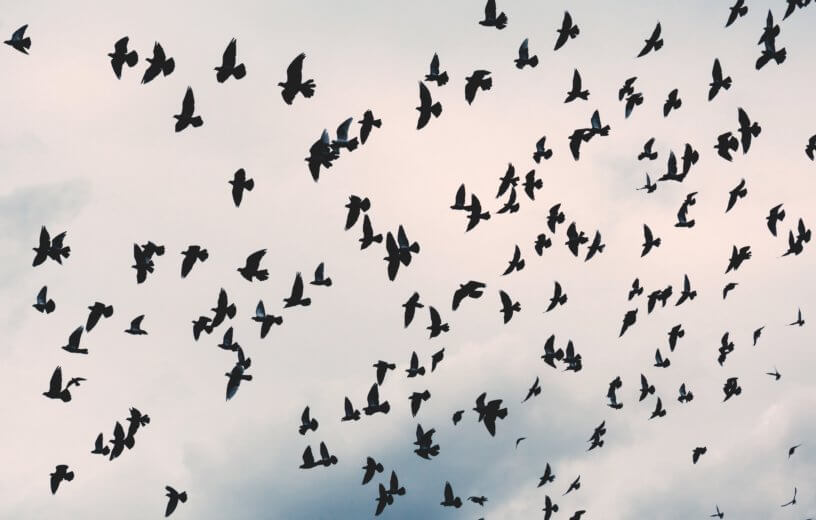
       For all the writing time lost, exercise has taken some of its place. Over Shelter in Place, I’ve become solely responsible for walking our family dog, a sickeningly energetic German Shepherd. Due to her size, and the fact that if not thoroughly exhausted she’ll wake my father at midnight, my dog requires an hour minimum of outdoor activities. She was pulling me home after one such excursion, when the two of us spotted a flock of crows. While I had not truly been moved to write in months, I sat down on the pavement right there —my dog sat upon my lap— and began drafting a poem on my phone. The opening lines said something similar to “everyone hates on crows, but really storks are harbingers of a kind too.” I’ll admit, the poem wasn’t my most insightful piece ever, but it was the first piece I had enjoyed plotting out in a long while.

    The next day, I spotted the flock again. Or perhaps it was a different flock, but they were undeniably birds. I sat down —this time on a bench— and wrote another poem. In the last three weeks, I’ve completed five poems about the crows of my neighborhood. Honestly, I feel if I keep writing crow poems at the pace I’m going then I might eventually give Poe a run for his money. Either way, I’ve rediscovered that sparkle that writing used to have for me. Writing is like a game, a puzzle to solve in your free time. Words are to be arranged until they make me giddy after reading what I’ve produced. Writing isn’t a chore like classes, or something to be mindlessly consumed like Netflix. It’s exciting, and difficult, and ultimately something that should be fun. Now, I’m ready to start this next calendar year fresh with a more energetic, crow-filled, mindset. 

    Emilie Mayer (Class of ’23)

  • Self Reflection & College Essays by Xuan Ly

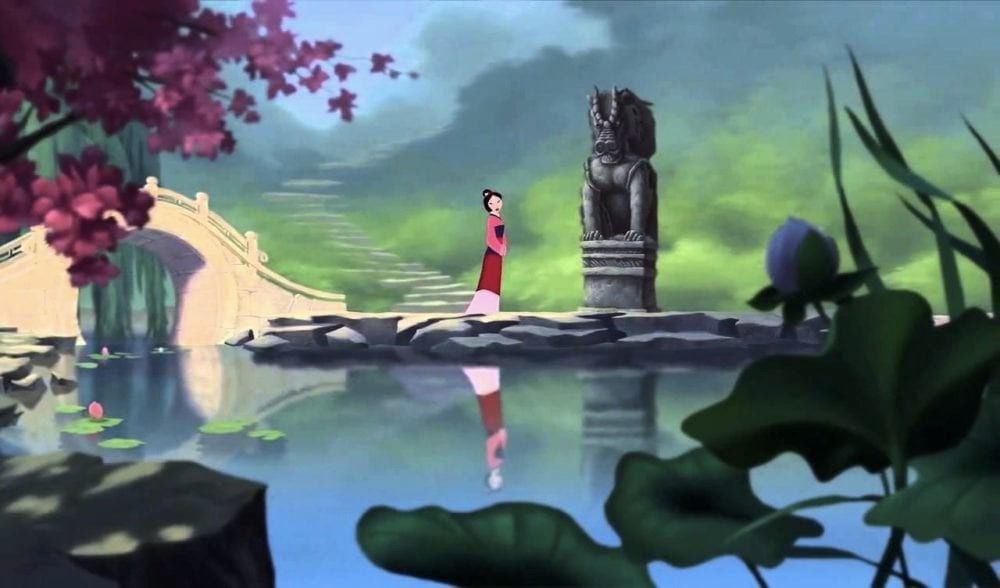
    I know every word of the Mulan soundtrack. I used to sing Disney songs with my middle school classmates during lunch hour, with “I’ll Make a Man Out of You” as our closing number. While the Donny Osmond song is undoubtedly a Disney classic, I find myself coming back to the early movie ballad, “Reflection.” As a kid, I just enjoyed the animation and the surface level confrontation with inner conflict. I sang the lyrics loud and open mouthed, using all the air in my lungs. I hear the song differently now, with a freshly familiar sense of desperation. 

    I lost touch with my outward reflection after working on the unending self-aware college essays. As I continued to analyze my life thus far, I became less sure of who I was at my core. For me, the question wasn’t “when will my reflection show who I am inside,” but “will who I am inside show in my reflections?” I admit that these are seemingly similar questions, but here’s my line of thinking: after my central values became hazy to myself, could I even recreate myself on paper? And in the act of writing a reflection of myself, would my truest values emerge on their own? This is adjacent to the line of thinking that Creative Writing fostered in me. In past years, I would show Heather an underdeveloped story or poem, and she would be able to identify the influence of my personal values in the piece. In a similar fashion, I hoped that the subtext in my writing style would be enough for the admissions officers to gain a better understanding of who I am, even if my own understanding of myself was slipping. 

    Despite my hope to free write drafts and find what emerges, I felt a pressure to display myself in the best light. It was difficult to pinpoint what to write about for the essays; when I did, I tried to explicate my own experiences to add some sense of character. Of course, the commonalities in every piece of advice in the application process is “be genuine and be yourself.” But, after picking apart every activity, every award, every struggle, and every source of happiness, I couldn’t recognize myself as a whole person anymore. How could I even begin to write? Similarly to the scene where Mulan’s reflection is multiplied around her, the copious college essays act as mirrors reflecting parts of me I no longer recognize. And sure, my rippled reflection may be compounded by the loneliness and forced self-exploration onset by the pandemic, or the nature of my thesis writing, which explores my ties to my family history, but it’s made me take a few steps back. In order to take a break from the intense self analysis, I had to get out of my own head which, in a backwards way, has been good for me. 

    Xuan Ly (Class of ’21)

  • Sending Love to the Virtual Holiday Show by Paloma Fernandez

    In this unconventional year, the arts have been forced to make many adjustments. The SOTA community is no different. Every year all the departments come together to create a Holiday Show. I myself have never been apart of the traditional Holiday Show, yet, this year I was put in charge of leading a small group of Creative Writers in creating a play, and putting on a staged zoom reading to submit. 

    I can only assume that the creation of this show is much more enjoyable in person than online. At times it was proven frustrating. At first, the nine of us attempted to write together, but we got extremely little done during this time. We would get distracted easily, and then I would get distracted while trying to get everyone back on track. So, in our two days working as a whole group, we were only able to produce an idea and a single page of writing. At this point, we decided to split into groups of two or three, and each group would write a couple of pages before passing the baton to for the next group to take over. With this system, we ended getting the play done in a week rather than the year I assume it would have taken if we were to continue as a whole group. Then came the time to do a staged reading of the finished product, but it was much more difficult to get six people on zoom at the same time that I thought. 

    I know for a fact that I missed out on the playful whole group atmosphere there is most years. I know that at times it was more stressful than fun. But, I am still glad I did it. In the end, we produced a piece titled “Medieval Matriarchal Merriment,” and it follows five medieval women during a white elephant gift exchange, and it is everything but traditional. I will not say much more because it will be online soon enough, and you can go see its glory for yourself. In the end, I would just like to say, thank you to everyone who worked on this project with me, I love you all endlessly. 

    Link to the Holiday Show: https://sites.google.com/sfusd.edu/asawa-sota-wintershowcase2020/home 

    Paloma Fernandez (Class of ’22)

  • In Creative Writing Two, we finish off each unit with a larger project. Due to the fact that we have different fellows teaching each of these units, these projects look different every time. I am a junior and getting ready to finish off my first poetry unit in Creative Writing Two. The project that our current poetry fellow, Angie Sijun Lou, introduced was a call for seven poems, most of which we had already been working on over the course of the unit, plus an artist statement, a short artist biography, and an introduction to your work written by another student in the class. This all may seem like a lot, but I planned out my timing well enough and it worked out fine. 

    When I started the poetry unit back in early October, I was purposefully trying to write my poems in a singular voice so that the collection would be unified. I had recently immersed myself in the work of Raymond Chandler, and my poetry is inspired by his short and precise images. Chandler was an American writer best known for his mystery stories, including The Big Sleep and The Long Goodbye.  His characters are lonely and sharp-tongued, and the world they live in is dark and desperate.  My poems’ speakers feel like the similar people, the way many of Chandler’s stories feature the same famous detective, Philip Marlowe. My poems talk about isolation and being stuck in one’s own thoughts–I was, without meaning to, writing about the pandemic. 

    My poetry has taken on a new tone throughout this unit, either because of the current turmoil going on in the world, or just because I felt like I needed a change from the work I was producing before the pandemic started. Whichever was the case, I feel as though this change was an improvement and a sign that I had grown as a poet since Freshmen year.

    Otto Handler (Class of ’22)