CREATIVE WRITING

at the Ruth Asawa School of the Arts in San Francisco

Welcome! CW develops the art and craft of creative writing through instruction, collaboration, and respect. This blog showcases STUDENT WRITING and how to APPLY to Creative Writing.

  • Message to Future Freshman by Filip Zubatov

    Another one bites the dust: this is my method when it comes to work. Truthfully, I have found a select few assignments in the first weeks I’ve been in Creative Writing that I’ve relished writing. A multitude of assignments that you will be faced with when coming into this program may not be your forte, but something is bound to be. You’ll be bombarded with work such as reading responses, critiques, and poems; minutes, hours, days, and months will pass as fast as a bullet and you won’t realize where all the time went. I made an atrocious mistake when first coming into this department. Before Creative Writing, I had low self-esteem in myself and my work compared to others. On the first day, walking into the classroom, surrounded by talented writers, I was anxious my work couldn’t even remotely compare. It seemed that I gave up my ghost of pride. I learned later that comparing your work to others will only put you down, so refrain from ever doing so. 

    Seven weeks have gone by and I’m starting to feel like I am a part of the Creative Writing community. I feel as though if there is one message I want to give to incoming freshmen it is to make friends within the department. I was lucky enough to have my brother at SOTA to spend time with when I was alone, but those that are coming in solo, talk with people and don’t be afraid to. Future freshmen, keep track of time and stay on top of your work, especially Creative Writing related work. Fall just ended, and Winter is coming in strong without any signs of stopping. Cherish every moment you can before they pass. Even if there are troublesome times, look for the valuable moments, because there will be plenty. Being in Creative Writing for a short time, I’ve already had an abundance of them. Be social, have pride in your work, and keep track of time in SOTA, but mainly in Creative Writing.

  • Learning How to Read With “Wren: Three Mirrors” by Zadie McGrath

    Early in the school year, I walked into the CW classroom and was handed a printed-out copy of a poem. As the low buzz of conversation slowly faded, I skimmed through it, the seemingly incongruent words stirring my mind into panic. Before CW, the poetry I read had been simple and relaxing, easy to digest. I would read a poem or two in the evening, lulled by the fluidity of the words, comforted by them in a distant way. Poetry is abstract, I thought. When I wrote my own, I never went beyond the first draft because I liked the sound of the words. What I write, it doesn’t have to be intentional, I thought at the time. For me, poetry existed in a bubble that I was afraid to pop.

    The poem we read, “Wren: Three Mirrors” by Michael Burkard, infuriated me at first—I could tell there was something I was missing as I annotated the poem, but whatever it was, it eluded me. The piece read more like a paragraph than a poem, and it switched rapidly from image to image, leaving me disoriented. “Like waking in the small room, looking out,” it began, “seeing the moon, almost down, through the pale/trees. So then the incompletion is waking…” It continued on like this, describing wings, mirrors, a woman, and finally ending with the bizarre words “I have/missed you like a donkey on fire, like a donkey.”

    As we moved into a class discussion, though, I began to glean some understanding of the poet’s intentions. The poem didn’t let me walk away from it with only a distant reaction; it contradicted all the conventions I knew and soon had me scrutinizing every word. 

    I came to the conclusion that the confusing imagery had all been a distraction—the speaker, trying desperately to distract themselves from the woman described at the end of the poem, focused first on the small room, then the moon, then the trees, and so on. Like waking in the small room, they said. Not Waking in the small room or I woke in the small room, but Like waking, as if the poem’s speaker was comparing waking to something else, and the act of waking was just an illusion.

    After frantically scribbling my theory down, I raised my hand to participate in the class discussion. It was the first time I had spoken up without stuttering over my words or trailing off, unsure of what point I was trying to get across. Now, the urge to have a complete, resounding idea of what a poem is trying to say is the norm for me. My annotations sometimes turn into full-fledged analyses, and at break time during arts block, my friends and I trade our takes on whatever poem we’re working on with one another. Surprisingly, this doesn’t feel like doing extra homework voluntarily; it doesn’t feel like work at all. It’s just the way I interact with poetry, popping the bubble and letting all the air in.

  • Sharing a Part of You by Kendall Snipper

    Creative Writing began the first workshopping sessions of the year this week. We were instructed to print out three of our summer work poems. Wanting something better to work with than the haiku and tanka poems I wrote, there were three longer poems left. I read each line over, making sure there was nothing to be kept away from my classmates.  Each poem was a part of myself, something I had written to express my emotions in the moment. Honestly, I thought about the different ways to avoid the assignment. Writing a newer poem, pretending to forget to print, anything so I wouldn’t have to show this part of me. My writing was never something I’d shared with others. I keep each piece to myself as if I’m rationing off parts of my brain for me alone to enjoy. 

    Inevitably, the time for Creative Writing came along and we split off into workshopping groups. In a group of four, I was among a junior and two sophomores. “Freshman first” is such a common phrase at this point, so I wasn’t surprised when I was urged to go first. Each poem I printed out seemed way too cliche for me to read aloud. Reading over my summer work was just like the feeling of hearing a second grader’s joke: cringe-inducing. But I handed each group member a copy of my poem and began to read it aloud. Reading my writing to others was never such a problem to me, it was more of an issue when I knew they had a physical copy. My issue was realizing that somebody could now read over a line multiple times and see that it doesn’t make sense. Sitting at a table in silence while your older peers critique your work is probably the scariest thing I’ve done in high school so far. After each of them finished reading and annotating my poem, we discussed it. Hearing my classmate’s voices on my work was such a relief to the quiet, that I forgot about my nerves. Instead of overthinking what my peers were going to say about the poem, I sank calmly into the discussion. Each and every person was respectful with their critiques, and overall each sentence was something helpful or reassuring. I learned so much about how others can perceive your writing, and ways that I can definitely improve. Opening up the portion of my brain that once hid all my thoughts is something I find enjoyable now. I’m grateful to have a safe place to share and put my emotions down on paper.

  • Open Up to Vulnerability by Oona Haskovec

    As a current sophomore, I associate workshopping with laughs, improvement, and an overall pleasant time. However, this time a year ago, I had an entirely different take on the matter. As a freshman, I was put into a group with only upperclassmen, including a senior, for my first workshopping experience. I was terrified, both of the critique I would receive, but also the critique I would have to share. Those were people who had been doing this for years and I felt incredibly out of place as I smiled and nodded along with others’ intellectual insight. However, as the year progressed, I found comfort in workshop days, and I gained a more established sense of the writing styles of those around me. This could not only aid in better critique for others, but also in getting to know them as people.

    This is why, in my second year, I have been making it my goal to enforce workshopping as a marvelous time for this year’s freshmen. Not only does it open up the opportunity for improvement, but also to get to know your peers and their work. The sooner you allow that vulnerability, the easier you will find it to be absorbed by the wonder that is the Creative Writing community, both social and academic. In my personal experience, workshopping opens up ideas in your work that not even you, the author, noticed at first. This can lead to richer pieces as well as richer bonds with everything. 

     I truly find critiquing to be one of the most beneficial activities one can partake in. If you can allow yourself to accept your flaws, and find a way to see benefit in the momentary discomfort, before long, the answer to that awkwardly worded line, or sometimes even just the flow of a piece, will be revealed.

  • Looking Back Through Lesson Leadership by Gemma Collins

    When I first came to the Creative Writing Department, I was in awe of how Heather (our department head) was willing to listen to student input and feedback. The seniors took on leadership roles—my ninth-grade self was awed by their intelligence and maturity. I watched upper-level students playing active roles in class and marveled at how they spoke so eloquently. I saw them do presentations and wondered how they talked fearlessly in front of everyone else. I listened to their writing and wished I would one day know as much as them or be able to express myself so clearly. Now, as a senior, I view Creative Writing from the opposite perspective. A few weeks ago, the senior class (shoutout to Emilie) led units on analyzing and writing poetry while Heather was out. We instructed the rest of the group by developing games and fun activities about various literary devices. The lesson included a thirty-slide-long presentation that took racking our brains of every literary device known to humankind to create. I even decorated my slides with funny anecdotes, pictures, and examples. We sat in the room as peers, helping each other deepen the conversation around the poems we discussed. If you asked anyone in this department, I am sure they would tell you that the community is what makes us unique. The units we taught last week showed me how much the students shape creative writing. Heather and artists-in-residence may manage the class, but student participation and discussion fuel the community’s energy. We build our analysis of poetry through hearing each other’s points of view and thrive off of hearing everyone’s creative interpretations. Sitting in class that day made me realize how fast time has gone from being a freshman to being a senior and how I am now so comfortable in a once foreign and frightening place.

  • Stepping Into the World of the Fae By Sophie Fastaia

    Community Weeks in Creative Writing had settled down, leaving us with memories from Kirby Cove and writing poetry among the flowers in the Botanical Gardens. Fatima, our artist in residence, came into Creative Writing ready to open the door to the world of fairy tales. She began class by reading a prose poem about dragons living among humans. I felt as though I were in the world she was describing, where dragons eat discarded sandwiches in the street or mistake a child for a seal pup, eat it, and feel guilty. 

    On the first day, Fatima asked us what our favorite fairy tales were. We went around in a circle, telling each other our favorite tales: Narnia, Tinkerbell, Repunzel, La Llorona, Aladdin, and many others. More and more kept popping up into my mind as each person shared the fairy tales that they had grown up with. I found it surprising how the topic could spark up so much conversation. Fairy tales, for most of us, were a part of our childhood that we got to share with each other. 

    On the second day, Fatima told us, in her soft Australian accent, about the history of fairy tales, how The Grimm Brothers collected tales from common people during the eighteen hundreds. They adapted and revised stories until the little gifts of hazelnuts, fallen from a sacred tree in an earlier version of Cinderella, transformed into gifts of glass slippers and ball gowns in modern versions. 

    On the third day, Fatima told us about the fae, the creatures and beings of fairy tales, such as fairies, ogres, and weird little guys like Rumplestiltskin. Rumpelstiltskin is a little man, who has the ability to spin gold from straw. He helps a woman spin gold from straw, in order to save her from the death penalty. In return, Rumpelstiltskin asks for the woman’s firstborn child. She agrees to give away her child, but when she has the baby a few years later, she begs to keep it. We participated in a mock trial, debating the case of Rumplestiltskin. The trial decided whether or not Rumplestiltskin or the woman should have custody of the baby. 

    During the mock trial, Fatima’s position was God. She was articulate and serious about the case, instructing the lawyers and judges throughout the whole mock trial. Fatima talked about Rumplestiltskin and the rest of the characters in the fairy tale as if their world was real and she had spoken to them minutes before the mock trial had started. Her attitude towards the mock trial drew me into the activity; it was as if the characters we were defending were alive somewhere, just not in the courtroom that Creative Writing had become. It felt as though there was a real baby that a weird little guy was trying to take, and the baby’s life was put in our hands.  Believing in fairy tales and the magical beings in stories conjured up something in me; I felt the excitement of the magic from my childhood, a feeling I had forgotten. For a moment, as we all debated about the case, I had stepped into the world of the fae and believed that these magical creatures were real. 

  • Community Field Trips by Itzel Perez Alarcon

    When entering Creative Writing you have to know what you’re getting into… and one of those things are the field trips we go on! I can’t tell you how much (and I think I’m speaking for everyone in the department when I say) fun we have on our field trips. When you first enter CW you’ve probably heard a little about annual trip to Kirby cove. Everyone looks forward to that. But before that, we spend time with our buddies at the Botanical Gardens (among other places) to give us a bit of an orientation. Heather give us a list of where we need to go in the garden, then off we go to write an inspired poem wherever the map took us.  It’s definitely a different experience when you’re with your buddy and walking around nature talking and pointing out very little details you notice while getting to know each other. Bonding is a huge priority in the Creative Writing department. And the Botanical Garden field trip was definitely a huge step forward into getting to know and learn more about my fellow writers. 

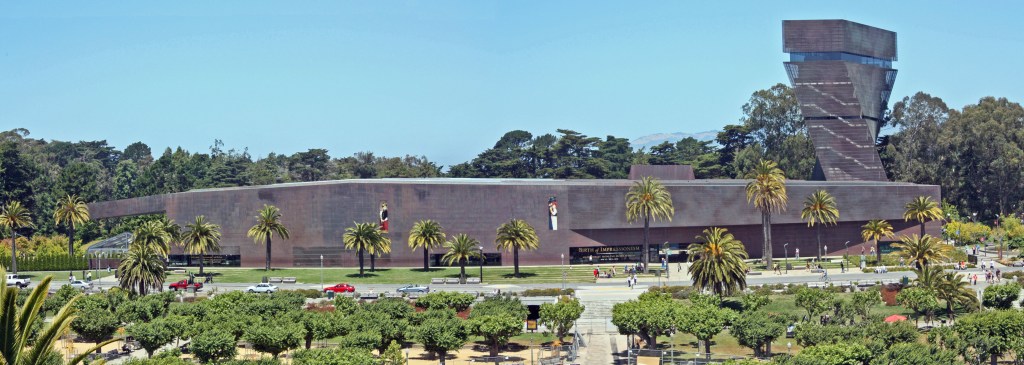
    The following week was the field trip to the Faith Ringgold exhibit at the DeYoung Museum. Creative Writing will give you so many experiences to expand on your writing and getting inspiration is key to achieving that goal. Going to see Faith Ringgold’s work enticed my inspiration even more. And there is definitely more inspiration coming our way! And that’s not all. It’s barely the beginning. If there was a different meaning for the C in our department it would definitely be community.

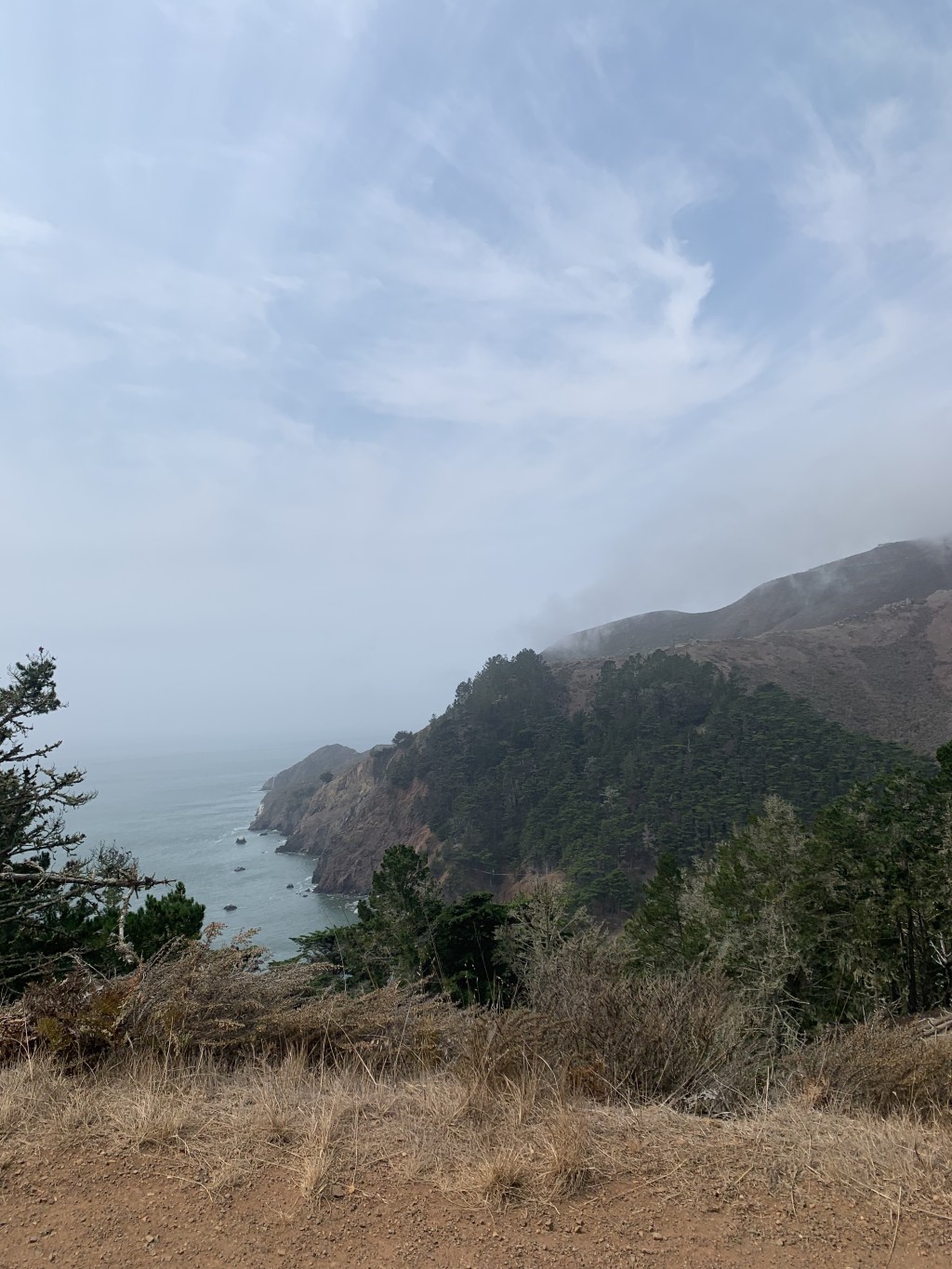
    Kirby Cove. My vocabulary cannot express how much I enjoyed Kirby Cove. Everything we did at Kirby Cove had something to do with bonding. Snuggling and cuddling in our sleeping bags to clumping up together when the fog comes down on us in the morning adds the right amount of getting to know each other. I definitely know Kirby Cove will become one of my favorite traditions. 

    All of these field trips have loaded me with joy and bonding. The best part is it’s just the beginning of the year and I’m already so excited to get to know the people in the Creative Writing community even more!

  • Intellectualism in Creative Writing by Leela Sriram

    Creative Writing has been taking trips to the De Young since before I came to CW. After two years in person and one online, I have started to appreciate the smell of paint and hand sanitizer hung near the exit of each exhibition. I have fallen in love with wandering around each of the cream and maroon colored rooms with my heavy shoes clunking on the polished hardwood floors. 

    The De Young is a quintessential aspect of the Creative Writing experience because all kinds of visual and performing arts are influential to the pieces we as writers create. Without learning the technical skills of other forms of art such as film and fine arts, CW would not be as well rounded. My knowledge of different forms of painting styles throughout history has heavily influenced my writing through imagery. A painting is a story told through texture, color, and subject matter. 

    The last time CW went on an excursion to the De Young, we visited the Faith Ringgold exhibit titled American People. This series of interdisciplinary fine arts including textiles and abstract paintings explored the dynamics of communal relationships during the civil rights movement. Her use of color and texture in her quilts and paintings immediately made me want to sit down on one of the vinyl benches in the center of the exhibit and write a poem on my relationship with my community. While I have always had a certain sense of distaste for the Art Girl cliche, the De Young has always been an inspiration for me, artistically. When I wander around the museum, I feel like I am walking through time. Every sculpture, painting, textile, has a unique take on the world from when it was made. This will always cause me to ponder how I fit into the world, and how my art can touch on my perspective on society. 

    While I do sometimes hate to walk around museums with my hand pressed on my chin in a thinker position, I believe this is excusable in the De Young.

  • No Time Like Now by Celeste Alisse

    How should one define the difference between the good times and the great times? It’s all based on the shine you see in someone’s eyes; when you see the crinkly, wrinkly smile lines appear. That’s the look you see in the eyes of us Creative Writers, especially during community weeks. 

    The first few weeks of every school year begin with bonding adventures, camping trips and field trips. What’s better than having fun while becoming smarter? Absolutely nothing. That’s why Creative Writing is so loved, it’s an equal balance of smiles and furrowed, concentrated eyebrows. A walk in the park with your friends while writing poems. A fun field trip where you learn and laugh. With every seemingly “boring” part of Creative Writing, there is something accompanying, making it enjoyable. There are no wants to go home or complaints about the day being too long because Creative Writing makes you forget about all that. You are home when you are in Creative Writing, you are with your family of friends that you have built since you got here. I, for one, love it there!

    However the best thing about community weeks are the friendships we build during them. Community weeks are our chance to get closer to the freshman, closer to the others in our grade and every other grade there is! All my best-friends that I’ve made in Creative Writing were a direct result of these event-filled weeks. With treasure hunts, buddy projects and more, there’s no way for community weeks to go wrong and that is because of the community we have built in Creative Writing. A community that loves, supports and helps each other. In my opinion, that is what makes community weeks so special: because there is no other time like it.

  • Learning The Ways And The Words by Chloe Schoenfeld

    I still think of myself as new here. I’m a freshman now and I have been for about three weeks. Creative Writing  is much more fascinating and enthralling than any other class I’ve had before. The department head, Heather Woodward, isn’t here yet, so the seniors have been leading us, and I never thought I’d say I had enjoyed analyzing texts. Sometimes I worry about my place in the group. That maybe my placement here was a mistake or a second choice, or perhaps I am not who they hoped I’d be. I try to reassure myself that I am wanted. Somehow I’ve made friends here, I can converse with people as if I’ve known them my entire life when a month ago we were strangers. 

    We began analyzing a poem this week. It was “Self-Portrait” by Afaa Michael Weaver. I read this poem through what must have been at least twenty times, each giving me another understanding and meaning of the words on the paper. This one man’s story has been hosting a raging party with all of the literary devices I learned only last week. I feel I’ve gained so much more of an understanding of Judaism and life and purity than I’ve ever known before. My mind has started spinning every time I look at the words or even my annotations.

    I see myself in the shadows of a leaf

    compressed to the green blades growing

    to a point like the shards of miles of mirrors

    falling and cracking to perfect gardens. 

    – Self-Portrait, Afaa Michael Weaver

    I was delighted to share an “Aha!” moment on this poem with a fellow freshman in Creative Writing, who I’m glad to say is my friend now. I’ve never had an experience like this, one that presents the core of the English language in such an inviting way. These concepts have been driven so far into my head that I’ve started to see them everywhere, and maybe that’s not a bad thing. Everyday I continue to be surprised by the talented writers and thinkers that surround me, somehow creating a comfortable environment for everyone even with the absence of the usual teacher.