CREATIVE WRITING

at the Ruth Asawa School of the Arts in San Francisco

Welcome! CW develops the art and craft of creative writing through instruction, collaboration, and respect. This blog showcases STUDENT WRITING and how to APPLY to Creative Writing.

  • Today in Creative Writing we shared our life stories. Well, first we wrote them. We weren’t allowed to use any periods, so we each ended up with a big run-on sentence. Then we were told that we would have to share all of the things that happened to us throughout our life, compiled  in only twenty minutes, with no punctuation.

    Needless to say, many of us were uncomfortable. A reasonably-sized group of angsty, teenage artists sharing the things that really stuck out in our lives? Well, there’s probably a reason that a  lot of the most famous writers were troubled people. Nevertheless, as a class we simply gave each other panicked looks and forged on.

    Turns out it was a wonderful, touching experience. Our teacher, Heather, cried. So did a lot of us. I feel that sharing our work is such a big part of writing, and making that emotional connection with people. Speaking as someone new to the department, I feel that this experience brought me closer to my friends and fellow students. Funnily enough it also made me feel safe, because we’d overcome the uncomfortable fact of sharing our lives with each other. I think it was a really wonderful experience for all of us.

    Isi Vasquez, Class of 2019

  • First Drafts by Harmony Wicker

    When I receive praise for my poetry, plays, and other works, it is easy to forget about the notebooks full of writing from my past years. When I do read my old writing, which I remember as the utmost incredible pieces of literature that I had ever written, I often wish that I hadn’t. There are even days when I want to burn them from physical existence in hopes that the incoherent sentences and serial killer handwriting will never be seen again. Unfortunately, I can’t always say that this has changed. Reading my former work is one of the most amusing and excruciating moments of being a writer.

    When I am reading the work of Shakespeare, J.California Cooper, Anton Chekhov and even Dr. Seuss, the possibility that there was any other version of their well-chosen words and rhythmic syntax is unimaginable to me. Nevertheless, it is true that the work I admire, at some point had a first draft. For example, when I read “Traveling Through the Dark” by William Stafford, I was unable to fathom how Stafford created such a profound, sorrowful, and exquisite poem. However, as I researched the poem, I happened upon its multiple drafts. While I examined draft after draft, I felt a connection to Stafford. He and I, in a sense, were the same. In an odd and unique way, all writers are the same. We all go through the process of discovering and changing our work until we believe it is presentable.

    To be able to grow as a writer, it requires hard work and willingness to revise your poems, nonfiction, plays, stories, or whatever else you’re working on. I must admit that sometimes it seems like it would be more satisfying to write the perfect draft in one go. Be that as it may, the late night frustrations, animosity, and eventual respect you develop for your writing is the most exciting part about the craft. So, don’t worry about where you are or where you are going. As long as you love writing and motivate yourself to grow, the final draft will no doubt be amazing.

    Harmony Wicker, Class of 2018

  • On Motivation by Amina Aineb

    Sometime during our fiction unit last year, I was talking to Emma E. about how I was unhappy with the stories I’d written so far. She responded that she too hadn’t really produced much from the given prompts, but that the stories she’d written on her free time were alright.

    Ok, I don’t remember the exact nature of our conversation, but it was something close to that. What I do remember is being shocked that Emma E. had written stories outside of Creative Writing. And my surprise didn’t surface because I think Emma is lazy (she’s actually one of the most dedicated writers I know), but because I had never thought of writing for myself.

    This is bizarre because before I arrived at SOTA, this was all I’d ever do. When ninth grade came around, “writing” became synonymous with “homework”. This isn’t to say that I dislike writing. Of course I do! I just mean that if I was writing something, I would eventually be handing it to Heather for a grade.

    This summer I was a part of the California State School of the Arts’ Creative Writing program. It was a life changing experience for many reasons, but one of them was that I immediately felt like I gained liberation in my writing. For the first time in a long time, writing wasn’t connected to school. Nothing was graded, I was there on my own accord, and what I wrote and when I wrote was solely up to me. I quickly got in the habit of writing every day, and thankfully, I’ve kept that habit since returning to the Bay Area, and to school. Of course, I’m still completing and putting my all into my CW assignments, but in addition, I’m writing other stuff for pleasure, and I’ve never felt more motivated in my writing in all my life.

    I made the decision this summer that I want to be a writer when I grow up. While I love being in our department every day, I realize that life after high school is looming in front of me. Being a writer usually means being your own boss, and I just hope that my motivation continues to grow and thrive, along with my writing itself.

    Amina Aineb, Class of 2017

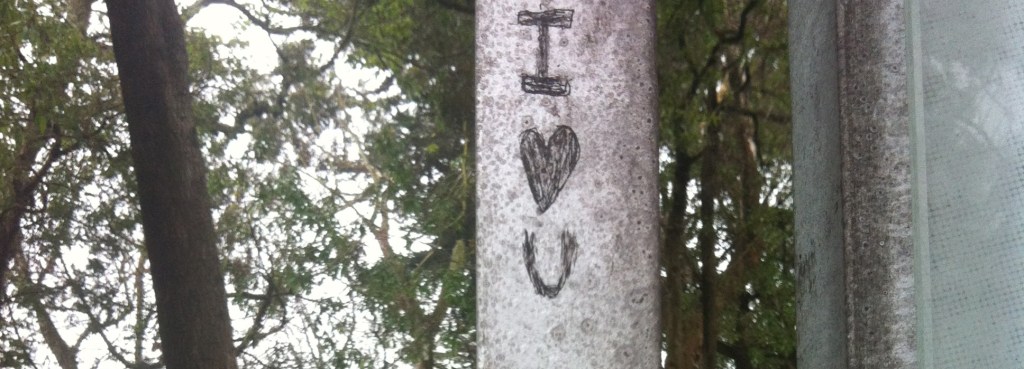
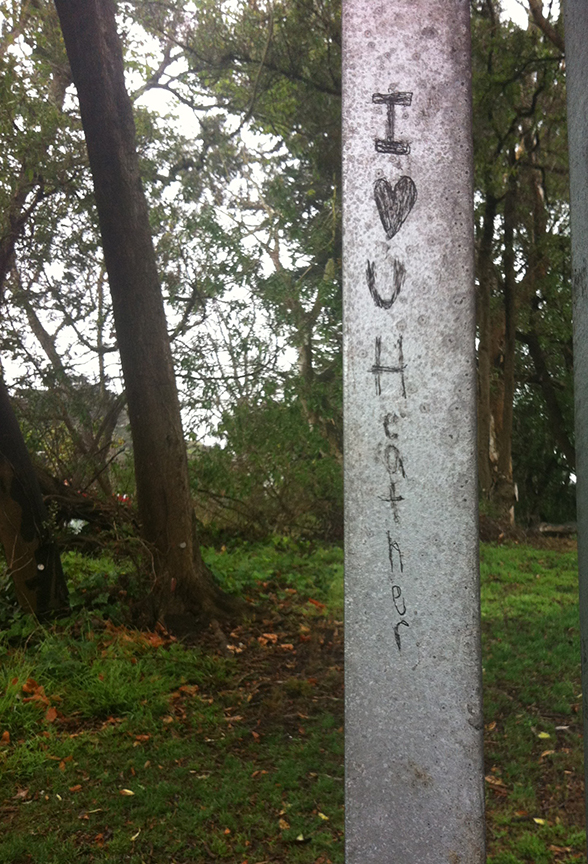
    The photo is of graffiti at the bus stop near my house.

    IMG_1908
  • Revision by Colin Yap


    I’ve been writing, in the serious sense of the word, for the past four years of my life, and to this day I don’t think I’ve fully embraced the editing process. Writing is instinctual and the end product is always raw, but as long as a piece of work feels substantial to me, even in its infancy, I am satisfied. Editing is not nearly as easy. Editing is supposed to be a radical reshaping of structure, a thorough examination of the content of a story or poem, with a number of inputs, from advisors, peers, and from myself, about what shifts in the words must take place for the writing to hit as hard as possible. The theme of editing for my work is usually, “trim the fat, embrace the substance.” Basically, understand where the story is, and don’t mess around with anything else.

    My fellow seniors and I are in the first trimester of the writing of our theses. The summer was a gestating period: we gained a sense of what we wanted to write, and how we wanted to write it, and we had the vacation months to try to formulate the first 20 pages. It was a necessary first step, with a tangible deadline, and I don’t think it was especially challenging for any of us to get to 20. The fact that I am slowly getting used to, however, is that very few of those pages are really going to make it into my thesis.

    In the thesis writing process, I have been transitioning from an identification as a fiction writer to that of a nonfiction writer. In any story, though, editing is tricky. It has always been a bit of an awkward process for me. After a serious assessment of my work, and with lots of feedback from others, I sit down and try to slim down the piece. But there is always some difficulty, and it comes from a fundamental discomfort with what I fear is a destruction of what is original and unique.

    The original writing, the rough first draft, is destroyed in the process of revising. This idea, even if its not true, is present in the way the editing feels; it does not feel necessarily right to destroy the order of words and sentences as they originally came. I know that this is a selfish instinct, but it exists in my mind in some form every time I contemplate the red ink. I still have to edit; it’s a writer’s business to edit towards some idea of completion. So I fix spelling errors and shoddy sentences. I haphazardly delete sections I know are lacking. And then after about a half-an-hour, I usually call it quits.

    I only write this because I am going through the process of revising a few pieces I want to go in my thesis and it’s hard. I know I have to keep writing. I have to keep thinking about what each piece is going to say, and what the thesis will say as a whole, is going to say. But I know that, as the process of producing a book-length body of work that is presentable and interesting, I am going to have to embrace the editing process.

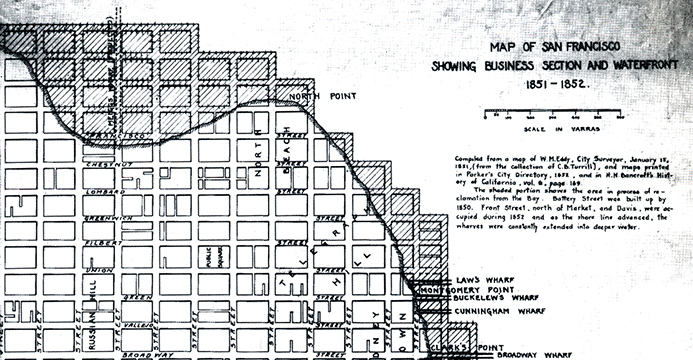
    Editing feels like destruction, and as much as I am sold on the ideal of enhancement, it’s just how it feels. It also feels necessary: first drafts are messy and incomplete. What I think I must do, as hard as it may be, is see the destruction in a positive light. To write draft after draft, to experiment—overlay different versions over one another. The visual metaphor I’ve though of is this: it’s like looking at maps of San Francisco throughout history, seeing where buildings were before tumbling, where the land was filled in, where dry surface that became neighborhoods. Hopefully, in the final draft, the piece will be able to pick and choose which surfaces and textures it wants from all the maps before it.

    Or at least that is what I tell myself. Even in writing this, I avoid the procedure of returning to the work. I have a sense, though, that I have ideas I can work with and ideals I want to reach in the interplay of destruction and preservation. Hopefully, I will have an update in a few weeks.

    Colin Yap, Class of 2016


  • I am graduating from high school in less than a week so I think I’ve accumulated a bit of wisdom about how to go about dealing with school from the approximate ages of 14 to 18. Now it may not be much, however, it’s all still fresh in my mind, and thus it might be slightly relevant. So here is a list of things that I advice highschoolers to do (keep in mind that I have not done all of these things but I wish I had):

    1. Do your homework. It’s so much easier than rushing to make it up at the end of the semester
    2. Show up to class.
    3. But it’s OK to sometimes not show up.
    4. Be nice to everyone. As much as people suck in high school, most people are going through some crazy and horrible s*** and you don’t want your rudeness to add to their sadness and anger.
    5. Find at least one person (student or otherwise) that you completely trust and feel comfortable with because it will make everything a whole lot less lonely.
    6. Participate in things you’re interested in. Join a club and if none of the clubs interest you, make your own.
    7. If you have a crush on somebody, do something about it. You’ll regret if you don’t, and take it from someone who got rejected from all her top colleges, rejection really isn’t as bad as it seems
    8. Peer pressure is super easy to avoid if you simply say “No.” Don’t be dramatic about it, don’t make other people feel bad for their decisions, just be super casual and say “no” and no one will bother you about it, trust me.
    9. Along the same lines as #7, if there is something you really want to do, even if it upsets your parents, do it, as long as you are safe! Seriously.
    10. Be happy. One of the most important things I learned while in high school was that happiness is a choice and no matter what is going on, your outlook is all that really matters. And honestly, it does take some effort, but after you get the hang of it, positivity is pretty great.

    There is definitely more to add (a lot of things not appropriate for this blog) but, no matter what you are doing, just have fun! It’s clichéd but it is not overrated.

  • The seniors are leaving. Each one of them is such a unique individual and yet they manage to work together so well. They treat each other with respect and kindness. At this point they’ve grown up together; the trauma of high school has brought them all together.  They understand each other, and although they may or may not admit it I think they all love each other a little bit.        

    At SOTA, high school doesn’t just make friends. It makes families. It’s a small high school to begin with, so everyone vaguely knows each other. Then you mix in the griefs and losses each grade itself undergoes, and you find yourself leaning on your classmates for comfort. Even if you don’t like some people, what you both experience bonds you. I know the seniors, as freshman, lost both a student and a teacher, along with the tough but common cases of kids missing school or dropping out because of drugs, mental health and ED outpatient programs. As a result this senior class is one of the bravest, most vibrant, creative, funny and kind group of individuals any of us will ever encounter. Their talent by far surpasses that of the class before them, and their charm and sincere interest reach even to the freshman.       

    You know how close classes get. Take it to a departmental level and you’re looking at some people who’ve spent over two hours together for five days a week for four years of their lives together, give or take. I’ve written about how close I personally feel to my class. If I take that and double it I can only imagine the depth and level of empathy our seniors must feel for each other.

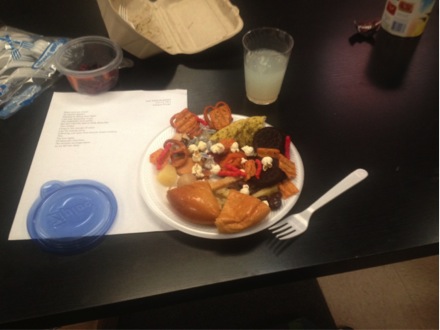
  • Today Creative Writing had our form of a Seder, which Maia dubbed a “C-dub-der.” We each brought in a food that somehow portrayed freedom to us, and combined them to create our own Seder plate (shown below). The rationales ranged from genuine to comical. Colin came up with a separate metaphor for each kind of snack in his bag of Munchies™, which I will not attempt to recite (you can thank me later).

    The food was accompanied by two pieces of writing per writer: one piece written during the Haggadah unit, and one piece written by another artist. Giorgia sung a capoeira thingy (Hymn? Chant? Just song?) in Portuguese. The readings, though we only got about halfway through, rounded off the C-dub-der nicely. Overall, a pleasant ritualistic feast and poetry recital. Also, I got Swedish fish out of it, and we all know that’s what really matters in the end.

    Image

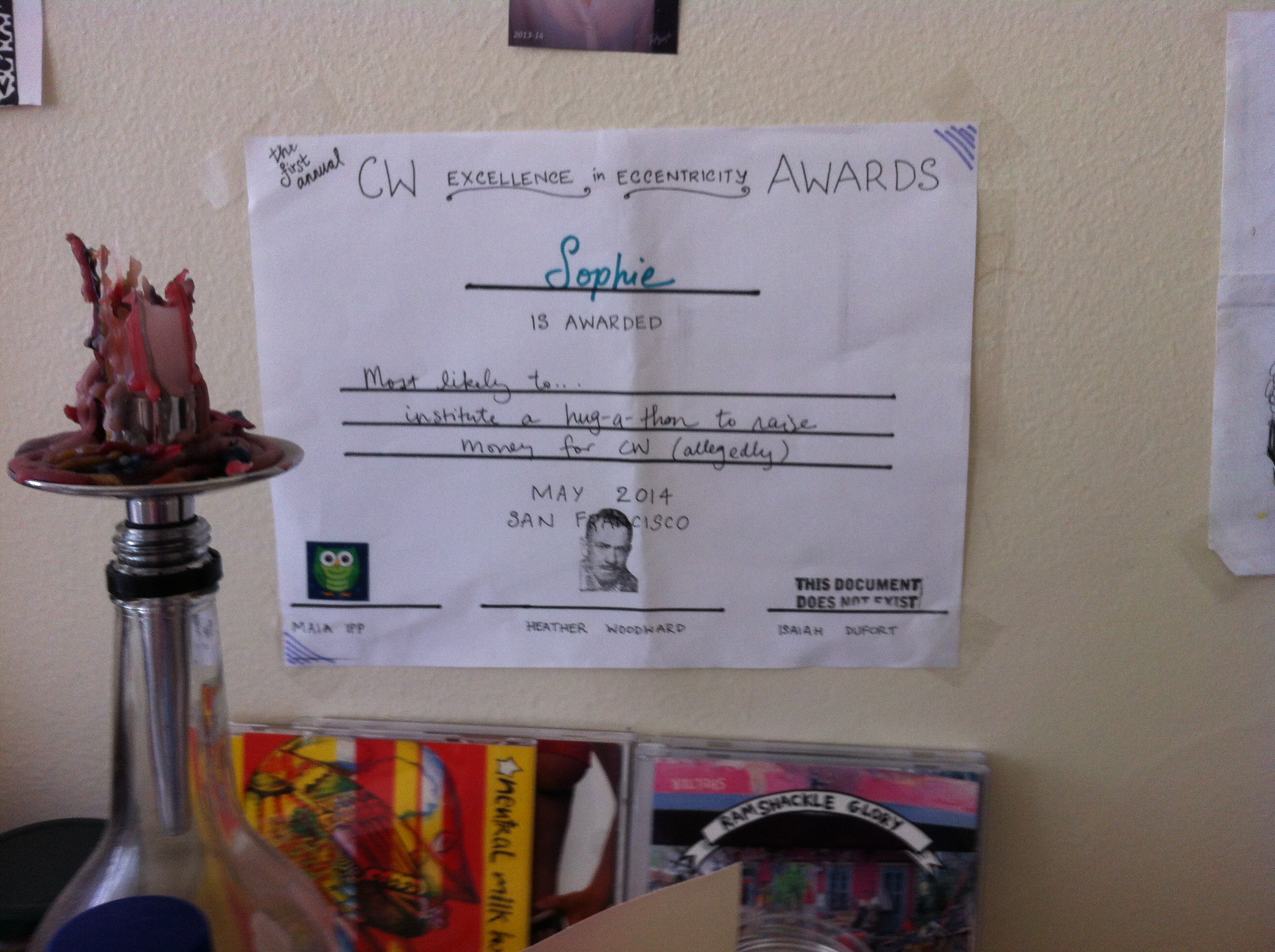
  • This past Friday, a new tradition was born. It was kind of a bittersweet day, with many of us feeling not only the dull relief of finishing our final finals, but also the pain of the impending loss of our amazing and irreplacable seniors. When we walked into the CW room and were greeted by the sight of a podium at the front of the classroom, we weren’t sure what to expect. Was there another guest speaker? Were we going to have to make impromptu speeches for the seniors? Wrong and wrong. Some twenty minutes later, after Isaiah Dufort made a dramatic, smartly dressed entrance, we learned that that the CW room was now the site of the first annual Excellence in Eccentricity Awards, curated by Heather, Maia, and Isaiah. Everyone in the department recieved an official paper signed by Maia, Heather, and Isaiah certifying their unique affinity for something or other and an accompanying gift from the dollar store. I was awarded Most Likely To Institute a Hug-a-thon to Raise Money for CW (Allegedly). The award came with an adorable pink stapler since according to Isaiah, I’m always trying to steal Heather’s. I have no idea what he’s talking about.

    The ceremony continued with more spot-on, strangely specific awards and gifts. After it was all over, we drifted to the carpet for a compliment circle to appreciate our lovely seniors. Fond memories were shared. Tears were shed. An entire box of tissues was used. We’re all going to miss the seniors. It’s going to be weird starting the new school year without them. Friday’s class was a mixed bag of emotions, but having our awards ceremony was an excellent way to acknowledge the awesomeness and uniqueness of every single person in the department. I, for one, am in love with this new tradition. Long live the EE Awards!

    IMG_0193


    IMG_0195

  • Giorgia and I are writing poems for our own graduation ceremony—which is a mere few days away (!?!). Our mission, as I have interpreted it, anyway, is to be creating something that will be both meaningful to and easily understood by everyone in the auditorium. Something that both preserves our authenticity, and conveys our classmates’. Something not overly cynical. Plus, I found out that I would be writing this poem with only a week or two to spare. I only turn out four or five poems per year that I’m completely proud of, and most of those take me at least a month to finish. In other words, this might be the craziest assignment I’ve ever been given.
    I’m reminded of the process of writing a college essay. This is more fun, of course, but some of the elements are the same. The guidelines are, if not strict, at least clear; you’re writing to a very specific group of people; you’re writing to them for a prescribed reason. That doesn’t mean you have no freedom, or that whatever you write will be contrived. But every so often, I catch myself becoming dangerously skeptical about the purpose of writing this poem. Does graduation have any intrinsic meaning, or is this all just pomp and circumstance?

    Since this kind of thought tends to occur right after I’ve been writing irritably for half an hour with no results, it’s pretty easy to put down to momentary crankiness. Yes, graduation is meaningful. And not just graduation as a moment in time—graduation as the event that the school puts on and that we’re all obligated to go to in slightly silly-looking hats. One of the reasons it will be meaningful is that the seniors get a final chance to show off our art: to write poems for the occasion, and play music, and dance, and do all the stuff that has been of ultimate importance to us for the last four years.

  • For my final blog post of my CW career, I’m supposed to be writing a testimonial to bring all you crazy blog-readers who are not already convinced of the value of CW over from the dark side. Obviously, there’s not enough space in one post to give a full brief, so I’m going to have to choose just one aspect of CW to talk about: Heather.

    Today, I went into Heather’s office to consult with her about a poem (the one I’m writing for graduation) for the last time. This felt more final than any of the other events of the day—more so than attending my last high school English class or bringing my cap and gown home or even being part of the “senior appreciation circle.” I have the impulse to frame my enthusiastically-scribbled-on poem and hang it on my dorm room wall.

    Working with Heather has been a defining part of every senior’s time in CW. “Working with Heather” may have included any of the following and more: sleeping on her couch; calling her at all hours of the night; eating her food; being showered with ego-boosting compliments; sometimes, grading her papers. Perhaps most importantly, hearing her explain something about your poem—some clever syntactical choice or meaningful image—that you hadn’t even consciously considered. Any CW knows how pissed off I get at apathetic teachers. Heather is the opposite of apathetic, and her complete generosity with her time, energy, and love is unearthly. She wins the Nobel prize for life-changing teaching.

    Prospective parents reading this? If you think your kid can find a teacher like this at any school, you are wrong. Prospective CWs? If you have ever felt like you didn’t fit in, or like nobody understood you, the chances are that Heather will be able to fix that. Along with teaching us to write, it’s what she does.