CREATIVE WRITING

at the Ruth Asawa School of the Arts in San Francisco

Welcome! CW develops the art and craft of creative writing through instruction, collaboration, and respect. This blog showcases STUDENT WRITING and how to APPLY to Creative Writing.

  • Reflection on Marina Abramović by Julieta Roll

    Marina Abramović is a Serbian performance artist born in Yugoslavia. In her nearly five decade career she has preformed radical and questionable feats pushing and defying the limit for
    what art can be and what performance art can be. I went to see her talk with City Arts and Lectures, a privilege I had been given through the Creative Writing Department. It was at the Nourse Theatre with interviewer and mediator Maria Popova. I was completely blown away by this women. I was seated in in the balcony, straining to see the large yellow-lighted stage where the two women sat facing the audience in large upholstered chairs. They seemed so far away but when Marina Abramović spoke her voice echoed powerfully and filled the theatre space making her seem close, nearly touchable.

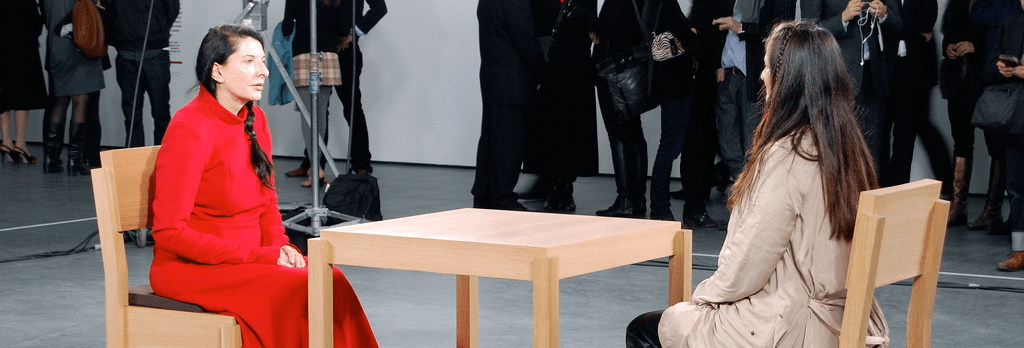
    Some of Abramović’s most significant work includes “The Artist is Present” and “Rhythm 5” among others. “The Artist is Present” (2010) was shown in the New York’s MoMa where Abramović sat unmoving in a chair, a table and another chair opposite her. Visitors were welcomed to sit across from Abramović where she would simply maintain stable eye contact with the guest until they left. The piece lasted 750 hours, stretching over several months and thousands of people waited in line to sit across from the famous performance artist.

    In “Rhythm 5” (1974) Abramović constructed a wooden star in which she soaked in petroleum, sprawled in the center of, and set on fire. The piece was brought out of Abramović’s thoughts on the strict Communist government that Yugoslavia lived under. In the interview she talked about how the Communist star was everywhere growing up: on buildings, in her house, on her birth certificate, and how she wanted to get rid of it, how she wanted to “burn it” so it was no longer apart of her. She also discussed while performing “Rhythm 5” she fell unconscious due to

    the lack of oxygen in the burning star and how this frustrated her. She felt she had lost control and was angry at the fact that the body had limitations. I thought Abramović’s work raised the question “What is art?” and “Why is this art?” as her pieces were so unfocused from the traditional lense of the fine arts and even modern arts.

    “I learned very early if you want to be an artist, not to compromise….I make my work without any compromise” said Abramović as she discussed the struggles she faced trying to become successful through her performance art. “The plumber had more money than the performance artists” she remarked. This inspired me greatly, to see a women who had come from so little and had made her way to place where she could talk freely about her ideas and create what she wanted. She spoke with such wisdom and gracefulness her words kept the audience at an attentive silence. I was extremely engaged the entirety of the talk, Abramović charismatic personality wrapping me and afterwards leaving me with more questions than I began with. Although this wasn’t a usual reading I did not exit any less inspired.

    Julieta Roll, class of 2019

  • Notebooks by Max Chu

    My notebook, in which I write all of my prompts and poems and draw all of my stick figures and mindless doodles, is larger than most; or at least larger than the standard composition notebook that one uses in math class, with the ruler and metric conversion tables. The cover is vibrantly red, with a three sided black diamond drawn in sharpie and a looted bar code sticker pasted in the middle. The pages are blank, not lined, and presumably are intended for professional drawings and paintings, but are instead covered in multicolored ramblings about the ocean and interesting words or phrases overheard. Everything about my notebook is uniquely me. Every inch has been touched or written on, and it’s been shoved in my backpack so many times that the corners are all crinkly. There are many stories in my notebook, literally and symbolically and if you ever meet me, ask to see it, and I will gladly show you the place where there used to be a sticker, but I decided against it, or a list of books I’ve been meaning to read, or some drawing that looks like it took seconds, but in actuality took hours.

    Kenzo’s notebook is small and black and a very nice Moleskine, which he’s drawn all over with gold sharpie. The front has his initials, K.F., in the center of a diamond. Every one of the pages in his book is taken up by a comic strip in which two detailed stick figures are forever fighting. In fact, there are more drawings in his book than actual writing. You’ll see a place where he finished detailing a prompt, and then in the last minutes, drew an entire comic book. Harmony’s notebook is large, but not quite as large as mine. It’s light blue and somehow gives off the feeling of being cloudlike and holy. The pages are lined with a block at the top of the page for the date, in which I’ve seen her put quotes, drawings, and on occasion, the date itself. Huck’s notebook is a purple variation on the classic black composition. It’s contents are very too the point, no doodles or drawings, only sentences in Huck’s scrawled handwriting. It gives you the feeling that he’s someone like DaVinci or Newton, someone who’s thinking great thoughts at a rate that’s too fast for his hand.

    Every creative writer has a notebook like this, where they put their deepest darkest, most controversial fears, or where they are outlining the next great dissertation. Each one is unique and reflects the writer’s own style and aesthetic so well that if a stranger were to look through the notebook, by the end of the reading they would know the person as if they were a friend. Every single thing that we put in our notebooks says something about who we are, from the size and style of our handwriting, to what’s in the blank spaces of our sentences. The variety of styles that you could find in creative writing just goes to show how much creative wiggle room we have; how much ability we have to express ourselves as the unique individuals that we are. The painters have their palates, the musicians have their solos. We writers, well we have our notebooks.​

    Max Chu, class of 2020

  • I write a lot about my dreams. Or at least I try to. How can you
    describe the surreal beauty of dreams? It’s near impossible. I used to
    keep a dream journal. All the sentences are incoherent, all the syntax
    just doesn’t flow right. But I can see and feel the dreams perfectly
    in my head.

    They say you should write everyday instead of waiting for inspiration
    to strike. The remarkable things in life happen everyday, meaning you
    can remark on everything. There is no “writer’s block” and there will
    never be a day when there is nothing else to write about, nothing new
    to say. If you are a writer and feel that you can’t write anymore,
    it’s because you don’t want to. That’s fine. Go for a walk instead.
    Write later.

    As hard as it is to write down your dreams, you can also lie about
    them, because thank God no one saw them but you. In a dream you open a
    cupboard and see an amorphous red shape. Change it to a small doll. Or
    don’t.

    Here is why I write. I want to do the world justice with the right
    words. I want to show you how good it feels to wake up with the sun on
    my face. You probably already know how that feels, but isn’t it
    excellent we both experienced it? I want to soak all of this up and
    then ring it out into a cup for you to drink, so you’ll be ready. I
    want to make you cry until I start crying with you. I want to describe
    my mother’s herb roasted chicken and mashed potatoes until you can
    taste them in your mouth. I would make dinner for you, but I can’t.
    I’m a lousy cook.

    Amina Aineb, class of 2017

  • Consider by Harmony Wicker

    Over the past few days, I’ve been pondering what it means to be a good American. Before I can unpack that thought, I have to backtrack and ask myself, what does it mean to be a good human? To answer my original question, to be a good human, one must be compassionate, care about important issues, be trustworthy, consider the world and the impact of their actions, and so on. As one person on this Earth, however, I don’t think that I can truly answer this question. To define what it means to be a good human, it would have to be a collective effort so that, at the very least, multiple perspectives are considered and respected. The list will never stop growing as our species continues to transform.

    In reaching my tentative conclusion, I asked another question, does it even matter? The world is bursting with kind people who are taking action against real issues such as starvation, abuse, war, bullying, and everything else that has ever hurt anyone, if only for a microsecond. Yet, when I look at the news, these issues seem unaffected by the valiant efforts and appear to only get worse. It’s extremely discouraging and even with the anger poetry I write, my words and voice never feel like enough to create change. However, I’ve come to a point in my life where I’ve decided not to give up. I want to make everything matter, to answer my second question.

    A couple of days ago, in Creative Writing Two, we read a interview of Mauro Javier Cardenas, the author of the recently published novel, The Revolutionaries Try Again. In this interview, done by Charlotte Whittle, Cardenas remarked that he wrote the novel “moment by moment.” I believe that this can be applied to all aspects of life. At this crazy time of complete uncertain, which I think is strongly felt across the entire world, we have to take life in moment by moment, step by step, breath by breath. We then can face the change that is currently happening and, hopefully, come out on the other side as better people. I still haven’t answered my original question what it means to be a good American and at this point—I don’t know if I can. Instead, I’ve tried to make sense of my current reality by considering other perspectives to help cultivate the correct answer for myself. In doing this, for now, I must live moment by moment, if only to stay sane.

    Harmony Wicker, class of 2018

  • Stage Fright by Emily Kozhina

    On October 21st, Creative Writing had its first show of the year, Stage Fright. It was the first show I had ever performed in at SOTA, and the title fit perfectly with the nervous wreck in my mind. I wasn’t sure what to expect; I had never performed my writing in front of a large crowd. The thought was utterly terrifying. I was surprised I didn’t faint at the mention of it.

    I was much too proud once I printed my final copy, the one I would be performing. When I practiced with our artist-in-residence Trey Amos, I tried to swallow my fear and read it with all the confidence I could muster. Workshopping my writing and performance only helped me improve, and reminded me of the friendly community I had never had with other writers.

    During rehearsal week, I had met the one and only Mr. Kwapy. After hearing his name over and over again, I finally saw him. He and Isaiah Dufort helped us with the skits, which I enjoyed watching improve over the few days we had. My piece engraved in my mind, and my skit face on, I felt almost ready for the show. It was a bit late to be almost ready, because I was backstage on Friday, listening to audience find their seats and chatter.

    Then the overflow chairs came out. My first show, and we sold out! Everyone was trying to celebrate with hushed voices, hugging and helping pull out more and more chairs. I stood, frozen. I couldn’t recognize the emotion I felt. The excitement around me and the anticipation of the audience brought butterflies to my stomach. It was either that or the excessive amount of food I ate before hand.

    The lights dimmed and my heart raced. The fear on my face was apparently very obvious, because students began to reassure me and smile and told me I was going to do great. I smiled back and went on stage.

    I don’t know how I did on the stage personally. My mind focused on the blinding light before me as I let my body take over. And then it was over. A wave of applause. I walked off and got hugs and ‘great job’s and I tried not to cry. I wasn’t sad, or even overwhelmingly happy. I suppose it was just relief leaking through my partially blinded eyes.

    My hands and throat were sore by the end. I screamed and clapped and ate candy, and basked in my overcoming of stage fright.

    Emily Kozhina, class of 2020

  • Trey Amos, the One and Only by Abbegail Louie

    Being a fan of spoken word and performance art, I was practically jumping in my seat when I learned that Creative Writing would be having an artist-in-resident from Youth Speaks. I know that I’m very vocal about my thoughts and being loud is in my genetic coding, so to learn that we were going to focus on performance writing had me geek out a little–ok a lottle. There’s something so unique about bringing writing to the stage and not just reading it, but presenting it. When starting the unit, I was pleased and, ok lowkey fangirling, over our new mentor, Trey Amos.

    Last year, I went to Youth Speaks’ Bring the Noise event and Trey was the MC. Trey is one of the most positive guys I’ve met and always brings the right type of energy into our classes. He brought many Cdubs out of their comfort zone and in turn helped made our annual showcase awesome. Whether it be a class game or a writing prompt, Trey has been there to navigate the performance aspect of our writing.

    And for that, on behalf of every Creative Writer, we thank you for being an amazing artist-in-resident!

    Abbegail Louie, class of 2019

  • Kirby Cove by Angelica LaMarca

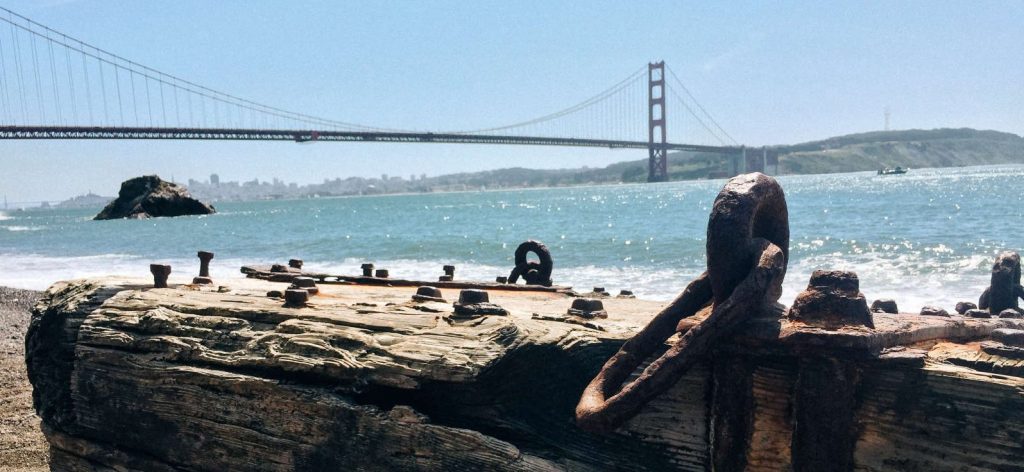
    Having been a part of the SOTA Creative Writing department for two years now, I can gladly say that Kirby Cove is something that never fails to generate excitement in me. No matter how many times I will re­exhibit the cycle of sleep deprivation, matted hair, and sand in my ears, I still found myself enticed as I descended down the gravelly, sun­doused path which leads to the campsite. Located in Marin, at the cusp of the Golden Gate Bridge, Kirby Cove is where Creative Writing takes part in a camping trip every year, and is a distinct attribute to the Creative Writing experience. The campsite offers a surreal view of the bay — especially at night, when your hair smells vaguely singed, and the beach is fringed with black water, and you can look out and try to estimate how many breakups and robberies and phone calls are happening on that hulking, gold­speckled mass which is San Francisco. At least, that’s I did this year, along with some of my friends as we sat atop an old war bunker after a long night of s’mores, scary tales, and Hot Seat. This has always been my favorite part of Kirby Cove: the eerie feeling of detachment you get peering out at San Francisco from afar, all the while knowing that no one will get to experience that moment with you except for your closest, most cherished friends.

    I know that in the years to come, Kirby Cove will anchor all the great memories I’ve attained from being in this department, and for this reason, I believe it’s been an essential part of my high school experience.

    Thank you Creative Writing for being great!

    Angelica LaMarca, class of 2018

  • Cutting Ball by Isaac Schott-Rosenfield

    Towards the end of last year, I received the opportunity to be an assistant/student in playwright Andrew Saito’s masterclasses at the Cutting Ball Theatre. The subject was dream theatre. In-between my urgent managements of water pitchers and printers (another education of a very different type), I wrote my short play, possessed by the lively and exacting spirit of both the instruction and genre.

    A while later, the Cutting Ball Theatre asked to include my play in their fall show of short Avant-Garde drama. CW artist-in-residence Isaiah Dufort stepped in to direct it. Working in Isaiah’s writerly apartment to restructure my implausible stage directions into something doable, discussing inflection with an attentive actor; I was surprised and moved by the seriousness and vigor which was afforded my work.

    On the stage, I observed the difference between my words and their performance, changed by the foreign influence of actors. My detailed, poetic stage directions had to lose their language, had to become visual and actual, rendered in flesh and contour. Theatre entails compromise—between the author and the actor; between the written and the visual. Quite different from the self-contained and thoroughly controlled realm of my usual oeuvre in poetry.

    And so while I do not imagine I will become foremost a playwright, acting as one has offered new understanding of dimension and immediacy.

    Isaac Schott-Rosenfield, class of 2017

  • UMLÄUT ONLINE

    Everybody’s favorite literary journal is now online at theumlaut.org

  • Film Workshop by Davis DuBose-Marler

    Every Sunday morning, I drag myself out of bed at the ungodly hour of nine thirty and get ready for the seven and a half hour time commitment otherwise known as “Film Workshop,” taught by Ronald Chase and mentored by SotA artists-in-residence Jesse Filipko and Isaiah Dufort (the Great).

    The workload and demand for quality are high. Yes, Film Workshop can be stressful at times and has definitely given me nightmares about 3D uses of space and visual concepts, but it has also provided with me with a new understanding not only of film and how to analyze it, but also with a new way to see works of literature. Sure, the visual aspects don’t really apply, but as far as critique goes, the methods are very similar. There’s still form versus content to consider, as well as the pacing and subject matter.

    As much sleep, hair, and sanity as I’ve lost through the workshop, getting to work with so many young artists from their different backgrounds has been a great experience for me, and I highly recommend it to anyone who has a high pain tolerance and/or a passion for new artistic experiences.

    Davis DuBose-Marler, class of 2017