CREATIVE WRITING

at the Ruth Asawa School of the Arts in San Francisco

Welcome! CW develops the art and craft of creative writing through instruction, collaboration, and respect. This blog showcases STUDENT WRITING and how to APPLY to Creative Writing.

  • Formal Transgressions by Ren Weber

    In light of CW’s most recent unit on Experimental Writing with Momo Wang, I’ve been interested in what defines and limits transgressive and experimental writing. In her unit, Momo juxtaposed two literary transgressions: writing bound by set limitations and constraints, and writing with very little or no literary constraints that may use stream-of-consciousness and interiority. The examples she brought in on writing with limits and restrictions (restraining word choice, structure, or verse form) intrigued me the most.

    Momo showed us many pieces that included elements of constrained writing, such as A Void by Georges Perec, a novel that entirely excludes the letter “e.” Perec is a self-proclaimed Oulipian, belonging to a group of artists who define themselves as “rats who must build the labyrinth from which they propose to escape.” They essentially attempt to use constrained writing methods to create works of art. A Void is particularly interesting to me because of the sheer amount of time and dedication it must have required; it’s difficult to imagine composing a few paragraphs of an “e”-less narrative, nonetheless a 300-page novel!

    I often find myself trying to avoid limitations and constraints in creative writing. I like writing pieces that are sometimes incoherent and not bound to proper formatting, line spacing, or narrative structures. This being said, I think it would be a very interesting experience to try and write a piece in which I am limited by a vowel or verse form, and I think experimenting with this might help me hone in on the actual content of the piece. I am grateful for Momo Wang’s guidance over the week and hope to explore experimental writing in the future!

    Ren Weber, class of 2020

  • Since I’ve been back to school, I’ve witnessed three fire drills and the Field Day event and practices, all in a wheelchair. The fire drills were surprisingly fun. One of my fellow creative writers, Liam, wheeled me out into the quad for two of the three fire drills. During the first fire drill, the two of us were really confused on what to do. We were on the second floor and needed to get down to the football field but didn’t know how. There was an elevator but I was always told that during a real fire or fire drill, you weren’t supposed to use it. Eventually, our Vice Principal Ms. Boyle told us to use it anyways because the fire wasn’t in the main building, it was in the studio theatre. No explanation as to why we had so many fire drills all  one after the other.

    The first Field Day practice was a slow day. The head of my department, Heather, gave all of the students two options: we could stay inside and paint my wheelchair yellow (our department’s color) or go out to the field to practice for the events that would take place. I of course, had to stay inside to let some of the other students paint my wheelchair.  While field day practice #1 was  calm, Field Day practice #2 was chaotic. I didn’t even get to actually watch the people on the field practice! My friend and I were too busy figuring out how to get me down to the field safely. That resulted in me freaking out when my friend Nadja tried to push me up a steep, unpaved hill. That was the end of field day practice #2 for me.

    The actual Field Day was even more chaotic than Field Day practice #2. I came to school wearing all yellow (which is what I thought was enough) until I saw a boy shirtless with his hair and chest dyed red. Everyone at school went all out with department spirit that day. The main events were absolutely chaotic. There was a combination of screaming, screeching, and celebrating. Unfortunately, CW did not place in any of the activities but we did try our hardest.

    Colette Johnson, class of 2021

  • Recently, we had a mini-unit with artist-in-residence Momo Wang. Our unit with her was focused on experimental fiction, which is prose that transgresses the usual rules of fictional writing. These transgressions could be anything ranging from grammatical errors or a lack of dialogue to extraordinarily long sentences or an entire piece written without the letter “e.”

    We read experimental pieces, including excerpts from The Waves by Virginia Woolf, Brasília by Clarice Lispector, and many others, and wrote our own pieces that broke the rules that we have become used to following in our time in Creative Writing. And yet several of us realized, in writing for Momo’s unit, that we have already written experimental fiction. Some of us write pieces with an excessive use of parentheses, some with run-on sentences that take up entire paragraphs, some using other transgressive elements, but we didn’t realize our work was experimental fiction, when, in fact, it was. I definitely write experimentally, most often when I write works with high emotion in them or which are about my own experiences.

    Recently, I’ve taken to writing every night before I go to bed, and it is always a stream of consciousness (a style we discussed with Momo), and often contains oddly structured sentences. Even though I knew that the writing that I do at night in this way was not in the same style as my normal fiction, I didn’t have a name for what it was.  But now those of us who didn’t recognize the genre of our work for what it was will know what we are doing when we write in ways that transgress the boundaries of writing, and we can use that knowledge to continue to expand our writing and learn to expand our writing into something more.

    Lena Hartsough, class of 2019

  • Kirby Cove by Kaia Hobson

    When I first joined the Creative Writing department, many things stood out, the people, the work space, and of course the writing. But one thing the made itself clearly evident was the extensive amount of traditions. I recently participated in the most recent one, Kirby Cove. Kirby Cove is the place the Creative Writing department goes to camp every year; it is treated as a bonding experience for all the grades. We stay only for a night.

    This year, we managed to get a spot during the three-day October weekend, providing an extra day for recovery.  There was one site for the whole twenty eight kids attending. It was cramped, but this heightened the bonding experience even more. The campground was beautiful, the green groves of trees creating a canopy over our heads, while the soft sound of crashing waves filled our ears.

    Most people had arrived around noon, their presence kicking off the abounding mini traditions in the Kirby Cove experience. I could see the excitement in the upperclassmen eyes as they arrived, old memories reminiscing, new ones about to be made. Most of the events revolved around the recent additions to the department: the Freshmen. Me, being a freshman was expecting this, but I was unaware as to how intense the activities would get. The activities will go undescribed to add to the surprise for next year, but all I can say is how they may have seemed surreal at first, but they were definitely something to remember. I felt much closer to my peers, us now seeming as one.

    Small groups of Creative Writers were constantly walking back and forth from the beach to the campsite. Those who didn’t have shoes, and who couldn’t handle the sharp rocks covering the path, were willingly carried by those who had shoes. I floated from group to to group, from other freshmen to upperclassmen, getting to know a little about everyone in the department.

    A night some decided to sleep, while others vowed to stay up the whole night. I gave in to my body’s pleas for rest, and got perhaps three interrupted hours of sleep next to the fire pit. The next morning everyone was delirious, even including the people who did get a improved night’s sleep. We all packed up, eager to head home and rest, but sad to leave such an experience behind.

    Although the trip is behind us, the connections I made will last me throughout my years of high school, perhaps even further. I can’t wait to return to the newly familiar Kirby Cove.

    Kaia Hobson, class of 2021

  • As I enter my junior year I have realized the transition from being an underclassman to an
    upperclassman. Although the shift was subtle at first, the piling homework and endless SAT prep
    soon had me face to face with the responsibility of being an 11th grader. Even if I don’t want it,
    I’m getting older, and that means change. I still can’t quite wrap my head around the fact that I’m going to college in a few years. Such a large transition seems almost traumatic, but I am
    reassured in the fact that many students have done this before me.

    I realize with being an upperclassman I understand things more. I have a map of the school in my head, I’ve learned how to take notes, most importantly I feel my writing has improved. What
    Heather says is true, writing is rewriting. In order to create finished pieces I’ve had to workshop.
    I’ve had to restructure sentences over and over again until I’ve felt crazy. It’s a painful process
    but it’s a necessary process. As a junior I understand that, and I understand how vital it’s been in
    my development. If it wasn’t for the Creative Writing Department I’d still be writing how I did
    in the 8th grade, and oh! How sad that would be! I think this is true for most students at SOTA.
    We spend half our days practicing, analyzing, and we get better. I guarantee you any senior who
    looks back on their freshman work is going to cringe, but that’s part of the process. It’s how we
    learn. It may be in three years time I look back on this very blog post and think, “Geez! What a
    loser!” But that’s okay because I’ll know I’ve improved.

    I think I’m trying to take junior year day by day. One thing I know is I’m going to keep writing,
    and I’m going to keep rewriting. Hopefully soon I can find balance. Between my art, between
    my academics, and within myself.

    Julieta Roll, class of 2019

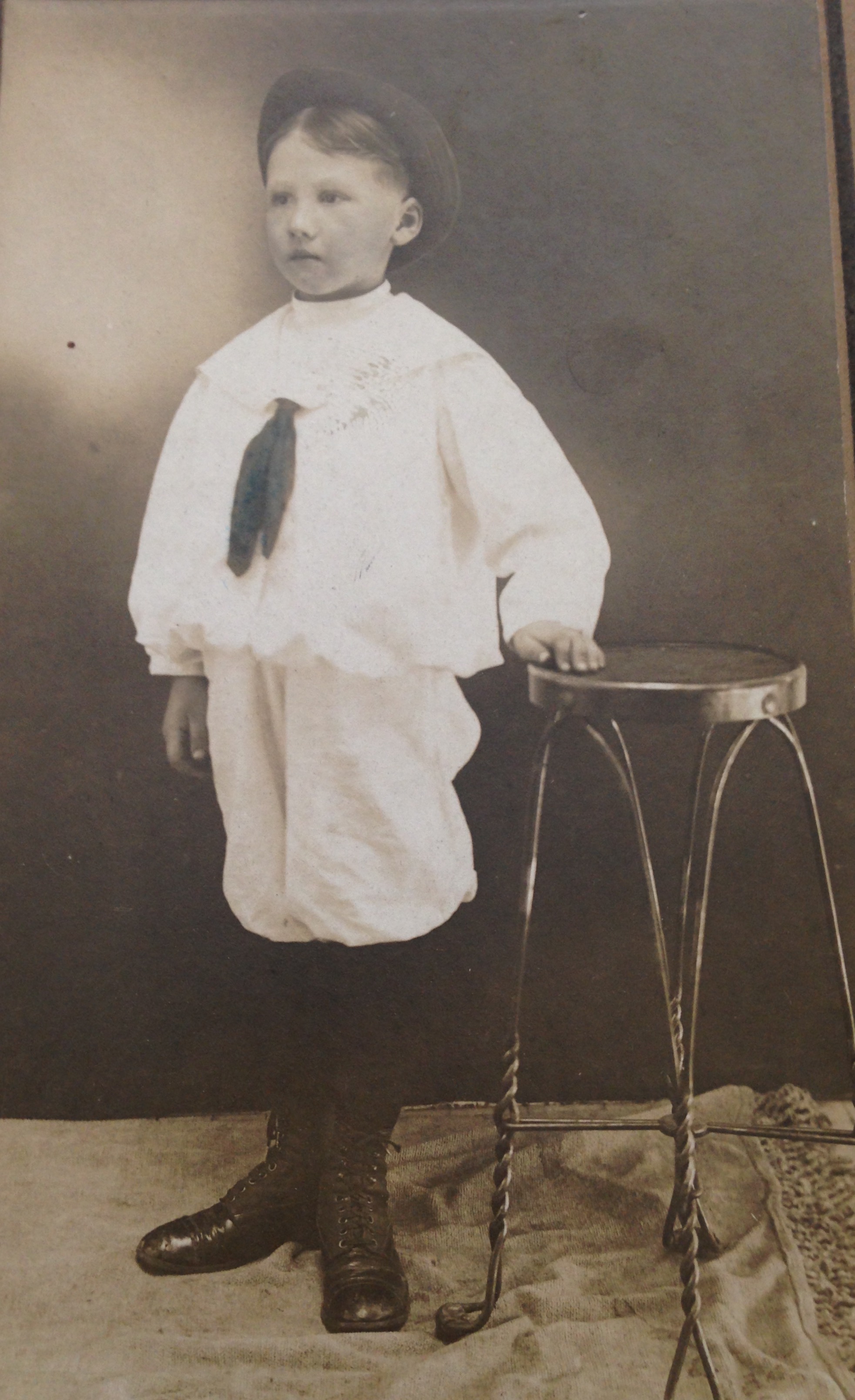
  • “Charlie, place your left hand on the stool and keep it there! No, your other left! By
    golly!” Aunt Wilfred’s cheeks fluster a deep shade of fuschia. Her shrill voice pairs fluidly with her put-together Victorian era style; broad shoulders (artificially padded) combined with a tight corset-formed cinched waist rest atop an elegant ruffled satin skirt flowing down to the ground and past. Her maroon colored velvet high heels clip and clop on the tan carpet that Charlie and the stool are positioned atop, walking in countless halos around him, inspecting his posture and positioning.

    There is an Addams family tradition in which when a boy in the royal family turns five years old, there is a picture he must pose for and a specific pose he stands in. Those pictures hang in Wilfred’s house for her to treasure forever. Charlie, however, is a boy who doesn’t quite get the significance of posing for a picture that will simply be hung in Aunt Wilfred’s halls. Anyone who knows Wilfred knows to not aggravate her – or else, so he reluctantly holds his body in a rigid line, a black top hat placed one-quarter of the way off the child’s head, displaying his greased-down hair with a middle part. Oversize white trousers and black heeled boots adorn his small five year-old figure, poofing Charlie’s body out to symbolize a transitional phase – he’s no longer a boy but still not a man. His left hand rests partway off the cold wire stool, his body angled away from the camera. “Agh, Charlie. Do not put your hat completely on top of your head. Move it back! No, not that far! It’s about to topple off your little skull! Good, now look into the camera, don’t blink, don’t you dare smile, and say ‘Prunes’.”

  • Middle school was one of the most agonizing and dragged out experiences I’ve ever had. High school would hopefully be my savior.

    In middle school, I had no motivation to work hard. There wasn’t anything for me to look forward to because it was a constant routine full of boredom. That’s why seventh grader Emma looked at SOTA as if it were Christ himself. Just the idea of going to an art school where I get to write alongside people like me gave me more joy than all my three years in middle school combined ever did. It was immensely frustrating to only be able to have creative writing as a hobby rather than something I could put my energy into on a daily basis. Being taken seriously at SOTA as a writer while having three hours everyday to write makes me feel content beyond words.

    Everyone at SOTA is here for a reason. They’re working toward a dream, to expand their talent and knowledge of their art, or any other reason they may have. It’s a school full of talented individuals who have a passion for an art form that they want to develop. I’ve met people who didn’t figure out they even liked art until last year, while other like myself have always done and loved their art form. For example, when I was seven years old I stole my dad’s computer and typed out my stories and ideas into the google search bar. I had no idea there was a platform called “Microsoft Word” that would have been much easier to use. Art can transform and take over anyone’s lives, no matter their age. SOTA exists to build off of that.

    Strangely, I feel I’ve already adjusted to high school. I thought it would take much more time for reality to set in, but it feels like I’ve been at SOTA for a year. The already close friends I’ve made in Creative Writing might have contributed to that. Especially during the two weeks of the Summer Workshopping, which helped me understand more about creative writing while also getting close to fellow freshman. The other creative writer’s work amazes me to the point of wanting to dig inside their brain to find how they creating such beautiful writing. Some of their work is better than most published authors I’ve read. Even the voice and presentation while reading work out loud is astounding. Being exposed to writing everyday had already improved and changed my writing so I can’t imagine what it will be like by senior year. I look forward to the new experiences I will have everyday and what I will learn and see.

    Emma Cooney, class of 2021

  • Revelations, by Emily Kozhina

    A few days ago, the Creative Writing department went to the DeYoung Museum to visit
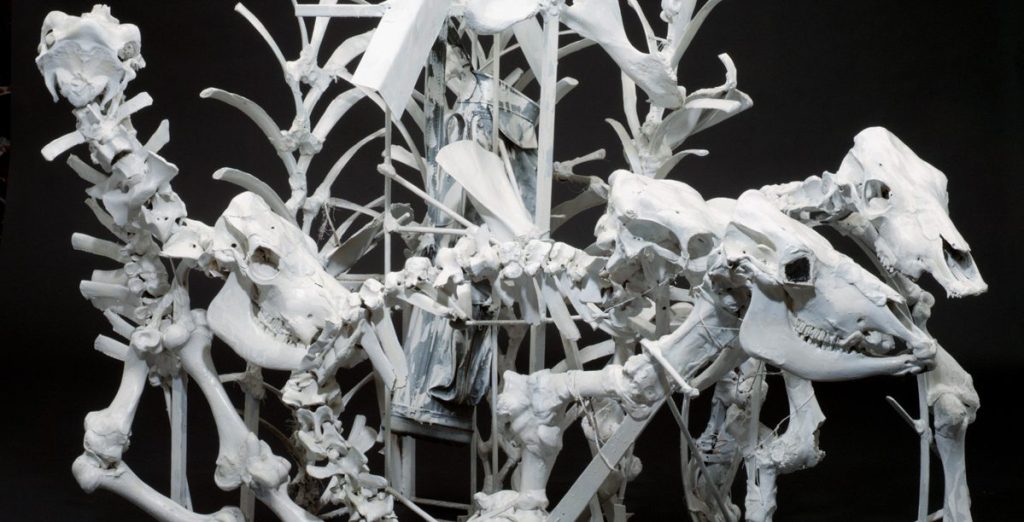
    the Revelations: Art from the African American South exhibit. A large majority of the art was done with few resources, since African Americans didn’t have much, but still wanted to express themselves and their thoughts through what they did have. Sculpture materials ranged from metal, to tree roots, to cow skeletons, and delicate canvases were replaced with blocks of wood.

    Every piece had kept a part of its creator, whether it be uneven stitches done by tired hands, or a shaky pencil line, smudged by a dragging arm. To be reminded that people made these pieces, to see something that couldn’t be remade, was refreshing.

    There was one significant moment described to me that I believe will be hard to erase
    from memory. My class group was kneeling on the floor, legs weak, eyes looking up at the quilts pinned onto the walls around us, different fabrics unevenly stitched together. Our docent told us of a woman who once visited this exhibit. The moment the woman had walked into this room, she grew emotional looking at the quilts. When asked why, she explained how when she was a small child, she helped her grandmother and aunts stitch these, and to see them in a museum was a vision she never could have imagined.

    I pondered after the telling of this story, and looked at the quilts. I saw jagged lines and
    uneven squares, and however humanely beautiful I found its imperfections, I didn’t feel myself well with tears. The differences between the woman and I were certainly clear. We grew up with different lives, families, memories. It wasn’t surprising when two people reacted to something differently. However, the more I thought, the more I understood the woman. I still didn’t feel any nostalgia or anything of the sort, but the very thought of these quilts affecting someone in that personal way touched me. I left knowing that there will be more guests who through seeing some piece in this exhibit, they will feel their past reaching out to them in a place much more familiar than they first believed.

    Emily Kozhina, class of 2020

  • Soundtracks, by Huck Shelf

    Recently, I attended the Soundtracks exhibit at SFMOMA along with the rest of the Creative Writing department. The show brings together works of art by a variety of artists that work with sounds and music. While CW makes it a habit to regularly go off-campus to see different art and cultural events, we went to this particular exhibit because we had been doing a unit based around music and writing.

    The centerpiece of the exhibit is a video installation called The Visitors by Ragnar Kjartansson, which lasted about forty-five minutes. In this piece, a band, scattered throughout different rooms in a Hudson Valley mansion (each shown on a different, life-sized screen), play a long interconnected piece of music, made up of three or four repeated phrases. As the song comes to an end, a cannon fires and the musicians join together and make their way outside the out where they continue to sing as they walk offscreen. I felt that thematically and conceptually, this work was very interesting, but I would’ve appreciated a slightly less repetitive musical procession.

    There were other surrounding exhibits, all playing off of the idea of sound in modern art. One particularly interesting piece was a cloud of red wires. There were headphones hanging on the wall next to it, and anybody walking into this room put a pair on and turned it on. As you walked around the cloud, different industrial sounds would play. This made it seem like the cloud was a sort of conduit to some mechanical entity, or even just to technology.

    The field trips are one of the coolest aspects of Creative Writing. We are exposed to art we wouldn’t otherwise see, and are able to experience it and discuss it in our tight community, Even if this particular exhibit didn’t grab me as much as some have, it was still an interesting art installation and a positive experience.