CREATIVE WRITING

at the Ruth Asawa School of the Arts in San Francisco

Welcome! CW develops the art and craft of creative writing through instruction, collaboration, and respect. This blog showcases STUDENT WRITING and how to APPLY to Creative Writing.

  • To put it frankly, the process of applying to college is an absolutely potent pain in the ass. It can be quite awkward having write about yourself for pages, and often, one is forced to adapt a clunky, awkward syntax in order to accommodate a strict, diminutive word count. Furthermore, if you are like me and you are prone to procrastination and a fully-flexed lack of motivation, you may find yourself on the day of the application deadline sleep-deprived and hyperventilating, scrambling to varnish essays which you in fact had months to work on.

    Since I am applying mostly to UC’s, I spent the bulk of my application process generating my UC personal statements. The UC website provides eight prompts from which one must choose only four to respond to. Being forced to self-advertise extensively, I found that one must straddle a fine line between being too flaccid and being too arrogant. This was probably the most challenging part.

    UC prompt #2 pertained to creativity, inquiring of the applicant, “ How does your creativity influence your decisions inside or outside the classroom? Does your creativity relate to your major or a future career?” Being an art school student, I had the most fun responding to this one. Because I feel that what I wrote was particularly authentic to my identity, here is the personal statement I wrote articulating my passion for writing.

    “Writing is my greatest pursuit because there has always been a part of me who fears a wasted or forgotten thought. As someone with a poor memory, writing is a way to preserve my most unflexed fragments of ideas which I can later develop into fully thrumming pieces of art. Without the process of archive, I am simply a sanctum for a current of perpetually flowing ideas that are immediately forgotten and never fulfill a purpose.

    For high school, I attended Ruth Asawa School Of The Arts, an art school located in San Francisco where I specialized in Creative Writing. In order to qualify for a place, applicants had to submit a portfolio which included three short stories, ten poems, and one play. The day I received my acceptance letter, my mother treated me to a fancy dinner to deliver the news, but I had already read the email, so I faked surprise over a bowl of hot soup.

    I don’t know what I would’ve done without SOTA. Art school offered me an environment in which to groom my abilities; within my four years, I’ve earned multiple awards in poetry competitions such as the SFUSD Literary Art Festival, where, in sophomore year, I won first place. But most importantly, this artistic space is what nurtured my ability to handle criticism. In my writing class, we must participate in peer-editing workshops, and routinely putting myself in that state of vulnerability is what ultimately chiseled out my confidence. I have learned that artwork is separate from the artist; if one insists on viewing their artwork as an extension of themselves, constructive criticism becomes personal insult, and one will never improve.

    My fiction pieces tend to lack plot, but I feel this more accurately reflects real life, which does not always channel the hyperbolic, frenzied momentum often depicted in literature. In the stories I write, I hold absolute control over what happens. I have learned to instill a similar control in my own life, treating my world as something malleable to be influenced rather than a body that has inflexible power over me.”

    Angelica LaMarca, class of 2018

  • As I near the end of my four years in the Creative Writing department at School of the Arts, I have begun writing my senior thesis that will embody everything I have accomplished here, from the development of my writing skill to the development of my understanding of myself and the world around me. neatly bound together in print for my friends and family to enjoy, file away, and forget about, as I will most of my memories of high school. What I will take with me are recollections of my years in the Creative Writing department, the tightest-knit and most fruitful community I have ever been a part of. As small a community as the department is, I have learned the writing style and voice of every other student, and realized how much I can discover about others through understanding their perspectives. Having spent hundreds of pages pouring over the junctures of other students, I have empathy for the unique experiences of every individual, and each of their time-worthy moments that has amounted to their present experience. Never before in my life has a community made me feel so safe, confident, or excited to discover the stories of a myriad of new people upon leaving high school.

    In addition to taking the time to understand the thoughts and experiences of other people, Creative Writing has led me to do the same with myself. Learning to translate into writing years of watching the sun set over the Golden Gate Bridge and dreaming of fog signals, dancing down neon Bourbon Street and swaying to the jazz of Congo Square, getting lost in the reels of the Internet Archive, has allowed me to appreciate and reflect upon my time as a teenage to an extent that I couldn’t otherwise. Taking every night to relive a new experience through writing has molded me into someone who takes no experience for granted. If I had not spent hours in a tent under lantern light scribing the sound of Aspen tree leaves in breeze or the quiet peace of my childhood home, I would never remember to appreciate them in times less tranquil.

    Reading my thesis in its pristine, printed final form, there is a symbiosis between the richness of my language and the richness of my experience; each year they grow together. In studying metonymy and synecdoche, in memorizing the meter of a sestina, in reading Sappho and Hemingway, I learned the significance of every moment, and the detail that it deserves. Because of this education, I have felt the elation of hearing my words performed on a stage and reading my poems in the pages of a literary magazine. It has never ceased to awe me that the thoughtfulness which undercurrents my writing could inspire someone else to view life through the same open and optimistic lens. It is my hope that my thesis will be that catalyst. So when I am next asked “What do you even do in Creative Writing?” I will laugh and say “I have examined and interpreted a thousand moments, found the joy and lessons in each of them,” and hand them a copy of my senior thesis.

    Anna Geiger, class of 2018

  • Last year, I found myself in awe of the previous sophomores and their unit lessons about their culture. I knew that there would be a day that I would be in their socks, but I didn’t think I would find myself there so quickly. When I found myself sitting with the CW I circle, poems from my culture in my hand, and my rehearsed lesson plan lodged in my throat, I felt the pressure surging through every word I tried to speak.

    Though I found myself panicked at times, unsure if the poems I picked worked (considering I was the third sophomore to center my lesson with pieces around communism), or if anyone would have something to say about my choices. Thankfully, with assigned prompts and long pauses of thought, I found myself leading a full discussion between the students, who raised their hands and voices with interpretations. The group discussions grew smoother with each poem as they familiarized themselves with these poems that took my long summer days to analyze.

    In the end, once I sat patiently, waiting for my unit reflections, I felt proud of the work I had done, and thought to myself, “I can do this again, no problem,” which I will continue to believe until I once again find myself with packets in hand, throat suck, and my mind whirling. Until then, I’ll be preparing.

    Emily Kozhina, class of 2020

  • When you google the definition of divination, what pops up is the practice of seeking knowledge of the future or the unknown by supernatural means. As always, the dictionary is half right. In life, there is a natural forward entropy, or fally-apartyness, that everything animate and inanimate possesses. Everyone will die, every country will fall apart. Every mountain will crumble, and every star will fall apart or brilliantly detonate. In this pessimistic way to view the world, there is no point in reading the future, learning from the past, or even existing at all. When you look at things in the grand scheme, most everything is pointlessly pointing in circles. Life points to death points to life. Or if you will, creation points to destruction points to creation excetera. It’s all just circles.

    However, we live in just one circle of this everlasting cycle, and so theoretically everything happening to us should be all new. In one lifespan, the future is as blind as the past, or it technically should be. However, we have writing and speech and such, and so we as humans have begun to analyze the past. And such is a form of divination: looking for patterns in past things that repeat over and over again to tell where and when they will repeat in the future. This can be politically, socially, anything with a broad, well categorized history. This is the stuff that is touched upon in all the pop culture cliches about immortals. They’ll say something along the lines of, “I’ve seen this all before! History Repeats Itself™!” and the protagonist will be like, “No, it’ll be different!” The good novels and literature will then eventually circle back to the beginning at the end of the book, with some easy poetic closure.

    Now there are of course other ways to tell the future. One way is through the Chinese I-Ching. The I-Ching goes as such: one throws two coins, and if they’re the same, you mark even. If they’re different, you mark odd. One does this six times, then reads the proverb and prediction for the corresponding series of evens and odds. Another method is through Tarot cards. Another is through divining tea leaves. There are many ways to tell the future, but the most reliable (in my opinion) is ones that utilize chance.

    The idea of looking at the future through something that can be different or the same any time that you do it is the idea of tapping into the natural entropy in the universe. The idea of randomness is the exact same idea that is slowly building the future, as well as pulling apart the universe. So it only makes sense that when you throw coins, the result will have something to say about the future.

    And finally, it is important to note that when you seek out the future, nothing is definite. Any “prediction” that you can receive can only ever be a lens in which to see events unfold. For an analogy, imagine a beam of light shining on a painting in a gallery. The beam is clear and you can make out the ocean and men and women in this painting. However, someone comes along and holds up a red colored piece of glass to the light. Suddenly the painting is bathed in red light. It is still the same painting, with the same strokes and frame, but the ocean looks like it’s full of blood and the people’s skin have changed color. There’s a different perspective on the same situation. This same idea can be applied to divination.

    Next time you throw the dice, or get a Tarot reading, remember the natural entropy in the universe is giving you a lens in which the future is recommended to be viewed. The recommended setting.

    Max Chu, class of 2020

  • A Day of Silents by Ren Weber

    San Francisco Art and Film for Teens holds Art Saturday every other weekend, taking Bay Area students to the many galleries, museum exhibits, and art festivals that San Francisco has to offer.

    This Saturday we attended A Day of Silents at the Castro Theater. It was a full day of cinema with silent-era films set to live music, put on by the San Francisco Silent Film Festival. With Art & Film I had the opportunity to watch The Rat, a 1925 silent film about a man named Pierre Boucheron, otherwise known as “The Rat,” king of the Paris underworld. What really sold the film for me was that it was musical accompaniment by Sascha Jacobsen and the Musical Art Quintet.

    Quoting the San Francisco Silent Film Festival website, “Jacobsen is the founder of the Musical Art Quintet, which performs his original compositions, and plays bass in the group, along with Matthew Szemela and Michele Walther on violin, Keith Lawrence on viola, and Lewis Patzner on cello.” The quintet’s accompaniment enhanced the silent film’s excitement and suspense, as the live music, timed to fit each scene’s tone perfectly, filled the theater. During brawls and dramatic sequences, the music had a low, ominous tone, whereas  scenes with romance and intrigue were met with soft, soothing violin melodies that support the silent film stars longing looks.

    Many people have perceived silent movies to have lost their cultural relevance and value, yet, in many ways the style of silent films is still being emulated, with modern films imitating the grainy and subdued washes and tints created during the silent-film era to signify a certain mood. At A Day of Silents I learned that with the proper musical accompaniment silent films can be just as gripping and charming (or even more so!) than the films we see in cinemas today.

    Ren Weber, class of 2020

  • Learning How to Drive by Juliet Roll

    Recently in my junior year I have begun my venture into the world of the American streets. By that I mean I have begun learning how to drive. I’ll be honest, it’s been rough. The cinematic scene of the teenage girl hitting the road seems far from my reality of jerky steering and lurching halts at the red light. No, it hasn’t been easy, but I think driving has given me a whole new perspective on my position in the world.

    As a passenger, your perspective is passive. You lean your head against the window and you watch your neighborhood go by. The movement of the cars around you appears timed and orderly and jeez! Why can’t your dad just park in one go? But as a new driver having that control is unnatural and horrifying. You suddenly have to think about every move you make, the cars around you, and how to get to where you’re going. It’s scary, especially being aware that you could get into an accident, but I’ve learned to be more observant. As a writer, detail and specificity are so important. When I’m driving I find myself focusing on the color of every sign, how each pedestrian walks, and the layout of every block. Driving has given me a new freedom and I can go through the world so differently from how I did before. I feel this is truly the transition from my childhood to my adulthood.

    Julieta Roll, class of 2019

  • Haiku by Xuan Ly

    For the past month, Heather has led the freshmen and sophomores through a six-week poetry unit. We have read and analyzed many wonderful poems such as E.E. Cummings’ “Chanson Innocente,” Dylan Thomas’ “Do Not Go Gentle Into That Good Night,” and Rupert Brooke’s “Sonnet Reversed.” We have explored concrete poetry (or shaped poetry), open form poetry, and traditional form poetry. The most recent traditional style we have learned about is the haiku.

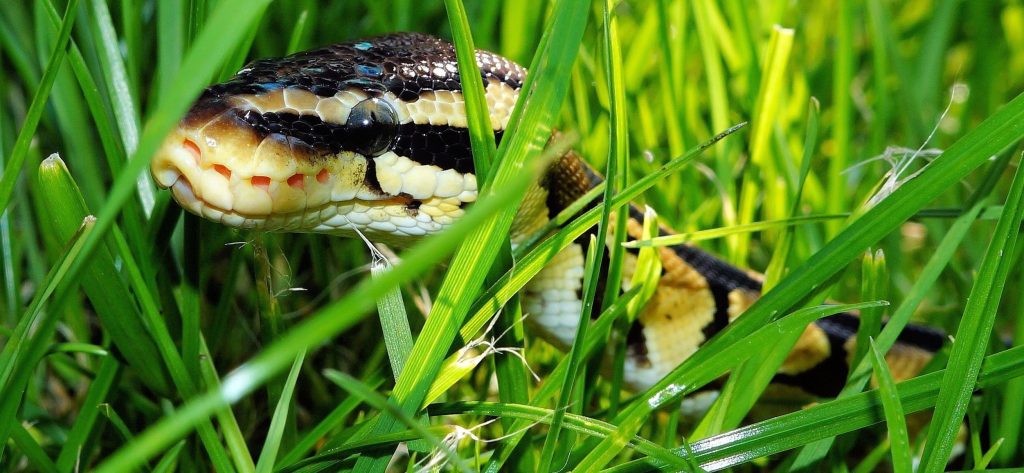
    This form of traditional poetry originates from Japan. The Japanese courtsmen would pass letters in 5-7-5 form for the recipient to respond in 7-7 syllable form. This five line, 5-7-5-7-7 syllable poem they would create is called the tanka. The haiku comes from the longer tanka, taking only the beginning 5-7-5 part. Courtsmen would write about a single moment in nature that expresses something larger than the haiku describes. For example, this haiku about the emotions the speaker felt after a staring eye-to-eye with a snake by Kyoski:

    The snake slid away.
    But the eyes that glared at me
    Remained in the grass.

    This poem describes moment after locking eyes with a snake. The glare stays in the speaker’s mind similar to an afterimage. The first line slips off the tongue like a snake slithers smoothly through grass. One of the words that stands out the most is “glared” in the second line. It breaks the silky feeling that the first line gives. The word “glared” portrays an intensity of the moment that cannot come across by using a word like “gazed.” The third line, “remained in the grass,” signifies the impression that the snake left on the speaker. It also could represent the shedding of the snake’s skin that often shows change. If this poem were taken into the context of real life relationships, the snake could represent someone that came in and out of the speaker’s life but left a lasting impression that the speaker cannot forget. There are so many ways readers can interpret this haiku, which is one of the most amazing aspects of this traditional form.

    Haikus may be one of the most well-known forms of poetry. The haiku is seemingly straightforward, but as we learned this week, haikus complement Japanese culture’s appreciation for nature and simplicity. We also experienced the difficulty in creating such a short beautiful representation of nature and life relationships. In class, Heather had us collaborate with the person to our right to create a tanka. One person would begin by writing a haiku. We would then pass the poem to the next person for them to respond in two lines written in 7-7 syllable form to complete the tanka. The result of the tankas were astonishing. The thoughtful lines and responses connected so well. Despite the similarities of nature and love, each tanka was entirely unique to themselves.

    Writing haikus is much for difficult than throwing words into a form. Haikus are intended to express nearly indescribable emotions and surroundings in only a few syllables.

    Xuan Ly, class of 2021

  • We are now entering the fourth week of our six week poetry unit. In this unit we have discussed and practiced many aspects of poetry: the traditional forms (sonnets, quatrains, etc.), rhyme schemes, the shape of poems, concrete and abstract imagery, metaphors and similes, and more. Our studies are based on reading The Discovery of Poetry by Frances Mayes, a book that explores many poetic devices and provides a range of examples for each one. Every night, we have a poem prompt due the following class. The prompts are usually related to the area of poetry we were focusing on that day or inspired by a poem we read. For example, after reading “A Blessing” by James Wright, our assignment was to write a poem with the same title. Another time, when we were learning about traditional forms, we were asked to write a poem with a traditional form about a certain mode of vehicular transportation (train, car, boat etc.).

    After numerous nights with poem prompts, we did a day of workshopping where each of us brought in three of our favorite poems and received written and verbal feedback from the three members of our workshopping group. I think this practice is what truly strengthens our writing, as it allows us to get helpful criticism from classmates who also have experience with poetry, and it gives us a chance to listen to and appreciate others’ poetry.

    I first took interest in poetry when I had to write five to ten poems for my portfolio. At first, that was the part of my portfolio I dreaded, and when I started writing it, I considered it my weakest style of writing. But as I began to study famous poems and write more poems to submit, working intensively to revise them, I realized I was actually enjoying it. Now that we are diving into the art of poetry in Creative Writing and I have several assignments to inspire my own poetry, I cherish the time I have to work on my poem when I get home from school.

    After the process of revising a poem, I often like to compare the revised copy to the initial version and notice how much it has evolved. Here is an example:

    Before:

    Adolescence

    At night the park transforms.

    The jungle gym
    that once invited me
    to clamber
    to the top
    now stands
    in its cold, metal
    complexity
    in which I fear
    I will be trapped
    A trail pressed in grass
    from wandering feet
    that trek countless circles
    waiting for the right moment
    to stop
    Stars point through drifting holes
    in fraying fog
    As the wind
    brings a chill
    to my skin.


    After:

    At Night the Park Transforms

    The jungle gym
    invited us to clamber up
    vibrant blue, criss-crossed ladder
    hook spindly legs around a bar
    and dangle
    shirts plummeting
    pale bellies revealed
    faces turned crimson from gathering blood

    Despite the heaving effort
    put upon upside-down lungs and heads
    we laughed

    When vigorous rounds of tag
    left bodies taken over
    by automatic rapid breaths
    that inflated and deflated our tiny torsos
    we lay in shady splotches
    on mounds of damp soil
    beneath sun-soaked leaves
    coolness extinguishing the flames
    on our cheeks

    Now
    as I press a trail in grass
    with wandering feet
    the jungle gym stands
    daunting
    in its cold, metal complexity
    in which I fear
    I will be trapped

    Once refreshing shade
    has become eerie moon shadows
    trickling toward me

    Formerly
    friends frolicked on cloudless afternoons
    that rolled into exuberant evenings
    munching candied fruit and salted nuts
    crumbly crackers and crinkled chips

    Now
    years later
    I tread countless circles
    at nightfall

    My dog follows
    with weary paws
    drowsy
    longing to return home

    Though numbness stiffens
    each limb of my sleep deprived body
    I cannot stop trudging
    I’m waiting
    for the pound of thoughts to deccelerate
    hoping, pleading
    I won’t have to lie
    when I look into my parents’ faces
    their eyebrows sloped with concern
    and say
    “I’m alright.”

    Stars point through drifting holes
    in fraying fog
    as the wind
    brings a chill
    to my skin.

    Nadja Goldberg, class of 2021

  • As my first year in the Creative Writing department progresses, I am beginning to notice a change in the way I observe the world, and the way I interact with others. An artist takes what is meaningful from their observations, and translates that into a language of their own; some of these can be deciphered by a wide range of audiences, and some are left with the message undiscovered. There is beauty in both these forms of art.

    As a writer, it is essential that I examine the traits that make someone unique, in order to create powerful, accurate descriptions of the impression one may leave. This is a skill I am developing here in Creative Writing. Once this ability is obtained, the fictional characters I generate in my writing will become stronger, and more developed, as I can draw from characteristics I notice in real life.

    In observing others, I seem to be noticing more about myself, the way I do things, the ways I don’t. I get so lost in interpreting other people’s aura’s in my head, that I sometimes forget to make a sound myself. It’s funny, some people have found me to be quiet and composed recently (sometimes), but really, my mind is constantly flowing with thoughts and ideas. It always has been, but only recently have the thoughts accumulated inside my head; few even to emerge onto anything but paper. This sudden change of personality is most likely linked to the extensive amount of writing, observing, writing and observing I have been doing for the past couple of months.

    By noticing what makes another unique, I am getting to know myself a bit better. My own writing style is becoming more developed as I learn more ways in which it can be strengthened. Whatever the rest of the year brings, I am excited to learn more about myself, and my writing.

    Kaia Hobson, class of 2021

  • On the Nature of the Decision… by Max Chu

    on the nature of the decision of a medium in which to create art, the nature of the title and why it is important, and the word cloud at the bottom of this website (with a side note about the not quite widely known artist Lee Lozano):


    1.

    1. sometimes it comes and goes with my mood, i think. per request pieces are the most difficult, as most often always i do not have any clue as to what to write about. or make about. I have a big box of old magazines in my room, with a glue gun and pages and pages of blank notebooks and colored pencils and paints and i think the untapped potential sneaks peeks at me while i sleep at night. sometime, i say. someday.
    2. but i must say, art is what id like to do for the rest of my life! creating and sharing are what i live for, i think, and i think that is the case for most everyone in the creative writing department. ive just watched a TED talk about procrastinators, and by the end the TED talker had accused everyone of being procrastinators, and so by the end of this blog post, i shall accuse you all of something (in an attempt to draw the reader to the end).
    3. there are three different types of art i personally can create: visual, written, and audible. i do believe that writing is necessary in most anything that anyone wants to create, but in this instance writing holds a concrete space in my artist’s mind, and such has a different feel than the visual feeling (which i might only choose to create something visually pleasing), or audible (which i might only choose to create something audibly pleasing). i suppose that if i were a chef, i might then think of ideas that could only be characterized through taste. for now, all of my ideas can be characterized within the three senses of the mediums i can work within. i do not come close to having ideas that without work can become some form of art, and such is a blessing i think, although may be inherent.
    4. make art, for sure. and yet, art is widely defined, so find a feeling < a sense (physical) < a medium < a time. this is a formula that might help some linear thinkers.


    1a.

    My favorite artist of all time is Lee Lozano. Lozano is remarkable for she brought up questions to what it means to be a person and an artist at the same time. Born November 5th, 1930, she lived most of her artist life in New York and Texas. Might I say something strange and unruly? Mostly, Lee Lozano exists beyond written word within my mind, which of course is uncouth to say as I am in a written department, but that of course is why I do not talk about Lee Lozano. So instead of telling you why Lozano is important to me, I’ll try and paint a picture of the circle around why she’s important, and maybe she’ll become important to you. No pressure, though.

    1. I first stumbled upon Lee Lozano in the Museo Reina Sofia in Madrid, Spain. Lozano holds the entire top floor, for she created lots of physical art, large enough to take up gallery(s). Most all of her art is vulgar and full of rough edges and messy lines. This is unusual because the fine art world, in which Lozano was keenly aware of, is interested in just the opposite (mostly). From first stepping into the gallery, I saw her Waves series, which without context is underwhelming. From there, I read her journals, and I was changed.
    2. Lozano lived in such art she called “Pieces,” which ranged from smoking grass for a month straight to refusing to talk to women to boycotting the “UPTOWN FUNCTIONS” to living wholly as an artist in every being and fiber, every moment and breath.
    3. This is where i leave you, and you do not need to go to Madrid to fall in love and you do not need to paint to be an artist.
    4. Being an artist is the experimentation with life; art is the recording of life through the lense of the individual’s soul.


    2.

    Part two, or,  the nature of the title and why it is important.


    1. In recent days, titles have become less of an art and more of a way of classification, or tagging within the art scene. I believe this is because people still want to convey meaning in titles, but they don’t want to be penalized for “wrong titles,” which most oftentimes are simply not conducive towards the format. Artists should have the freedom to title art whichever they like, although I do enjoy a good informative title. In fact, those pieces that don’t make sense without a title are some of my favorites!
    2. Those pieces which are untitled are the worst offenders, as the artist had given up. I do not like Kendrick Lamar’s album untitled unmastered. on principle.


    3.

    I want to be in the word cloud at the bottom of this blog. There are other students who have their own tag, and so I would like one. However, this is not a blind request, as I am aware as to they are exceptional or have lots to write about, and so I propose this: I will write many blog posts to get my own tag. Look forward to more of what’s here!


    1. (redux)

    I accuse all of you reading this of participating in an art project for these minutes we have shared, and such makes you an artist.


    1. (redux) (part 2.)

    You are all artists.

    Mac Chu, class of 2019